We’re moving into the second half of our Annual TPM Membership Drive. So we’re at the crunch time when we really need to be adding numbers. Let me be as direct as I can. If you’re not a member, your signing up today will make a big difference in the vitality and health of TPM. I would be so grateful if you could take a moment literally right now and click this link and sign up. We’ve made it super easy. I delay things I plan to do as much as anyone. But if you could take a moment literally right now and click that link we would all appreciate it so much.
Editors’ Blog


The country is beginning to wake up to the sheer level of strategic failure of Trump’s impulsive and unilateral war on Iran. Let me start with an extended quote from a weekend article in the New York Times …

I’ve described to you many times how TPM was saved by an early shift to building a membership system. We began it at the end of 2012 and started building it in earnest in about 2014. That gave us a five or six year head start on almost everyone else. We were thus much better positioned when the collapse of the digital ad economy hit in the couple years just before the pandemic. But today I’d like to share with you another part of that transition because it intersects with a fascinating story of Trump era corruption published today in the New York Times. It’s the story of a couple Syrian-born billionaires, already in business with the Trump family, lining up Trump’s personal support to secure another vast payday. In “a sign of how powerful Mr. Trump has become,” Times reporter Eric Lipton says after laying out the basic facts of the story, “To get almost anything done in the nation’s capital requires not alienating a vexed and vengeful president, and, ideally, pleasing him.”
It’s that personalist rule I want to focus on.
And to do that let’s go back to TPM ad business.
I sat down with Elizabeth Spiers, founding editor of Gawker, former editor of The New York Observer and now a columnist for the Times, to discuss this year’s annual TPM Membership Drive and today’s media landscape. We discussed journalist independence, membership business models and why in the Trump Era only truly independent media can tell the truth without fear or favor.
I hope you give it a look.
Ready to join the TPM community as a member and support our team’s work? Just click right here.

It’s no great insight to say Trump’s impulsive Iran War has been a big political loser for him. Even some of his and the war’s supporters would concede that point. “Katrinas” are also wildly overdetermined and over-diagnosed in political talk. How many “Obama’s Katrinas” were there? How many did Joe Biden allegedly have? But it did occur to me this morning that it is something like that for Trump but for a specifically Trumpian reason. Donald Trump’s great super power is changing the subject. He never sticks to one racket or con until its rung out of all its juice. He’s always on to some new thing because — long before we lived in the broken world of social media — Trump has always lived in the attention economy. Attention is the great commodity. It’s even more powerful for Trump as a defensive weapon. When something isn’t going great he’s always creating some new drama, some new thing to change the subject to. But what we’re seeing now is that Trump simply cannot change the subject. The whole Iran War story is devastatingly bad for him. And he simply has no way to stop it from being the big, dominating story. He can’t make any shiny object take its place. He’s stuck, not just militarily but politically as well.

You’ve probably seen the story about how, at a DOD presentation, Secretary of Defense Pete Hegseth quoted what he apparently thought was a bible verse but was in fact the faux biblicalism delivered by Samuel L. Jackson’s character, Jules Winnfield, in Pulp Fiction. There’s a lot here. Yes, the faux godly Hegseth should really be a bit more versed in the bible. But it’s really perfectly apt that he’s not. If you remember, Winnfield is a hitman, a killer, a man of meaningless violence. He wraps his murders in stylized bible verse imitations to give them some mix of giving them retributional ooomph and just for kicks. Is there any better description of Pete Hegseth? I can’t think of one. Hegseth’s brand of Christian nationalism is a permission structure for domination and violence. The biblical text is a source of handy quotes to the extent it advances those aims. But he’s neither smart enough nor serious enough to mine the text in any serious way. He’s just a different version of Jules Winnfield.
Something went wrong. Please refresh the page and/or try again.



PODCASTS

Kate and Josh discuss Swalwell’s downfall, Orbán’s ouster and Alito’s possible retirement.

The TPM Social Club is joined this week by Max Rivlin-Nadler of Hell Gate, an independent publication owned and run by journalists devoted to covering NYC.
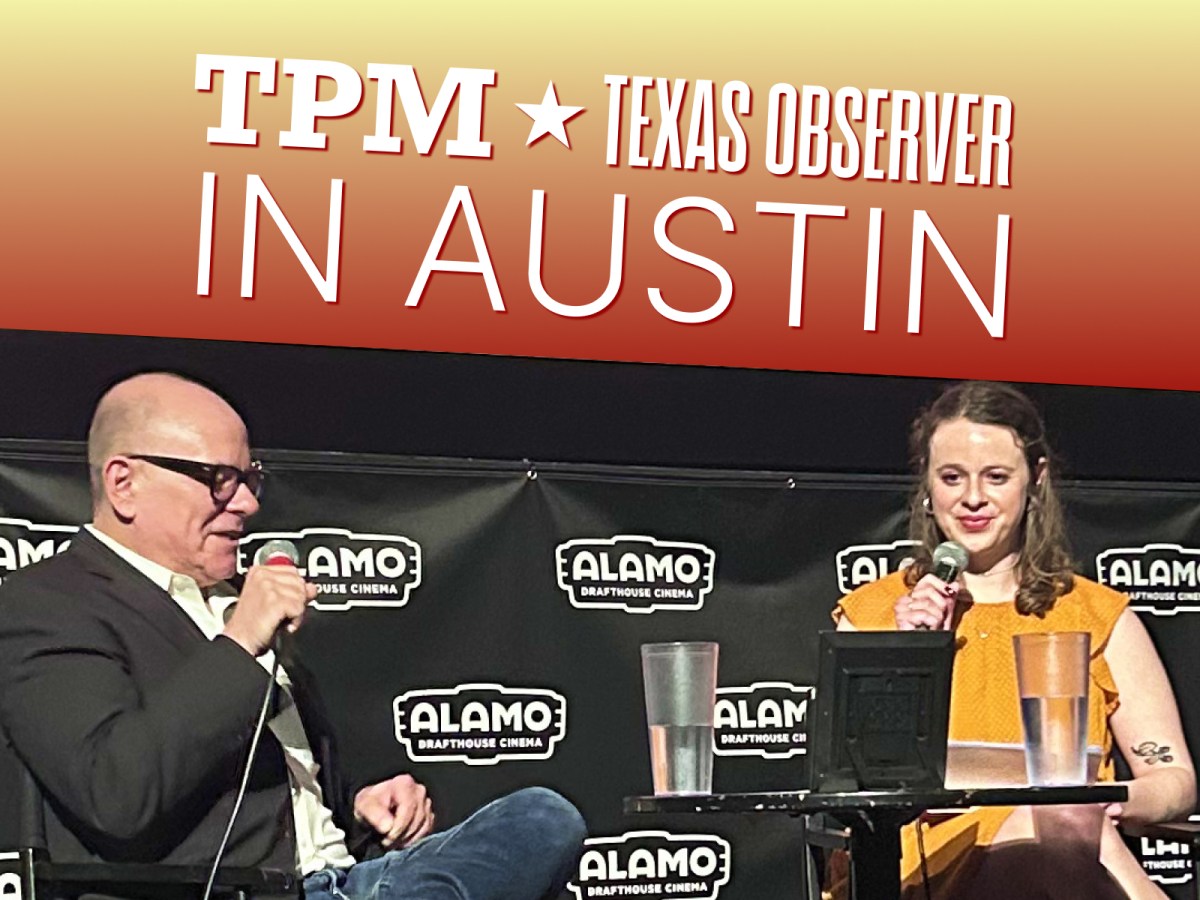
Kate and Josh talk war and midterms from the Lone Star State (with a special bonus segment featuring the Texas Observer’s Justin Miller).

TPM reporter Josh Kovensky and publisher Joe Ragazzo are back to launch The TPM Social Club, a show about what’s interesting.
RECENT


Something went wrong. Please refresh the page and/or try again.


Trump Crackdown on ‘Terrorist’ Left Notches a Victory in Texas
Jury finds eight members of a supposed ‘Antifa’ cell guilty of material support for terrorism