


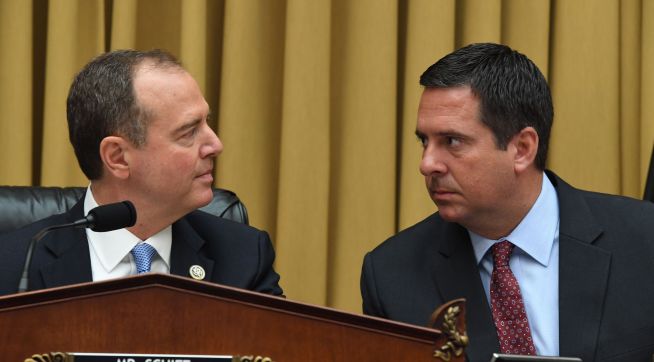
Republicans have put forward their requests for witnesses at the upcoming public impeachment hearings. A few are quite reasonable. Those are people who testified behind closed doors and were supportive or partially supportive of the President in their opinions and judgments even if they confirmed facts which support the case against him. NSC Senior Director Tim Morrison is in that category as is Ukraine special envoy Kurt Volker. But most are in a distinctly different category. They include Hunter Biden, Devon Archer (Biden’s business partner), Andrea Chalupa (a researcher and sometimes consultant for the DNC), Nellie Ohr (a researcher for Fusion GPS and wife of State Department organized crime official Bruce Ohr).
We could get into the specifics of each person in the second category. But each focuses on the same thing: proving or advancing the various conspiracy theories the pursuit of which got President Trump into this impeachment inquiry in the first place. In other words, House Republicans aren’t really defending Trump so much as joining his plot or conspiracy.
Join
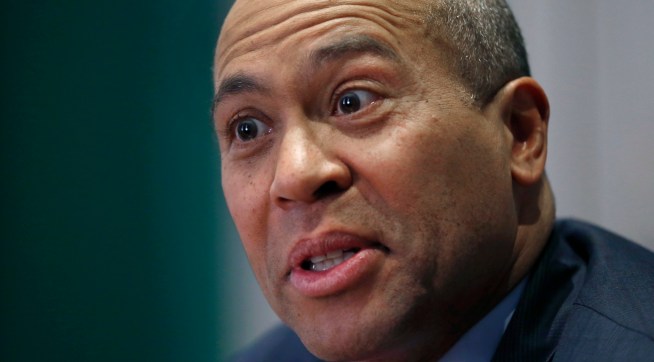
Happy Tuesday, November 12. Former Massachusetts Gov. Deval Patrick (D) is weighing an eleventh-hour presidential bid. Here’s more on that and the other stories we are watching.
Join
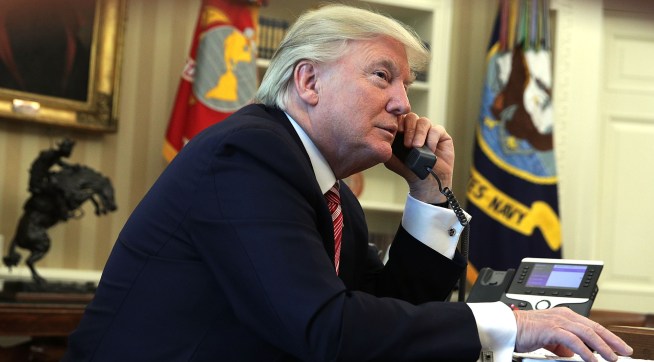
There’s a jarring passage in the testimony of Christopher Anderson, which was released yesterday by the House Intelligence Committee. Anderson is a Foreign Service Officer who was serving as a special advisor to Kurt Volker while he was the U.S. Special Envoy on Ukraine.
In January of this year, the U.S. Navy was sending a naval vessel into the Black Sea and specifically through the Kerch Strait. Without going too deep into the geography, this is a narrow passageway through which Russia can limit maritime access to parts of Ukraine because Russia now controls Crimea. Here the Navy was asserting its right to unfettered transit to support Ukraine. It’s referred to as a “freedom of navigation operation.”
President Trump saw a CNN report about the mission, thought it was a challenge to Russia and called John Bolton at home one night ordering him to cancel the mission.
Join

Let me draw your attention to this new article in the Times, the subject of which is the range of rivalries, turf wars and personality conflicts which epitomize the Trump White House and are coming to the fore under the Stress Test of impeachment. One of these is the on-going battle between “acting” Chief of Staff and John Bolton, which flared up overnight when Bolton and his protege told Mulvaney to get his own lawsuit against the President and stop trying to glom on to theirs. Mulvaney complied. He first appeared set to file his own lawsuit before — apparently? — giving up on the whole idea.
But note this passage in the Times article which suggests that Mulvaney is telling colleagues he’s all but unfireable since he knows too much damaging information about President Trump.
Join
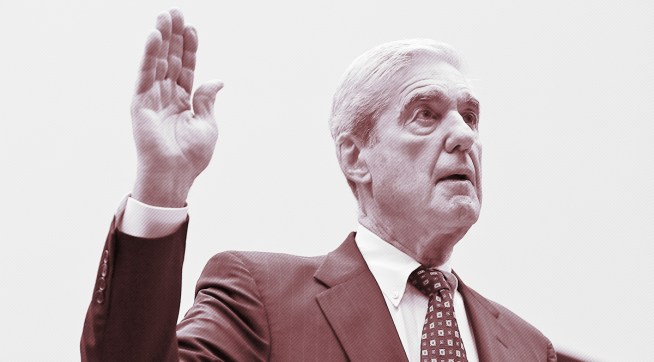
Today’s revelations out of the Roger Stone case put just one more weight on the branch of the Mueller probe’s credibility and probably far more weight than it can bear. Credibility in this context is a very fraught and weighty word. I don’t mean that it was crooked or out to whitewash the President’s actions. It’s all too complicated for anything like that. But we have a simple fact: six months out there is lots of new evidence that Mueller either must have known or could have known but didn’t make it anywhere into the report.
It’s hard not to reach the conclusion that Mueller ended up as what we might call the anti-Starr: determinedly refusing to look at anything not narrowly within the confines of his original brief. Just today we learn that there was at least pretty strong evidence that the President lied in written answers to the Special Counsel’s Office about Roger Stone delivering advance word to the campaign about Wikileaks.
Join
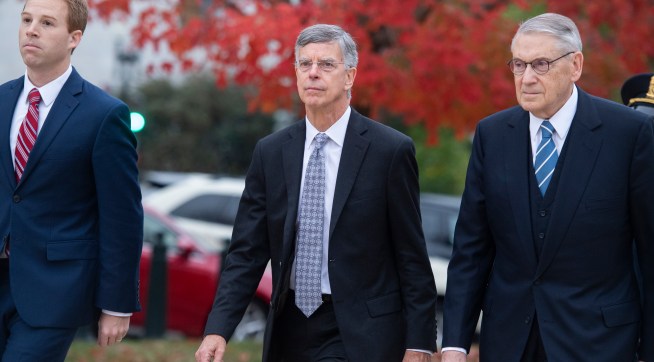
Happy Wednesday, November 13. Today marks the first public hearings in the impeachment inquiry into President Donald Trump. Here’s more on that and the other stories we’re watching.
Join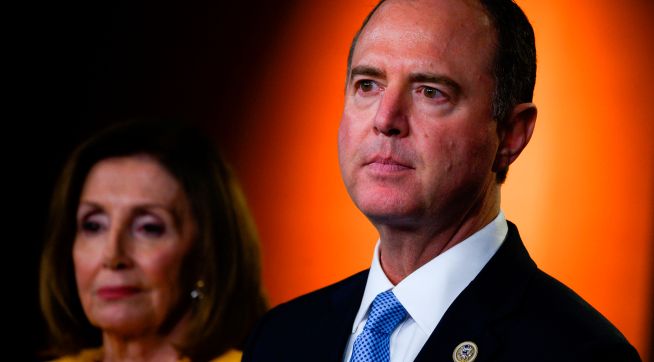
On virtually every talk show and daytime cable news discussion of impeachment, I hear the same question: Will the Democrats be able to make the case to the American people? Will they be able to make it clear enough, understandable enough, convincing enough? There’s often a Perils of Pauline tone about how the question is put to this or that guest, with Democrats on the line just as much as Republicans and perhaps hanging on the cusp of failure. Certainly the case can be made more or less well. I myself have pressed the importance of avoiding confounding obscurities like “quid pro quos” in favor of describing clearly what actually happened: an extortion plot to use a foreign power to sabotage a national election in the President’s favor.
But for all this the question itself misstates the situation in a critical way. What’s really being asked is whether Democrats will be able to convince not the American people but Republican partisans and more specifically congressional Republicans. And that is by design an all but impossible standard because they are deeply and unshakably committed to not being convinced.
This is not only the obvious verdict of the last three years. It’s even more clear with the questions which have emerged since September. Congressional Republicans have hopped from one argument to another: from no evidence of wrongdoing, to the wrongdoing is actually fine, to a rearguard action against a corrupt process. The chaos of arguments has zero logic or consistency beyond the simple and overriding one: of refusing to accept that the President did anything wrong no matter what evidence emerges and simply use whatever argument is available to justify that end.
For their first impeachment hearing, House Democrats have picked a room that is TV ready.
The House Intelligence Committee, a relatively small committee that typically meets in private, is gathering in the cavernous Ways and Means hearing room — an upgrade from its typical hearing space and a world away from the underground secure conference room where all these witnesses have been talking to members up into this point.
JoinWe are, as you’d expect, all in on today’s hearings. Here’s our staff liveblog of today’s hearings: mainly Tierney Sneed (who is in the room) but also Matt Shuham and Kate Riga.
Some of this is certainly benignly feigned naivete. But it’s nonetheless striking and I think real how these career diplomats and civil servants had genuine difficulty grasping the nature of the kind of Trumpian and pre-Trump GOP batshittery that those of us who’ve been covering it for years know as second nature.