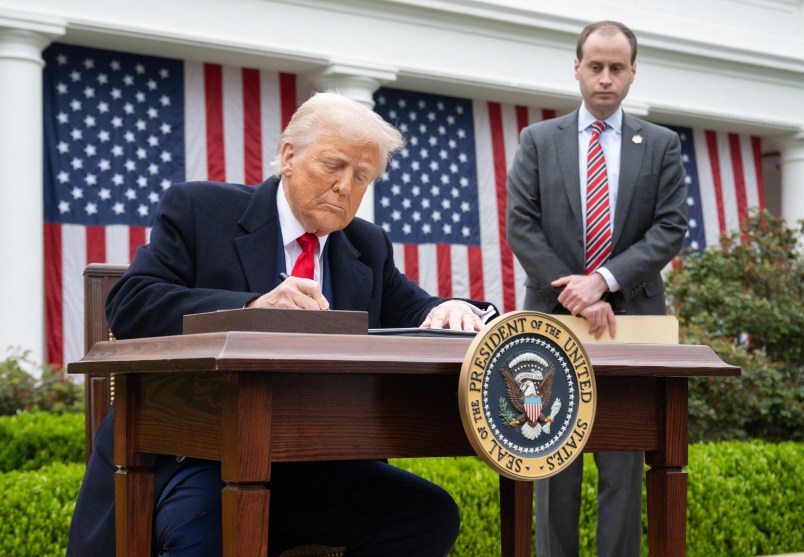
US President Donald Trump signs an executive order after delivering remarks on reciprocal tariffs during an event in the Rose Garden entitled "Make America Wealthy Again" at the White House in Washington, DC, on Apri... US President Donald Trump signs an executive order after delivering remarks on reciprocal tariffs during an event in the Rose Garden entitled "Make America Wealthy Again" at the White House in Washington, DC, on April 2, 2025. Trump geared up to unveil sweeping new "Liberation Day" tariffs in a move that threatens to ignite a devastating global trade war. Key US trading partners including the European Union and Britain said they were preparing their responses to Trump's escalation, as nervous markets fell in Europe and America. (Photo by SAUL LOEB / AFP) (Photo by SAUL LOEB/AFP via Getty Images) MORE LESS

The trade court’s decision that Trump’s entire trade war was based on powers President Trump didn’t actually have is a big, big deal. But there are some details that are important to consider. As we’ve discussed in earlier posts, this isn’t the only law in which Congress has delegated authority over trade and tariffs to the President, a power which the Constitution gives entirely and unambiguously to Congress. In fact, this law doesn’t deal with tariff authority at all. That’s the whole point of the decision. Yes, Congress has given you a lot of authority over tariffs and trade. But not with this law, the court is saying. Just why he chose this one is important and gives us some visibility into what comes next.

Want to keep reading?

Join and get The Backchannel member newsletter along with unlimited access to all TPM articles and member features.