


Daniel Drezner says we are now in the Wile E. Coyote phase of the 2026 midterm, the phase of six weeks or so in which everyone knows the GOP is toast but we pretend we don’t. Some of this is simply the political press’s collective suspension of disbelief. It’s neither fair nor fun to act as though the outcome is mostly known. Nor is this new. G. Elliott Morris notes that election odds makers consistently overstate the odds of the president’s party in the midterms, which is sort of another way of saying the same thing since the president’s party is usually on the losing end of the proposition. I would argue that a significant amount of this remains the structural, though not necessarily ideological, bias in favor of the Republican party — two decades on, Washington, D.C. remains wired for the GOP. But what all of this really reminds me of is the aftermath of the 2024 presidential election and what was then referred to as the “vibe shift” — both the hidden reality Donald Trump’s narrow but clear victory had purportedly revealed but also the shift in attitudes about cultural power and the future driven by that victory.
In elite circles the argument and belief went something like this. We thought that MAGA was a movement of reaction fueled by those left behind or discarded by the forward march of history and culture trying to wrench society back to an imagined 1950s. Not at all. In fact, it was the movement of the young and the most vital elements of the culture and the future. It was even expanding in the non-white constituencies which were supposed to be the anchors of the political left, the communities which were supposedly the targets and victims of MAGA, not its latest converts. Most of all, MAGA now had cultural sway to match its electoral power. And both were growing.
Every election brings its share not so much of history-rewriting as future-rewriting. Those first drafts of the future are usually wrong. 2008 was a genuine electoral blowout coming after a previous Democratic wave election in 2006. There were plenty of signs of a true realignment. Yet Republicans were back with their own wave two years later. But 2024 stands out both for the breadth of the argument and the meagerness of the electoral result it was based on. By the popular vote, Donald Trump beat Kamala Harris by a mere 1.5 percentage points. The Electoral College magnified that margin of course, and Republicans had a solid Senate showing. But cultural sway is about popularity, not the accidents of state borders.
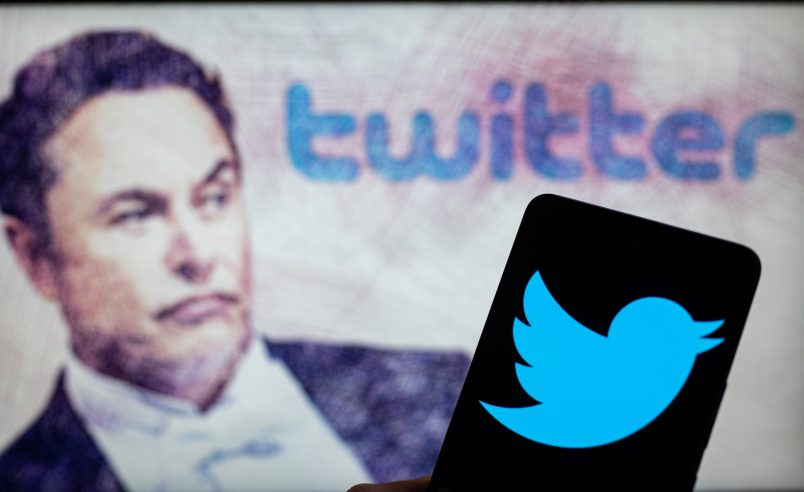
Why did this happen? Some of it is rooted in the parties themselves. Republicans, as the more authoritarian party, are prone to chest-thumping and self-assertion, while Democrats fall into self-doubt and acrimony at the first setback. But the more I’ve thought about this the more I think a key role was played by Twitter/X itself, not only because of its ubiquity in public conversations but because of how much time reporters — and not only political reporters — spend on the platform.
The right’s beef with Twitter was always that it was dominated by a loud minority of censorious left-wingers and societal whiners. It wasn’t just the vibe of Twitter power users. It was the governing philosophy of the company itself, with its focus on safety and moderation, which right-wingers claimed was just censorship of the right. Elon Musk’s angle was to blow through all of this with the power of his money (very much an oligarch flex), something that Twitter was vulnerable to because it had never been very profitable and its owners were eager for a rich exit. Musk came in, rebranded the company as X, welcomed back cadres of harassers and racists, programmatically down-rated non-MAGA voices, and by all these means effectively drove away not just “the left” but really most non-MAGA voices. They didn’t disappear of course. But any visualization of reach and volume shows that the character of the platform changed profoundly. In these terms, the whole effort was highly successful.
One thing I’ve been telling people for years is that just because you browbeat people into shutting up doesn’t mean you’ve changed their views. There’s an argument for establishing societal norms, making certain kinds of speech and ideas socially unacceptable. But it doesn’t always mean what you think. Some people on X quieted down and others left. What it all amounts to is that Musk created an information space on X that made MAGA seem much more dominant than it was in the real world. MAGA leaned into this because that’s their aesthetic; booyah!! is their philosophical core. But it created an impression that made a lot of 2026 possible.
Since 2024, it’s been a cliche or truism that Bluesky is a liberal echo chamber. It’s the basis of countless major media think pieces and right wing media attacks. By a certain definition that is absolutely true. On political Bluesky, the people are overwhelmingly people to some degree on the center-left or the left. Right-wing trolls tried to make some beachheads early on. But the algorithmic structure of Bluesky along with its blocking tools makes that really hard, so they all basically gave up. If you’re trying to shoot the shit with likeminded people about subjects you’re interested in this is great. And let’s be clear: this isn’t weird at all. In the real world if you’re into jazz, free love and self-expression you’re not going to hang at the local VFW. This is obvious; and everybody knows this is normal. Recently I’ve been spending a bit more time on X because it’s a place I can find Trump enthusiasts to provoke. But that’s basically because of a personality defect on my part. The audience is self-selected, and that does drive an element of homogeneity. But so what? To the extent I’m wasting my time with addictive behavior on social media, I’m going to do it where the experience is most pleasant and edifying. I’m not trying to prove anything.
What this all amounts to is that yes, by that definition, Bluesky is sort of an echo chamber. But everyone there knows that. No one on Bluesky thinks they’re interacting with a cross section of the population. But a lot of people on X do think that. A lot of journalists whose understanding of the political moment drives conventional political wisdom thought that about Twitter. Not a perfect approximation certainly, not a representative poll but a barometer of big shifts in the zeitgeist. That was what the “vibe shift” was all about. It wasn’t just a winning election. It was 1932, the beginning of a new political and cultural era. Only it wasn’t. And Twitter/X was a key part of maintaining that illusion for a long time, largely because the platform is such a touch point for journalists and influencers who maintain conventional wisdom.
To be clear, I definitely don’t think that the reality is that MAGA is down for the count. I think the mirage of the vibe shift allowed the Trump White House to plumb a depth of unpopularity that could allow Democrats to score the kinds of electoral victories that make it possible to drive lasting change. But no more than the opportunity. Mostly I think we’re still, at any underlying level, in the same split and polarized society, sloshing back and forth between momentary electoral advantages for either side. But Twitter/X has been a big part of convincing a lot of people of something very different.