


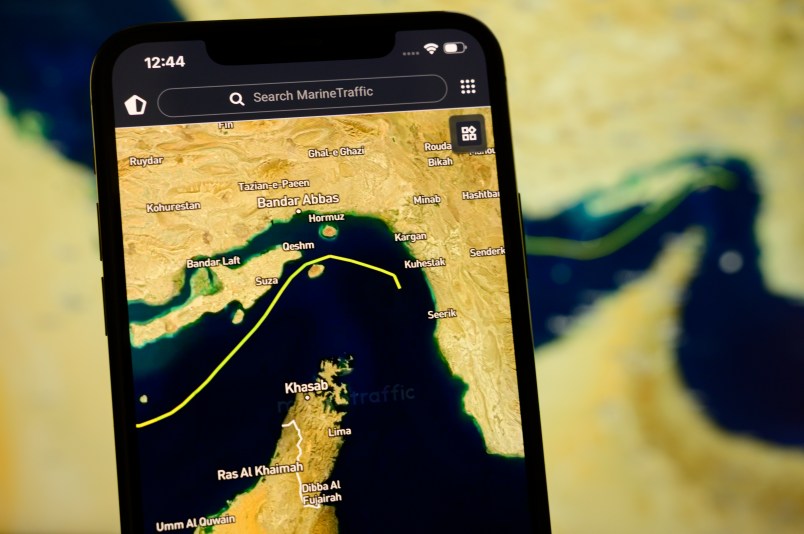
Living as we must, in history, it is always important to distinguish between the mostly contingent events of the moment and the deeper trends that will affect the future. Call it, perhaps, the difference between the libretto and the score. I was thinking about this while I was trying to make sense of the latest jousting over the Strait of Hormuz. Trump remains in the same space, having gotten himself into the crisis with no plan for how to get out of it. He’s now making limited efforts to contest control of the Strait. Iran says it remains completely in control of it. But, in a way, that’s a trap for Trump, because if passage through the Strait requires using military force, it’s precisely the use of military force, the danger and uncertainty it creates, which makes it impossible to use the Strait as a secure and safe means of transit. Force may be the medium-term answer to Trump’s problem. But in the short term it makes things worse. And Trump’s not a delaying-gratification, thinking-long-term kind of guy.
But the deeper impact of this crisis, one entirely of Trump’s own making, has been to convince many countries, especially but not only in East Asia, that oil and gas are too vulnerable to price shocks and supply instability. Meanwhile, renewables like solar and wind have now crossed the threshold where they are not only simply cheaper than fossils fuels but, as a tech product, will continue to get cheaper over time. Wind and solar energy can be produced entirely within your sovereign borders. So the Strait crisis is looking like it may be a turning point in the climate/renewables energy transition.
As is often the case with such transitions, the building blocks are already in place. The economics of renewables are already unstoppable just on a cost basis. They’re cheaper. You also have a superpower, China, heavily, heavily invested in electro-power and eager, both for economic and geopolitical reasons, to export the technology around the world. So the building blocks are there. But a crisis can force everyone to consider the matter afresh, with the new facts of the Strait crisis, coming just a few years after the start of the Ukraine war, to spur different energy strategies for cost and supply stability into the future.
The key dimension to all of this is that none of this debate or conversation outside the United States, so far as I can tell, is driven by climate. It’s there in the background of course. But Egypt isn’t on a crash course to shift from 10% to 45% of its electricity from renewables in two years because it’s concerned about the future of the planet. It’s government is focused on reliability and cost. Beyond what I’m gently calling climate concerns, none of this global conversation is embedded in what in the U.S. we might call “woke” politics, either for or against. That’s all a U.S. thing. Or, the U.S. is the only place where culture war politics trump the nuts and bolts of which source of energy is cheaper and more reliable.
U.S. culture war and climate politics are the kind of thing that can exist in a country that has a lot of wealth and a lot of access to energy. It gives you the luxury of being unserious, of playing games. It’s a macro version of why Ukraine became a world leader in offensive and defensive military drone technology despite having a limited tech sector and defense sector and endemic corruption. They did it because they had to. Meanwhile, the U.S., where a lot of this technology originated and has vast wealth and military procurement apparatus, is playing catch up. Why? Because we didn’t have to. Necessity makes new things possible.
The simple fact is that China has bet big on renewables and battery technology, the bases of a post-fossil fuel energy economy. And that bet is paying off big time. Trump’s antic and erratic behavior got us into the Iran War and the Strait of Hormuz crisis. Meanwhile, the authoritianism-billionaire nexus, increasingly heavily backed by the oligarchs of Silicon Valley, is allied with the fossil fuel industry. They’re not only limiting national investment in the energy transition. Through Trump they’re busily working to tear up or shutter investments already made or wind and solar projects that are already underway. Energy politics is increasingly fused with the future of civic democracy in the U.S. and around the world. It’s all of a piece.