


I’m now seeing press reports confirming the chatter I’d heard through the afternoon, which is that Senate Democrats have offered to vote for a continuing resolution in exchange for a one-year extension of Obama subsidies and creating some kind of bipartisan kumbaya health-care negotiating group. There appears to be other budgetary stuff in there. It’s not clear to me whether there’s anything on rescissions. But the topline is the headline. Shutdown ends in exchange for a one-year extension of the Obamacare funding. I had heard that Senate Majority Leader John Thune’s answer was no. But Axios says the Senate caucus is meeting this afternoon to discuss the offer.
Read More

I want to thank everyone who came out for our TPM 25th Anniversary show in Manhattan last night. Kate Riga and I did a live version of our podcast (it should be in your feeds soon). But before that we had a panel/oral history of TPM featuring three members of our current team — John Light, Nicole LaFond and David Kurtz — and three alums — Paul Kiel, Evan McMorris-Santoro and Katie Thompson. I loved this discussion. I’m not sure precisely what my expectations were, but whatever they were, it exceeded them.
Before this panel, we did a Q&A with a small group of readers and then after I was doing the podcast with Kate. Those were the things I needed to be on for. I decided in advance that I wanted to be as invisible as possible for the panel/oral history. I had some idea of wearing a hat and sunglasses. But it turns out I don’t own a pair of sunglasses. So I settled on a beanie and sitting as far back as I could. I wanted to watch as much as I could as an observer, not being in any kind of eye contact with the people on the stage and as far to the back of the venue as I could get so as few people as possible were aware of me being there. It’s hard for me to get outside of TPM, to get some distance to see it from the outside, and TPM probably has similar feelings about me.
Join
One of the most important things to understand about politics is the danger of literalism, assuming the straightforward meanings are the important ones. You can be following the libretto but the real action is in the score. Closely related to this is the danger of assuming that politics operates by a kind of Newtonian cause and effect. Object A moves when it’s hit by Object B. That’s logical and straightforward. But that’s often not how things work. You can see some of this this morning in the DC insider sheets that distill conventional wisdom.
This morning’s Punchbowl newsletter runs with the headline “Political winds whip the MAGA movement.” The movement is rocked by an argument about antisemitism, good or bad? Trump’s tariffs, his central policy, are on the rocks. Trump’s out of sync with the congressional Republicans on the shutdown. Republicans are losing the shutdown. He’s unpopular. Their policies are unpopular. Costs continue to rise. It all sounds pretty bad, and the Punchbowl editors add in the bad election night too. What’s notable though is how much of this was the case before Wednesday morning, before which they were generally saying that things were going great for Trump and the GOP.
Join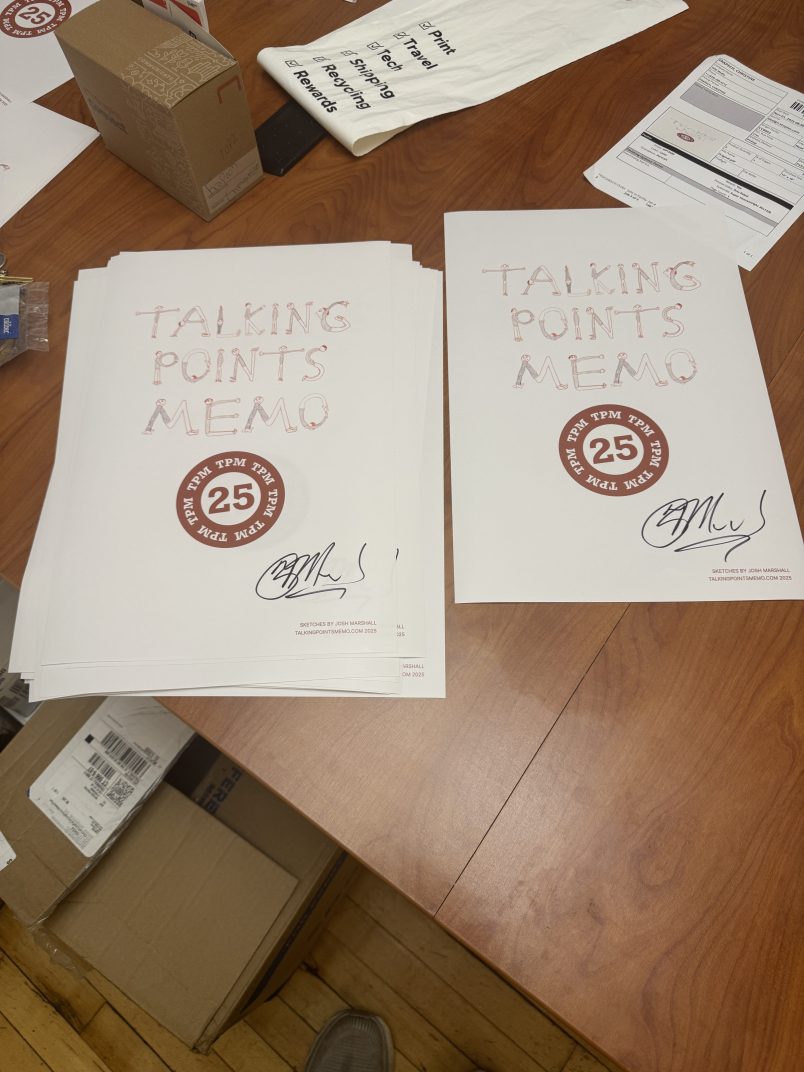

I was excited by Zohran Mamdani’s candidacy, which brought many young and minority voters, who had been turned off by the Biden-Harris years, back into the fold. I have been a democratic socialist since the late 1960s, so I also welcomed his attempt to run as one. That said, I wasn’t crazy about his victory speech.
Read More
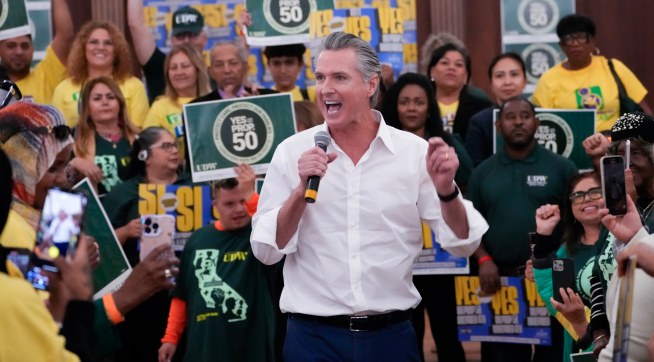
The clearest read of what happened last night is that, as far as I can tell, Democrats won every race that was in meaningful contention anywhere in the country. That’s not just high-profile races in New York, New Jersey and Virginia or the redistricting proposition in California. It goes way down into races only obsessives or local observers were watching in Pennsylvania, Georgia, Mississippi and a bunch of other places. Democrats won everywhere, and just about everywhere they won by larger margins than even optimists were expecting.
As I noted last night, some of these were surprises against low expectations which were not realistic. But Democrats did well against realistic expectations too.
Join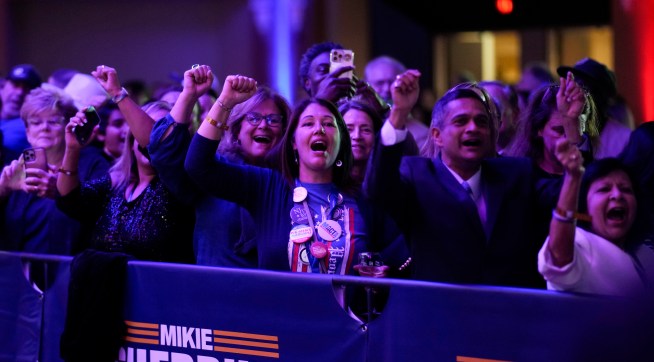
Elections are hard to predict. But even with that, some of the notional “surprises” we’re seeing tonight are less surprises than a measure of GOP dominance over current press narratives. People were looking for an upset in New Jersey. Nate Silver’s Silver Bulletin speculated that New Jersey might be moving toward becoming the next swing state. In fact, Rep. Mikie Sherrill (D) currently appears on track to crush Republican Jack Ciattarelli. A similar failure of conventional wisdom appears to be unfolding in the Virginia Attorney General’s race. A lot of D.C. insiders had convinced themselves that a controversy over some intemperate texts (not nothing but fairly close to it) had doomed his campaign. As recently as a couple days ago, betting markets (which are proxies for conventional wisdom) gave his opponent Jason Miyares 3-to-1 odds of victory. Jones now appears on his way to a clear though not resounding victory with a 3-to-4 percentage point margin.
Read More
Editor’s Note: I mentioned in today’s Morning Memo that while TPM doesn’t do obituaries, we had for years a draft of one in the can for Dick Cheney. He was too central of a figure in the early years of TPM not to have something substantive to say upon his death. In the end, Cheney managed to outlive our meager draft.
I went looking for it when the first alert of his death hit my phone early this morning. I soon got a text from former TPMer Brian Beutler: “Welp that Cheney obit I pre-filed to you ~15 years ago is finally good to go!”
Unable to find it immediately, I enlisted the help of our tech guru Matt Wozniak, and in a dusty old CMS covered in cobwebs, he found it.
Read More
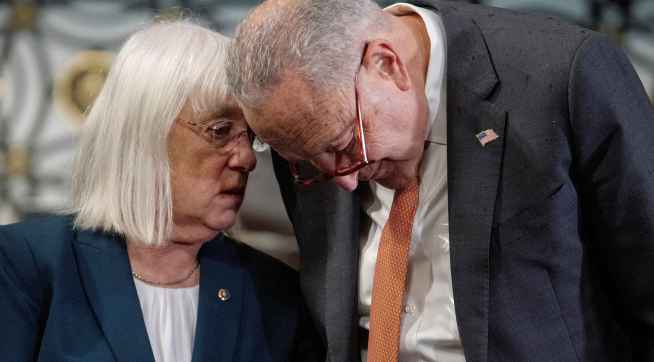
The insider DC sheets this morning all have news of a coming deal to reopen the government. The outline of that deal is an agreement to hold a future vote on Obamacare subsidies (a name we should really drop), which there’s no certainty Democrats would win, in exchange for another short or medium term continuing resolution. The catch to these reports is that, if you look closely, they seem to be overwhelmingly sourced to Republicans. That, however, doesn’t mean they’re not accurate — though you wouldn’t go too wrong being suspicious. Another dimension of this story is that the Democrats doing informal negotiations — and the potential crossover votes — are heavily stacked with soon-to-be retirees, Jeanne Shaheen (D-NH) and Gary Peters (D-MI) among others.
Join

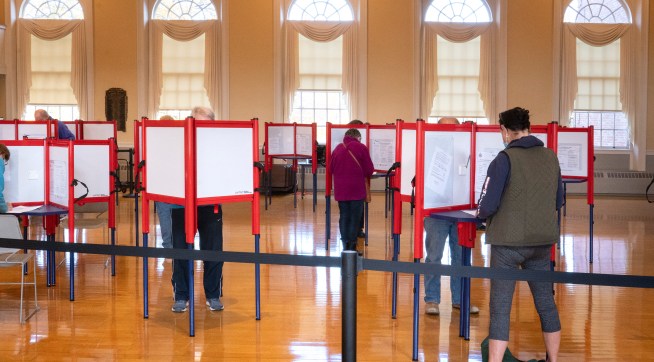
Tomorrow we’re going to get our first widespread read on what actual voters think of the Trump presidency. Of course, Trump isn’t on the ballot. Nor is it a federal election. But, more than at any other time in our lifetimes, all political questions revolve around Trump and whether you’re for or against him. We’ll get indirect reads on how perceptions of Trump are affecting voting behavior. We’ve also just gotten a series of new national polls, timed for release just before Tuesday. They show Trump almost as unpopular as he has ever been, not only during his second presidency but at the most feral and unhinged moments of his first. FiftyPlusOne shows his average approval numbers underwater by 15 points, with approval at 40.9%. If there’s anything “new” here, it’s that his high disapprovals are breaking more ground than his low approvals. He’s wringing the final undecideds or not-paying-attentions out of the electorate.
But the picture is different on the generic ballot — the standard measure of a congressional election. There, it is a kind of choose-your-own-adventure. The FiftyPlusOne average here have Democrats up by 3.5 percentage points — 45.6 to 42.1. That’s okay for the Democrats but it’s far closer than you’d expect with a president this unpopular. The most recent numbers are fairly scattered. NBC and Verasight have the Democrats with an eight point advantage. CNN gives them a five point advantage. But Washington Post/ABC have it at two points. NewsNation (whose pollster I can’t identify) says it’s essentially even.
Join