


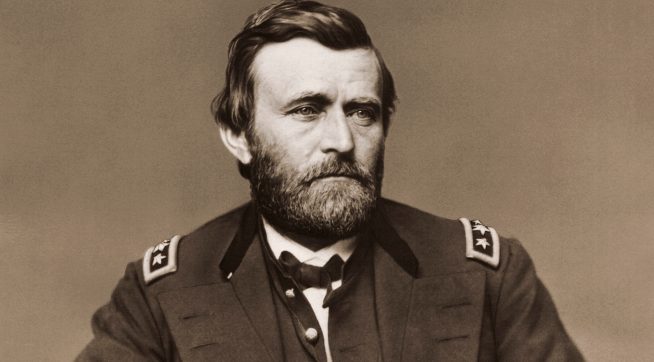
April 9th is a glorious anniversary: the day Gen. Ulysses S. Grant, Commanding General of the US Army, received the surrender of Robert E. Lee, a renegade US Army Colonel who was a leader of a violent rebellion against the United States which killed hundreds of thousands of Americans. Grant offered generous terms to Lee and the other traitors making up his army. Six days later President Lincoln was assassinated in Washington, DC.
JoinIn case you’re not following it, the union organizing drive at the Amazon facility in Bessemer, Alabama seems to be going down to a blow out defeat. Out of 3,215 votes cast the current tally is Yes: 294, No: 691. In other words, rejected so far by more than a 2 to 1 margin. I don’t have enough experience with this to know whether there are factors that can make early votes different from late votes or if that concept even applies here. But this rough proportion has been very consistent since the first couple hundred votes were counted. So it seems like the organizers didn’t even come close.
On this week’s pod we spend most of the time talking about the burgeoning Matt Gaetz scandal, which appears to be growing more serious for the congressman with each passing day.
Follow us on YouTube, Apple Podcasts, Spotify or wherever you get your podcasts.
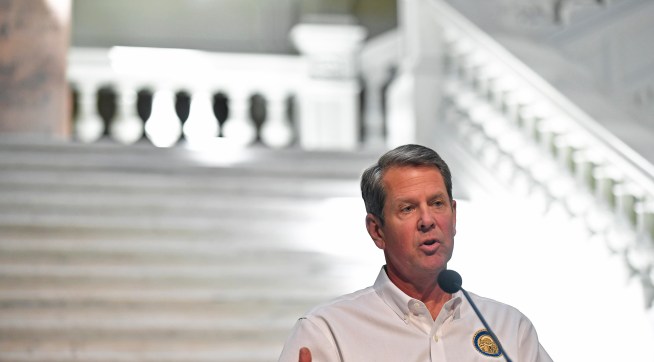
Brian Kemp is up for reelection in 2022. And the true leader of the Republican Party, former President Donald Trump, has made it pretty clear that Kemp has fallen far outside of his good graces.
Join
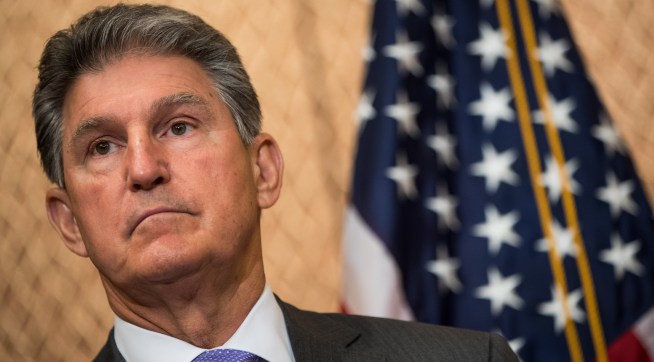
I just got around to reading Joe Manchin’s new OpEd in the Post. And, well … it’s pretty bad news and by my read almost all bad news. With anything less than heroic squinting and wishful thinking, it reads pretty clear: Manchin won’t support abolishing or weakening the filibuster. Full stop. This seems to take back what had seemed to be his pretty clear openness to some version of a talking filibuster earlier in the Spring. He claims early efforts to weaken the filibuster have only increased partisan polarization, a claim that makes no sense – correlation, causation, etc.
What jumps out to me most is that his argument is absurd even on its own terms.
Join
Europe is again grappling with a problem we in the US are really lucky to have avoided. European and British regulators now seem to be increasingly confident the AstraZeneca vaccine is associated with a serious but extremely rare blood-clotting side effect. Until now the UK – which has one of the world’s leading vaccination campaigns – has rejected reports of adverse side effects. But now they’re seeing them too and are recommending those under 30 get other vaccines. (There’s some indication younger people may be more susceptible to the side effect; and of course they face less threat from COVID.)
This isn’t just a major setback for Europe. It’s a major setback for the whole world. The global effort to vaccinate the populations of poorer nations (COVAX) relies heavily on the AstraZeneca vaccine because it requires less complex refrigeration and transport technology.
Join
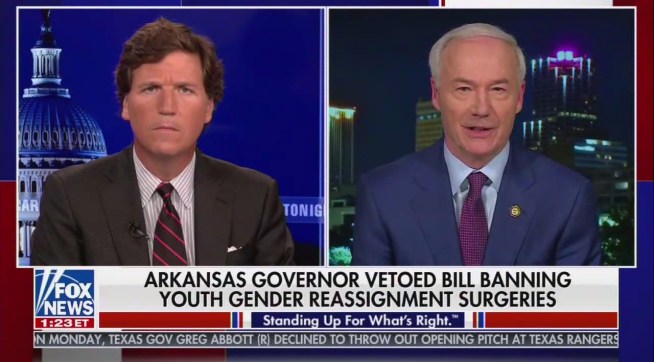
Asa Hutchinson’s veto of an anti-trans bill in his state, which we covered yesterday, proved to be for naught — it was promptly overridden by his GOP colleagues in the state legislature.
But his defense of his veto saw him position himself at a crossroads for conservatism, between libertarian values and the increasing desire on the right to punish one’s perceived enemies.
Join
Somehow yesterday I happened on this December article about COVID vaccines by David Wallace-Wells in New York Magazine. The premise is a set of facts you probably know. The Moderna vaccine, which along with Pfizer’s and Johnson and Johnson’s is now protecting millions of Americans from COVID and in all likelihood bringing a halt to the pandemic, was designed by January 13th. A month later a small first batch had already been sent to the NIH to begin phase one trials. Moderna was first but the Pfizer vaccine was almost as fast. In other words, we had the vaccines before the pandemic in the US even really got off the ground in early March.
JoinI’ve been wondering about this from the moment we learned Matt Gaetz was under federal investigation for sex trafficking or sex with a minor. Why didn’t he ask for a pardon? Or rather, he must have asked for and not received a pardon. Public reporting suggests that Gaetz drew the interest of federal prosecutors as far back as early June of 2020. That doesn’t mean Gaetz himself knew about the probe then or perhaps for some time after. But the investigation of what seems to have been his pretty close friend, Joel Greenberg, was public. It’s hard to imagine that he still didn’t know or suspect he was in jeopardy by mid-January when Trump was still in office and preparing what turned out to be an historic pardon spree, which gave especial focus to the legal woes of people who had been consistently loyal to him.
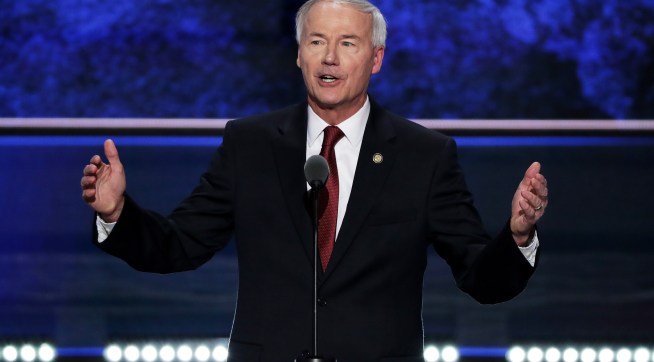
As Republicans fling one culture war after another at the wall to see what sticks in recent weeks, at least one GOP governor isn’t playing along.
Join