


From the beginning of the COVID19 epidemic in the United States the epidemic has been dominated by an outbreak in the New York City metropolitan area. That outbreak is distinct from the progression of the disease in the rest of the country. It has its own intensity, timeline, arc. The New York City metro is an integrated economic, transportation and population reality – and thus a distinct epidemiological reality – even though it is spread over three different states. So to understand the NYC metro outbreak and the progression in the rest of the country it is helpful to separate them out visually.
Here are the latest numbers as of yesterday evening, plotted out for the number of new cases per day as well as the new fatalities reported each day.
Fascinating email from TPM Reader JO, whose personal bio is tailor-made for TPM:
I’m a critical care nurse working in a COVID ICU. I’ve practiced nursing in a variety of settings, from helping to run an Ebola Treatment Unit in Liberia to coordinating mass vaccination campaigns during the H1N1 pandemic. I’m also a former political professional who really appreciates your insight and analysis.
One thing that I feel is really missing from the public discussion about COVID is the surprisingly high rates of (likely) permanent disability among those who become critically ill.
Read More
I am making my way through your COVID19 turning point emails. And really … they are so good. I struggle to know which to absorb myself and which to share in posts. I can’t post them all and many, in the nature of things, are similar. But each captures some unique angle on the story or human experience of it. There are entirely unexpected scenarios which aren’t turning points so much as collisions with life, like the – one imagines – quite awkward necessity of broaching with your fiance the possibility of postponing your wedding. That’s the experience TPM Reader JL shares.
Read More

The governors of Texas and Iowa will soon be rewarded for their reopening efforts with a visit to the White House this week.
Trump out here moving the goalposts on coronavirus deaths like an auctioneer pic.twitter.com/nb6Eo92MYJ
— The Daily Show (@TheDailyShow) May 4, 2020
TPM Reader KM tells us in the subject line of her email that she writes from Detroit …
My own experience of the pandemic is of something that was very distant and abstract up till the moment I was in the thick of it. So my turning point is more like a breaking point: the experience that split my life into a Before and a Now.
TPM Reader WC (not his real initials) is an emergency room doctor on the West Coast. His turning point is different from many of our who haven’t been on the front lines of the epidemic.
Like many of you listeners, I too saw the closure of schools and the cancellation of the NCAA championship/NBA season as big turning points. The other turning point for me was the day I walked into our ER at a large trauma center and it was totally empty, which is unheard of.
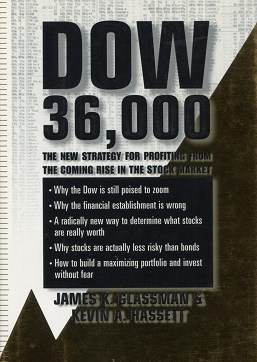
One of the most depressing and least surprising developments in the last 36 hours is that the White House is apparently relying on a “cubic model” of the COVID19 epidemic prepared by White House economist Kevin Hassett to craft its crisis response. I have not seen any statisticians or epidemiologists who know precisely what “cubic” refers to the in this context – though there are some promising speculations based on simply plugging in one of the default trend lines (third degree polynomial) in Microsoft Excel. The more relevant point is that, according to The Washington Post, the model predicts the number of people dying of COVID19 in the US will fall to close to zero by May 15th – a scenario that seems all but impossible.
Here I can’t help but note a basic point. Hassett is not a health care economist, let alone someone at the crossroads of behavioral economics and epidemiologists. Indeed, his record as an economist is rather notorious.
As you may have sensed from my writing over the last two months I’m if anything a COVID19 pessimist. I have generally thought things would be worse than the consensus opinion anticipated. Unfortunately, I’ve generally been right. But let me strike a different note about this CDC model or forecast that has gotten all the news today. The numbers are stunning. And from a purely non-expert viewpoint they don’t seem credible. I put this forward purely on the basis of being very immersed in the current statistics and having at least some sense of how trends work.
Let me try to explain.