


8:00: Nets immediately call Alabama for Biden – not a surprise there. Large African-American Democratic electorate. Again, immediate call means sizable win. CNN is calling Massachusetts, Maine and Oklahoma took close to call. In the first, Warren, Sanders and Biden. In the latter two Sanders and Biden in contention.
7:49 PM: Van Jones on CNN a short time ago made a good point. There are lots of Democrats, especially Biden supporters, who are ecstatic tonight. The big prizes are Texas and California. But these early states are going really beyond any realistic expectations Biden’s campaign could have had. But there’s at least a big chunk of Democrats who are experiencing a harsh, harsh reversal of fortune tonight.
Obviously it’s not like Sanders’ campaign is over. There’s a good chance he could still end up with most delegates tonight. But whoever wins the nomination it will be critical for the winners to craft a story that makes it possible for losers to come on board. Some of you will say that the Sanders campaign has shown little inclination to do that over recent weeks. I agree. But that doesn’t matter. Life isn’t fair. The winner will have to do that.
7:31 PM: Networks immediately call North Carolina for Biden. Again, immediate call suggests a sizable win.
7:04 PM: CNN calls Virginia for Biden right out of the gate. Immediate call suggests a big win. Vermont equally fast to Sanders. But Virginia is a much larger state. And it was considered up for grabs only a few days ago.
We’ve got a Super Tuesday to make sense of. So let’s do this. The first states are about to report. We have live election results from every state as well as our staff live blog here. You can also see the live results to the lower right on our front page.
As David noted below, we’re in touch with several readers who live near the assisted living facility which appears to be the main epicenter of the outbreak in Washington state. One reader has generally high marks for local authorities, others more skeptical reports. All are concerned about the schools, both for the welfare of children and as a potential vector for the spread of the disease. People find themselves having ambiguous symptoms that might be signs of the virus but could just as easily be the kinds of mild colds we generally ignore every winter. The one common refrain is the lack of information and unclarity about just what you’re supposed to do.
Our whole team will be here this evening bringing you live coverage of the Super Tuesday results which are going to have a huge impact on the outcome of the presidential nomination race. Be sure to bookmark this page where you’ll find live updating election results for every state voting today as well as our staff Live Blog bringing you developments through the evening.
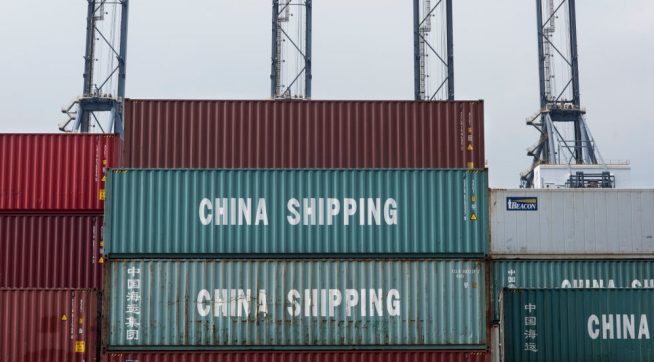
I’m working on a series of posts tied to various topics surrounding the COVID-19 outbreak. One of the issues is economic impact. We can hope and have some reasons for relative confidence that the US can avoid the worst outcomes from this outbreak. But we can already see lots of reasons to understand that the economic shock will be massive – and a lot of it has already happened. It’s baked in.
Let me point you to just one stunning datapoint.
There are a series of questions and contingencies we need to be considering about the 2020 election campaign. These aren’t about how the Coronavirus outbreak will affect the outcome of the campaign per se – who could be helped or hurt electorally. It’s about the mechanics of the campaign itself.
Let us assume (and hope) that we have a better than worse outcome to this pandemic in the United States. Still, it seems entirely possible that it won’t be advisable to hold big party conventions in the late summer of this year. Consider it: Tens of thousands of people coming together and spending several days in one arena and various parties for four or five days. Also, those two events include most of the senior elected officials in the whole country.

We’re in sprint mode as the few remaining 2020 candidates vie for wins in the 14 states holding primary elections today.
But even after this weekend’s en-masse exodus of top candidates who under-performed in South Carolina on Saturday, Trump seems to be primarily concerned about the rise of the former vice president.
Join
The state of California wants you to know that if it’s taking a while to count its residents’ votes on Super Tuesday, it’s not because it’s heading into a Iowa-esque debacle.
Join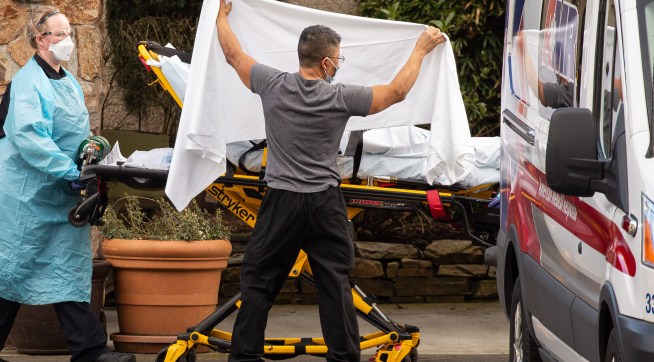
TPM Reader RS sends in this dispatch from Kirkland, Washington:
Thought you might be curious to hear from someone who lives about 500 yards from the nursing care facility and down the street from the hospital at ground zero. Read More
Here’s a very important article from Science. On February 28th, a WHO-organized mission to China published a detailed report about the situation in China. It was led by a Canadian WHO epidemiologist named Bruce Aylward. The actual report is here. The article I’m recommending is an article summarizing the key findings of the report by two highly respected health policy and infectious disease journalists.
Let me briefly address some of the emails in response to this post below about the seasonal flu. First, all your feedback is helpful and appreciated. For reasons I don’t fully I understand some readers have interpreted that post as saying either that the flu is worse or comparable or that COVID-19 infection isn’t that bad. One reader even said it played into President Trump’s efforts to downplay the problem. I strongly disagree, for reasons I’ll explain below. But before I do, for clarity, I’m definitely not saying any of those things. I say quite clearly that even at the low bound, COVID-19 infection appears to be dramatically more lethal than the flu and that all human populations have little to no immune resistance to it, which is also dramatically different from the flu.
The point to me is numeracy.