

This excerpt is running in TPM Cafe, TPM’s home for opinion and news analysis.
The optimism and euphoria that was so widespread when the Berlin Wall came down in 1989 has long ago soured. Both in international relations and in the virulent politics that has erupted since 2016 in almost all the older democracies and many of the newer ones as well, we find ourselves today in truly baleful circumstances.
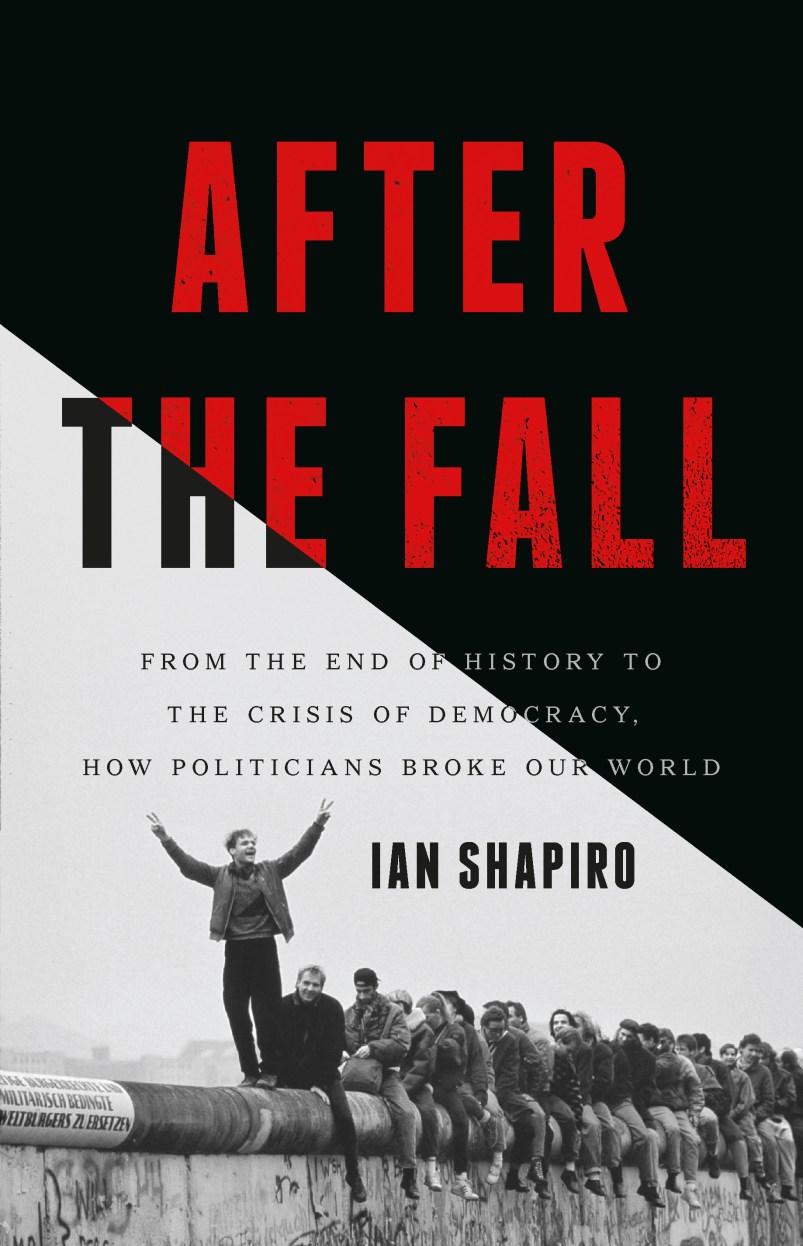
Tracing this history is the focus of my new book After the Fall: From the End of History to the Crisis of Democracy, How Politicians Broke our World. My central concern is on paths not taken, choices made or forgone by political leaders that closed off better options and made our current circumstance if not inevitable much more likely. It is not a twenty-twenty hindsight book. The decisions I examine were made in defiance of credible alternatives that were being pressed at the time by serious people inside and outside of government. “Barack Obama’s gift to Donald Trump” is significant not only for its account of U.S. political dynamics in the wake of the 2008 financial crisis, but also because Obama’s approach became the template for many other democratic governments, with similar results, that I discuss elsewhere in the book.
Barack Obama’s gift to Donald Trump
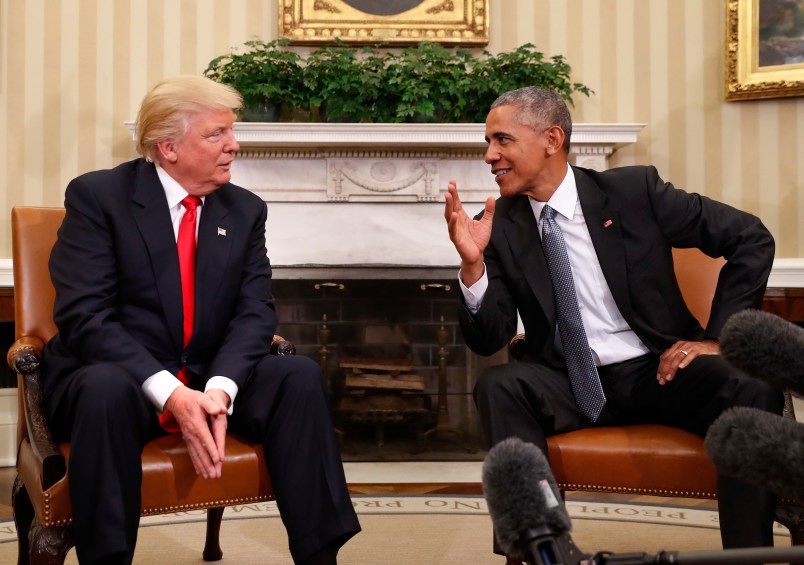
Barack Obama took office amidst the worst financial crisis since the Depression, yet his response differed notably from FDR’s seven decades earlier. President-elect Roosevelt ignored lame duck President Hoover’s entreaties to embrace a bipartisan response, leaving him twisting in the wind for the then four-month interregnum. Obama did the opposite, lobbying Democrats to support President Bush’s Troubled Asset Relief Program that the Republican Congress refused to adopt. This lent color to the impression that the emergency had fallen out of the sky rather than resulting from reckless deregulation of mortgage and financial markets that had been pursued in response to relentless lobbying by the big banks – including Bush’s Treasury Secretary Hank Paulson when he was head of Goldman Sachs – that were now desperately seeking bailouts.
Roosevelt’s first term was marked by far-reaching banking and securities reform, establishing the main components of the New Deal – the Federal Housing Administration, the Public Works Administration, Social Security, robust protections for organized labor, farmers, homeowners, and consumers – and steeply progressive tax reforms. Obama bailed out the banks, paid bonuses to executives who had led their companies and the country to financial disaster, and curtailed regulatory reform to accommodate the bank lobby, while doing little for millions who were harmed during the crisis. FDR responded to attacks that he was a traitor to his class by declaring “I welcome their hatred” and winning reelection by the biggest landslide in over a century. Democrats retained control of Congress throughout FDR’s twelve years in office. Obama’s accommodationist response didn’t prevent his losing the House to Republicans in 2010 – hamstringing the rest of his presidency. In 2014 he also lost the Senate.
There were, to be sure, significant differences. FDR was elected during the depths of the Depression, three years after the Wall Street crash. By contrast, Obama won as financial markets were imploding, more like 1929 than 1932. Global credit markets were more tightly intertwined than in 1929. Without immediate, decisive action by the Fed and the Treasury, the world’s major economies would have collapsed. This would have been incomparably worse for hundreds of millions of people than the Great Recession. Moreover, the US was the dominant global player in a way that it was not in 1929. No other government could have acted with the speed and decisiveness needed to forestall the catastrophe.
But this circumstance also gave Obama leverage. Like many others among America’s elites, he missed how much had changed. It was as if he was mesmerized by their comfortable confidence that, once the crisis was over, voters would continue deferring to leaders who had been so spectacularly and destructively wrong. Most Americans had lived for decades in an unforgiving economic order in which the rich kept getting richer while secure middle- and working-class jobs disappeared. Family incomes were maintained, when they were, by adding second earners or borrowing against their homes – eroding their main source of wealth. They had accepted this world because no leader of either party challenged the expertise of the elites who both ran it and insisted that there was no alternative to it. They failed to appreciate that once the reckless incompetence had been exposed, the conventional wisdom about the dearth of alternatives on which they had insisted since the 1980s would be vulnerable as well.
Obama’s central failure was his reflexive acceptance of the ideological terrain that Republicans had reshaped since the 1980s. In this he was working from Bill Clinton’s playbook, dubbed “triangulation” by his advisor Dick Morris. But by 2008 this was obviously a disastrous strategy for Democrats because it left many more of their traditional voters behind than it helped. Moreover, the Republicans led by George W. Bush together with enabling Democrats like Larry Summers and Rahm Emanuel had been so thoroughly discredited that there was a beckoning opportunity to confront them head on.
This was Obama’s moment to insist that the condition for deploying trillions of dollars of public money to revive the financial sector was major investment in the broader economy. High short-term unemployment was obviously in the cards, but the recession would also accelerate the structural changes to labor markets that had been in process since the 1980s – away from well-paid, secure long-term employment toward lower-paid and increasingly precarious service sector jobs. One study of baby boomers by the US Department of Labor documents that people born between 1957 and 1964 will change jobs between twelve and fifteen times during their working lives. For the fortunate few, this involves going from one lucrative opportunity to the next, but for the great majority it involves downward mobility.
Ignoring these developments was remarkable because, as journalist Ron Suskind has documented, before taking office Obama had recognized that major economic changes were underway that posed political dangers for the Democrats. In a 2006 speech at the Brookings Institution, Senator Obama stressed that the recent decades of economic growth had created losers as well as winners: people whose jobs had been eliminated, who had lost their healthcare and retirement security, and who expected their children to face an even bleaker future than theirs. Despite plenty of talk about retraining these people for the new economy, Obama noted, little had been done. The risk was the growth of “nativist sentiment, protectionism, and anti-immigration sentiment.” During the following year’s primaries, Obama posed this prescient question to his economic team: “In year two of my administration, when the housing bubble finally bursts, I come to you as my economic advisers and say, ‘what do we do?’ Well, what do we do?” This led to a discussion in which his future Chair of the Council of Economic Advisors Alan Krueger, mapped out the recent labor market changes, away from well-paid industrial jobs toward less secure and lower paid service sector jobs. Obama concluded that the centerpiece of his policy should be a large enough infrastructure initiative to create ten million jobs.
In office, Obama missed the chance the crisis created. TARP and the Fed’s Quantitative Easing policies flooded the economy with liquidity that predictably revived financial markets, but no one believed that they would head off a major recession. Beyond the low-hanging fruit of implementing what turned out to be a botched $75 billion program for distressed homeowners (most of which never made it to homeowners), Obama could have pressed hard for ambitious reforms to address the inevitable foreclosure epidemic and to invest in rebuilding the economy beyond the financial sector. Part of this could have been done directly, via a modern version of FDR’s Works Progress Administration that had employed some 8.5 million people during its eight year existence at the cost of $11 billion ($250 billion in 2009 dollars) to rebuild America’s collapsing roads and bridges and his Civilian Conservation Corps that recruited another three million between 1933 and 1942 and planted 3.5 billion trees at the cost of another $3 billion ($50 billion in 2009). Part of it could have been done through private sector incentives and public-private partnerships. Obama never attempted anything remotely comparable.
Obama’s failure to rise to the occasion seems best explained by his triangulating adherence to what by then had become Democratic orthodoxy. This amounted to ceding the terrain of possibilities to a Republican Party that had long since made it clear that they would respond by dragging politics to the right. He failed to see that the orthodoxy he reaffirmed once the crisis was over now rested on quicksand for political legitimacy. He missed the opening this created to reject that orthodoxy and start rebuilding the Great Society coalition that Democrats since Lyndon Johnson had abandoned. That would have meant responding to the needs of millions of voters who would continue enduring the effects of the crash long after the financial elites had recovered. By acting as though nothing had changed, Obama signaled blindness to the new reality that mainstream Republicans also missed. This bipartisan obtuseness meant that was only a matter of time before someone like Donald Trump would seize the chance to upend their comfortable world.
There is another cost to triangulation that Obama’s experience illustrated. Signaling willingness to cooperate with adversaries who have no intention of cooperating with you is bound to be seen as weakness. Sensing blood in the water, they will go after you — as they did most dramatically in the fight over extending the Bush tax cuts, the vast majority of which he agreed to make permanent. FDR is instructive here as well. In his first term, he was frequently frustrated by a Supreme Court that struck down major pieces of New Deal legislation as unconstitutional, including minimum wage legislation, the National Industrial Recovery Act, and the Agricultural Adjustment Act that gave relief to struggling workers and farmers. Following Democratic gains in the 1934 midterms and his landslide reelection two years later, FDR proposed expanding the Court to defang it. The plan was eventually rejected by Congress, but in the interim the Court backed down, upholding legislation that previously had been in doubt such as the Wagner Act and the Social Security Act, and reversing its previous rejection of state minimum wage laws. American politics always involve mixes of cooperation and conflict, but if you keep cooperating when your adversary does not, you are asking to be played for a sucker.
Adapted from AFTER THE FALL: From the End of History to the Crisis of Democracy, How Politicians Broke Our World by Ian Shapiro, copyright ©2026 by Ian Shapiro. Used with permission of Basic Books, a division of Hachette Book Group, Inc.




I agree with some, but not all, of the observations/conclusions drawn here. One in particular, which I think is worth noting:
[Emphasis added]
Sometimes, a mere threat is enough–especially to bullies and cowards. Perhaps we’ve stopped making use of threats unless we’re sure we can carry through on them; history suggests we might want to rethink that. Extraordinary times call for extraordinary boldness.
Just MNSHO.
If Obama was more aggressive, he would have had to fight not only Republicans and Fox propaganda but the Clinton Democrats. Clinton finished his term as an effective and efficient Republican administrator, cutting welfare and balancing the budget, getting small government bills passed that a Republican President might not. Obama would also have to acknowledge that Clinton probusiness, antiregulation of Financial Services and Silicon Valley boosterism were the cause of the 2008 crash, when combined with the Bush II antipathy to financial oversight and ignoring financial danger signs for two terms.
Obama did not have the confidence that FDR’s wealth and social status provided. Perhaps only a rich and powerful man could have done the New Deal. If a poor man tried it, it would be seen as a socialist revolution. FDR had no illusions about big Capital and he clearly understood that if left to their own devices they would run the country into the ground: plantations and wage slaves. Sounds like a good book.
Reforming the Court is definitely a worthy goal, but legal historians know from the work of William Leuchtenberg that the Supreme Court’s “switch in time that saved nine” actually preceded FDR’s Court-packing plan. It’s in his book The Supreme Court Reborn. (Unless somebody can point to a subsequent revision.)
The House of Lords - er - senate - traps every Senator into believing comity and decorum are both necessary and good. As we have seen over the last 10 years, that mindset is no longer valid, if it ever was.
A lesson that still hasn’t been internalized…