


In Rough Edges, Mike Rothschild writes about fringe groups, conspiracy theories and how the Internet broke our brains. This column is part of TPM Cafe, TPM’s home for opinion and news analysis.
Before COVID-19 had reached the United States in significant numbers, there were countless conspiracy theories about what it “really” was and who was behind it. The “infodemic” was so virulent that many people’s first knowledge of the pandemic was the disinformation about the pandemic.
As the virus spread around Asia and Europe in early 2020, rumors ran almost unchecked alongside it. The internet became a dull throb of fear about “Coronavirus Death Smog” from all the bodies China was secretly burning, or China using it as an engineered bioweapon that would wipe out humanity, or that the outbreak was “foretold” in a 1981 Dean Koontz novel. The disinformation had penetrated places it would take the virus itself months to reach. As a result, when COVID truly impacted the U.S. in mid-March, many Americans knew little about the virus other than what they’d heard online, and had been inundated with false claims and scapegoating of Asian Americans.
Conspiracism instantly became a major factor in how the pandemic was responded to and treated. And it happened incredibly quickly, as hundreds of millions of people found paranoia and fearmongering in their COVID isolation. The infamous disinformation superspreader video Plandemic took just one day to shoot and two weeks to edit, cost $2,000, and was released less than two months into lockdown — instantly gathering millions of views and shares. It went from non-existent to almost inescapable in a remarkably short amount of time.
Disinformation and conspiracy theories are now often the first point of contact we have with a rapidly-developing news story. We hear the myths and rumors before we even know what we’re hearing them about.
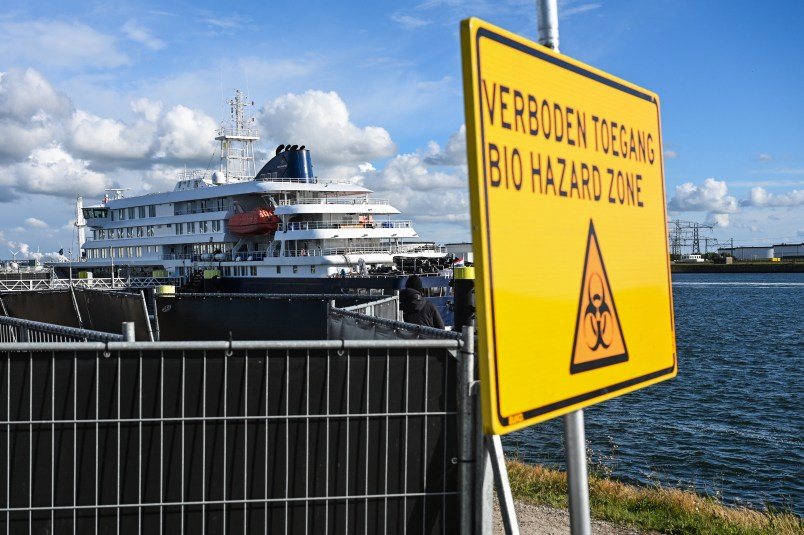
And the same process has been playing out with the recent hantavirus outbreak centered on the cruise ship MV Hondius. While passengers started showing symptoms in early April, reporting on the outbreak didn’t start until early May, by which time three passengers had died — the only fatalities so far. Given the severity of the epidemic on the ship and the public’s unfamiliarity with hantavirus, searches for the term spiked — the Google Trends number for “hantavirus” went from 0 on May 1 to 100 on May 6.
And those searchers would find much more in the way of conspiracy theories than actual reporting because there was little information to go on, but an enormous amount of fear that this would be another pandemic.
Reddit’s r/conspiracy board exploded with threads almost from the moment the first reports were published. “Hantavirus is purposefully being spread” declared one thread posted on May 6, claiming it was a plot to distract us from jet fuel shortages. Others posted the next day proclaimed “You Are Spreading Hantavirus” using numerology as proof the outbreak was a media-driven plot, and “Keep your eye on hantavirus.”
Reddit had so many hantavirus threads on May 6 and 7 that even that became a conspiracy theory to the user who posted “There are 9 posts (This makes 10) on the front page about the Hantavirus,” adding in the post “They are trying to get you guys to yap about the Hantavirus so it hopefully sticks. Not even my boomer relatives or coworkers know about it and if you talk about it the subject will be implanted in the conscious [sic] of the public and it will start sticking.”
The same speed applied to right-wing media and podcasts. Alex Jones didn’t mention hantavirus once on his Alex Jones Live episode on May 6. On May 7, it took him minutes to call the outbreak a “globalist WEF UN COVID 2.0 fear mongering operation” that would usher in new lockdowns and eventually economic collapse. At this point, it still wasn’t clear if anyone outside the ship had contracted the virus when the ship had docked. But rumors were flying that it was a “side effect of the COVID vaccine,” that it was a Democratic plot to steal the upcoming midterm elections, or that it was an Israeli false flag attack.
All of this is the exact same playbook as the early days of COVID-19, despite hantavirus being nowhere near as easy to spread as the coronavirus still is. The misinformation industry had months to hone its tactics and monetization vectors before the virus crashed into the U.S. in March 2020. When large-scale lockdowns began, the ground had been laid for a huge part of the American public to question what they were being told and believe their own research was more accurate and truthful.
The same sequence of events played out when the COVID vaccine was released about a year later: so many influencers had spent so much time seeding conspiracy theories about the shots that many conservatives simply refused to get them, making the pandemic worse and more lengthy. The conspiracy theories came long before there was anything to actually report, or for people to do. They got the vaccine myths before there was a vaccine.
The popularity of conspiracy theories during the first days of the outbreak is understandable to a certain degree. Any kind of global trauma becomes a petri dish for conspiracy theories as people try to make sense out of the scraps of information they’re getting, and real reporting runs headlong into personal biases. Whether it’s a new war, economic contagion, or pandemic, people want to know what’s happening and who’s responsible. When reporting and expertise are lacking, the desire for answers remains, and it has to be filled with something, preferably from a source you trust.
As faith in media institutions and medical experts is replaced by “doing your own research” and relying on instincts, the people with the loudest voices and most outrageous attention-seeking tactics are the ones who dominate the conversation. Many of these accounts excel at stoking fear and selling the cure for it. Indeed, the entire industry of false cures and worthless medical products that arose from COVID swung into action immediately. The same ineffective cocktail of ivermectin, zinc, and vitamin C that was sold as a cure for COVID was quickly shilled as a preventative for hantavirus. But the two viruses have completely different molecular structures, and there is no biologically plausible reason why the compound would work for both.
The spread of hantavirus conspiracy theories is complicated by several factors that weren’t in place during the early days of COVID. For one, the distrust laid down by years of COVID conspiracism hasn’t gone away. One 2024 survey from the University of Pennsylvania’s Annenberg Health & Risk Communication Institute showed a quarter of respondents believed the COVID vaccine had killed thousands of people, despite no evidence behind the idea whatsoever. And there is a vast network of influencers, quack physicians, pundits, and social media personalities all readily equipped to begin pushing out false claims the moment news breaks, many of whom made their reputations off the pandemic.
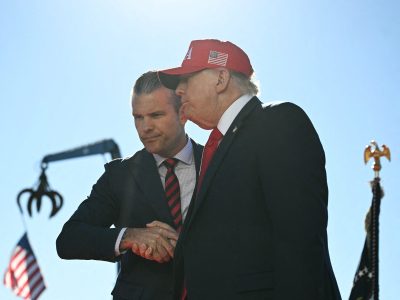
There is also the fact that while we have the same president now as we did in 2020, his second administration is vastly different and has gutted many of the public health agencies and procedures that were employed during the early days of COVID. Vaccine denialists and conspiracy theorists now hold prominent positions in the Trump cabinet, and it is undeniable that the country is less prepared for the potential of another large-scale outbreak.
Finally, the ability for influencers and trolls to create fake hantavirus images and videos is lightyears beyond where it was in 2020. Social media was instantly full of AI-generated images of the cruise ship, fake maps of new outbreaks, and new cases. Many are lifelike or convincing enough to spread quickly, and reach millions of people before being debunked. Now, a Plandemic style video could be created in hours and spread in days.
Still, hantavirus is not COVID-19. It is much more difficult to transmit and not actually a new virus. The outbreak appears to have been contained on the ship, and its remaining asymptomatic passengers are in quarantine. Sure enough, as it became clear that the hantavirus outbreak was under control, the conspiracy machine shifted its attention toward the growing Ebola outbreak in the Democratic Republic of Congo. News of the new outbreak was reported May 15, and it took less than a day for Ebola threads on r/conspiracy to start. A day later, the hugely popular conspiracy theory account ZeroHedge declared that “The WHO Drums Up Fear With Ebola After Hantavirus Scare Fails” and Alex Jones was calling it a staged pandemic.
As has become the norm, the conspiracy theories about the virus were traveling around the world at the speed of light, while the virus itself was contained in a distant corner of the world.
Correction: This article initially misstated the incubation period for hantavirus compared to COVID-19. TPM regrets the error.




Frist!
Is this article contagious? Nobody has commented but me.
It only has 16 views, as of 10pm est.
And charlatans on the internet making wild conspiracy pronouncements and in the next breath selling snake oil supplements, 5 gal buckets of “survival mac and cheese” and other tin foil accessories is sadly not new.
What’s with the poor fact-checking in this article? Andes hantavirus doesn’t have “a much shorter incubation period” than COVID, it has a much longer one (4 to 42 days, with a median of 18 days). (Neither is there clear evidence that it’s “much more difficult to transmit,” and indeed there’s some evidence against, but that’s at least not definite—but it would still be more appropriate to note that this is not definite.) With that kind of incubation period there’s also no way to know yet whether or not the outbreak will reach beyond the ship.
Ironic for an article about disinformation to also contain disinformation.
Unfortunately, the somewhat overblown media response to hantavirus may make people complacent to news of the much more serious threat of the current Ebola spread.