



The last time President Donald Trump lost an election, he fought back with a wild series of baseless legal challenges and protests that culminated in an assault on the U.S. Capitol. Since then, he has openly talked about his desire to cancel the upcoming midterms including declaring that “we shouldn’t even have an election.” And, after returning to office for his second term last year, Trump and his allies have made real efforts to target voting infrastructure by taking control of influential election offices, attempting to seize and purge voter rolls, and raiding Fulton County, Georgia’s election hub based on debunked conspiracy theories about the 2020 election.
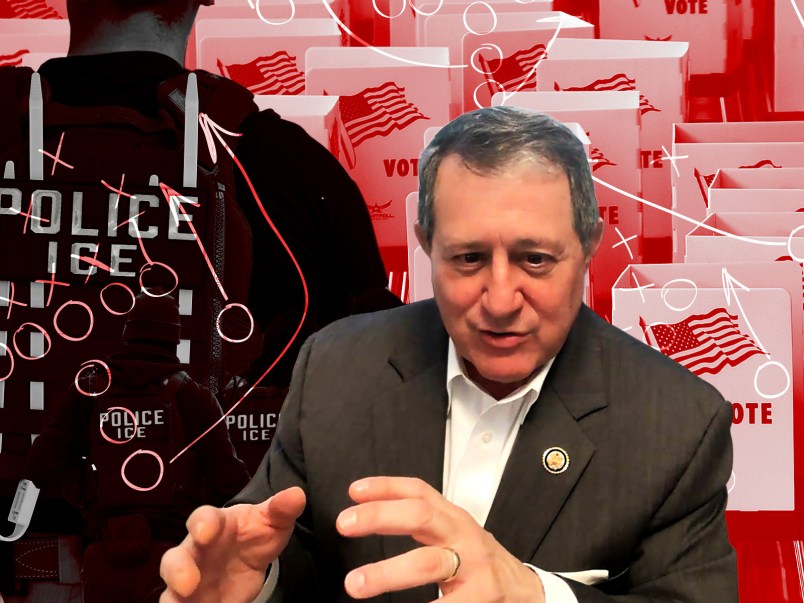
Faced with these unprecedented threats, House Democrats are mounting a counteroffensive. Rep. Joe Morelle (D-NY) — the top Democrat on the House Administration Committee, which is tasked with federal election oversight — is playing a leading role in that effort.
In an exclusive interview with Talking Points Memo, Morelle discussed his work running a congressional “security task force” for the upcoming election. That includes war-gaming the potential ways in which Trump could disrupt the proceedings with what Morelle described as “tabletop exercises” and “red team exercises.” Along with preparing for how the president and his allies might try to attack and disrupt the election process, Morelle and his task force are also working on a counteroffensive aimed at ensuring a free and fair vote.
The task force has identified “about 150 threats,” he said, adding, “So, each one of those we go through and we have sort of a matrix — what we think the likelihood is of this, whatever it is, happening, and then … what’s the damage that it could cause?”
“So, some things could be very low likelihood, but a high impact. Other things could be highly likely that they’ll happen, but we think are relatively low impact,” Morelle explained. “Then of course, what you want to do is figure out how do we prevent that from happening and then, if it does happen, how do we respond to it?”
Morelle discussed his work on war-gaming potential election disruption scenarios for the midterms and planning an aggressive response in a TPM Special Report podcast. You can watch the interview in full here. Our conversation, which took place earlier this month, is the most in-depth look thus far at House Democrats’ efforts to confront threats to the vote.
The task force includes members of the House Administration Committee — particularly Rep. Terri Sewell (D-AL), the top Democrat on the subcommittee on elections — and members of an Anti-Corruption and Democracy Reform Task Force that Morelle helped launch earlier this month. Morelle said the scenarios House Democrats on the task force are planning for include: intimidation by federal agents near polling places; misinformation being spread to voters; executive branch agencies trying to purge voter rolls or seize local election infrastructure; interference with state certification of congressional races; and even a potential floor fight on Jan. 3, 2027.
When the president says some of the things that he says, that sends off alerts.
Rep. Joe Morelle
The task force work essentially began in January 2023 when Rep. Hakeem Jeffries (D-NY) became the Democratic minority leader, according to Morelle. On the morning he ascended to that position, Jeffries called Morelle, who was first elected to Congress in 2018, and asked him to serve as the ranking member on the House Administration Committee. The pair knew each other from the New York State Assembly, where both previously served and Morelle was the majority leader.
“I honestly said two things in response: ‘One, Mr. Leader, I’ll do whatever you need me to do and I’m happy to fill and play whatever role you need me to play. Secondly, I’m not really sure what it does. So, while I’m happy to do it, and I’ll, you know, I’ll do it to the best of my abilities, I’m not really sure of the jurisdiction,’” Morelle recounted with a laugh.
The committee, he would learn, oversees day-to-day operations in the House. In that respect, it is similar to roles Morelle played in the New York legislature. However, the panel also has jurisdiction over federal elections and election law. As part of Morelle’s work on the committee, Jeffries, whose office did not respond to a request for comment on this story, wanted him to form the election task force. That work only heated up after Trump returned to office last year.
Since then, along with musing about somehow cancelling or trying to “nationalize” future elections, the president dove back into his baseless push to challenge his loss in a past race. Trump has expressed regrets about not ordering the National Guard to seize voting machines following his defeat in 2020. He also pardoned most of his supporters who were charged after storming the Capitol to protest that outcome. Trump also brought some of the election deniers who were involved in the slew of unsuccessful legal challenges to the 2020 results into his administration. With help from them and from other allies, the president has launched an investigation into election integrity that seems designed to resurrect debunked conspiracy theories and support measures to challenge or change election procedures going forward.
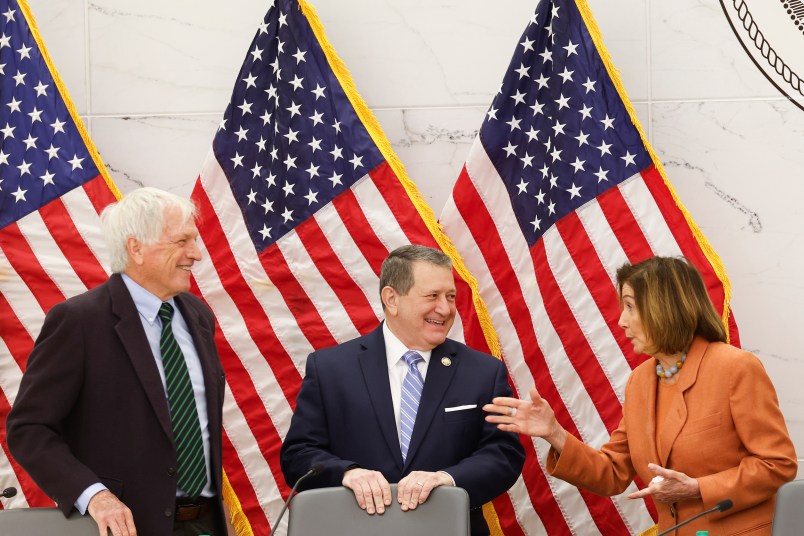
Trump has also backed legislation that would disenfranchise millions and issued an executive order that would only allow the Postal Service to mail ballots to voters identified as eligible by the Department of Homeland Security. That step, which many experts have described as blatantly unconstitutional and which faces legal challenges, could block eligible voters from being able to cast ballots. Trump officials have also used the heavy handed presence of ICE agents and National Guard troops in U.S. cities to bolster their election manipulation efforts. The Trump administration has pressured local leaders to turn over voting records with an eye toward purging the rolls, while offering to end the federal presence in their cities if they did so. In other states, the administration has sued to obtain sensitive voter data, though many of those legal efforts are failing. And, as the president’s allies muse about having ICE or other federal forces maintain an armed presence at the polls, top officials have refused to rule out the possibility.
White House spokeswoman Abigail Jackson responded to questions about the task force by reiterating the president’s support for legislation that would place new restrictions on voting. She also argued he has legal authority over the matter, a claim that has been consistently disputed by experts.
“President Trump is committed to ensuring that Americans have full confidence in the administration of elections, and that includes totally accurate and up-to-date voter rolls free of errors and unlawfully registered non-citizen voters. The Civil Rights Act, National Voting Rights Act, and Help America Vote Act all give the Department of Justice full authority to ensure states comply with federal election laws, which mandate accurate state voter rolls,” Jackson said, adding, “This campaign pledge from the President is why millions of Americans sent him back to the White House. The President has also urged Congress to pass the SAVE America Act and other legislative proposals that would establish a uniform standard of photo ID for voting, prohibit no-excuse mail-in voting, and end the practice of ballot harvesting. Noncitizens voting is a crime. Anyone breaking the law will be held accountable.”
Trump and other Republicans have consistently pointed to the prospect of noncitizen voting when advocating for the SAVE America Act and similarthis legislation. There has been little evidence of the phenomenon actually occuring. Experts describe the concept as a myth, noting the fact there are already various measures in place to prevent noncitizens from voting.
Amid these various indications of Trump’s desire to restrict voting and disrupt future elections, some experts and pundits have dismissed the threats posed by Trump as unrealistic and blatantly illegal. After all, the Constitution does not give the president authority over elections. Instead, it specifies that individual states shall determine “Times, Places and Manner” of elections, and leaves it to Congress — not the president — to “at any time by Law make or alter” state election administration rules. While Morelle repeatedly stressed that he has “every confidence” in local election officials and that he agrees Trump technically lacks the power to disrupt voting in many of the ways he might like, the congressman also said threats to elections cannot be dismissed when they are coming from inside the White House.
“We really started several months ago planning for the midterms. And again, you know, when the president says some of the things that he says, that sends off alerts. I mean, you cannot help but pay attention to someone who says, ‘I should have called out the National Guard,’” said Morelle. “That’s jarring. I mean, never before has a president of the United States said that, or … at one point he said, ‘I’m not even sure why we need an election. Why do we need a midterm election?’ Like, wow, no one ever says these things, but you can’t, by the same token, you can’t sleep on it.”
Congress is supposed to be engaging in oversight over the administration. When it abuses its powers and behaves improperly, that is a check on the abuse. So, it is actually a constitutional role of Congress to engage in oversight.
Wendy Weiser, Brennan Center
Morelle also argued the issue must be taken seriously because of Trump’s past willingness to engage in wild and questionably legal conduct — and because the president’s appointees so far this term have shown little interest in curbing his most dramatic impulses.
“On the one hand, I would laugh because it’s so insane, and the task I have is kind of crazy, but as much as I laugh and as much as I really think the guy is unhinged, he’s willing to act on it,” Morelle said of Trump. “And people have a hard time telling presidents no, especially when the only test to be in the administration is whether they’re loyal to him.”
Morelle is keeping some of the specifics of this “crazy” task force mission close to the vest to avoid tipping their hand — or even inspiring potential election disruption.
“I’m a little hesitant to talk about it,” he explained, adding, “I don’t want to give the Trump administration any more ideas, nor do I want to, you know, signal what we’re doing in response to it.”
However, Morelle did describe some of the task force’s activities — and the risks it has focused on — in his conversation with TPM. Along with identifying potential scenarios that could put the vote at risk, Morelle said House Democrats’ plans to confront those threats fall into a few broad categories.
“I start by thinking of it in four ways that we can have an impact: We legislate where we can, we’ll litigate where we need to, we will certainly agitate, and we will communicate with people,” Morelle said. “And I’d also add probably one other bucket that’s part of the others, which is educate.”
Morelle said the task force is currently working with “civil society groups,” “civil rights groups,” secretaries of state, and attorneys general. And in the interview with TPM, he outlined a few of the threats the committee is closely watching. He pointed to the potential spread of “misinformation” about voting procedures and deadlines as something the task force hopes can be addressed with public awareness campaigns. And Morelle noted the prospect of ICE or other armed federal agents at the polls could be confronted with legal challenges.
“There are federal laws which protect us from having federal agents at polling places. Those are not only acts of intimidation, which is against federal law, but there’s specific federal law against armed federal agents being at polling places,” Morelle said.
To that end, he said, the task force is working with legal groups to prepare materials that inform citizens and local leaders about what they should do if they see an armed federal presence at the polls. It is also preparing materials and briefs to aid in rapid fire legal challenges to any federal presence. Morelle also hopes that making it clear he and his allies are ready to aggressively fight this tactic — including pursuing potential criminal penalties for officials who are involved might have a “prophylactic” effect and prevent Trump or his allies from deploying agents in the first place. Overall, when it comes to election disruption, Morelle argued prevention is far more powerful than attempting to address an issue after some voters have potentially been turned away.
“We want to prevent anything, because once something happens, it’s hard to undo,” he said. “Even if it’s in the middle of an Election Day and you get a court order to now suddenly extend election hours or something … then you’re trying to reverse engineer a day that’s gone badly.”
Wendy Weiser is a veteran election expert who works as the vice president for democracy at the Brennan Center, a non-partisan law and policy organization within New York University. In a conversation with TPM, Weiser noted the current threat to the election system is “highly unusual.”
“It is unprecedented … that our own federal government has emerged as the principal threat to the administration of elections in America this year. That is shocking. I mean, that is conscience-shocking. This is upside down,” Weiser said.
She proceeded to rattle off a series of actions taken by Trump that have shaken the landscape.
“We have never before seen a president that has tried to meddle in election administration,” Weiser said, continuing, “That has tried to assert authority over state election procedures, that has tried to claim the authority to supervise the casting and counting of votes, that has called for his political party to take over the voting, and who has repeatedly tried to cast doubt on the validity of our election system, which is the backbone of our democracy and our strength as a country.”
While Weiser cast the threat as a severe one, she also noted there is also “good news.”
“The good news is the president actually has no power over election administration — all of the different efforts to interfere, all of the different threats are all unlawful. … The law’s on the side of free and fair elections. … That’s the very good news,” she said. “The bad news is that, of course, the federal government brings a lot of formidable powers and tools that they can use to wreck havoc and to intimidate.”
Weiser also takes heart in the preventative measures being taken by organizations and officials.
“The other good news is they have been telegraphing their plan relentlessly. Everything they’ve done, they’ve been announcing they’re going to do,” said Weiser. “So, groups like the Brennan Center, election officials, public officials, civic groups, have been able to prepare. Every one of these efforts has steps that can be taken to guard against the damage.”
Weiser said she is “glad to see” members of Congress involved and hopes there will be more responses from leaders across the political spectrum.
“It’s really important for all of our public leaders to step up and stand for free and fair elections,” said Weiser. “In this particular case, these are leaders of committees of jurisdiction. Congress is supposed to be engaging in oversight over the administration. When it abuses its powers and behaves improperly, that is a check on the abuse. So, it is actually a constitutional role of Congress to engage in oversight.”
The prospect of ICE at the polls isn’t the only area where Morelle’s task force is preparing material to aid potential legal challenges. Morelle said he and other members of Congress are also supporting the effort to fight Trump’s executive order, which directed DHS to create and share “State Citizenship Lists” with state election officials and attempts to significantly restrict voting by mail.
“There’s already four lawsuits on the president’s executive order. So we are involved with that. There will be an amicus brief from members about that executive order which I’m currently working on,” he explained.
Additionally, Morelle said task force members are doing all they can, from the minority, to oppose Trump-backed legislation that would disenfranchise millions of Americans and place new restrictions on voting, including the SAVE America Act and the Make Elections Great Again (MEGA) Act.
What happened in Hungary? What’s happened in Turkey? Those are people who got elected and then started basically making the objective of the party become the objective of the state. That we cannot have. And that’s what the president talks about doing all the time.”
Rep. Joe Morelle
Morelle also has his sights set on Jan. 3, 2027.
Most of Trump’s 2020 election interference efforts took place after voting had ended, as Trump and his allies pressured state officials to not certify his defeat. That push progressed to January 6, when rioters stormed the Capitol as Trump’s allies in the House sought to block the certification of President Biden’s victory.
Now, the concern is that Trump may attempt something analogous: pressuring state officials to not certify certain House elections. Others worry about Trump potentially bullying state officials to certify losing candidates. When the House meets to organize itself on Jan. 3, that could mean endless disputes: contests over who can take an oath to be sworn in; fights over who won what.
Morelle said he and his colleagues are gaming out how that might play out on the House floor.
“Say you had a dispute — an election that came down to three or four votes in a particular district, and there is a question about 20 people who voted on whether they were eligible, something like that. Someone could file a contest, and then contested elections go to the committee on House Administration, we would take evidence and make a determination on who we believe is rightfully supposed to be seated. And then the House presumably would ratify the decision by the committee,” Morelle said. “We think about that. Would someone try to play games with certification? Would folks try to in some way contest a significant number of elections?”
The nightmare scenario could be an echo of 2020, with disputes filed over the certification of individual congressional elections, leading to an endless fight over who really controls Congress. And, unlike 2020, this time Trump would have a DOJ staffed with cronies and federal election protection agencies stacked with “Stop the Steal” conspiracy theorists.
It’s an area of law and congressional procedure that largely relies on norms of good faith behavior to elide a rickety legal structure, Matt Glassman, a senior fellow at Georgetown’s Government Affairs Institute, told TPM.
On Jan. 3rd, the House Clerk does a roll call of members-elect based on state certificates of their election. Those on the roll then vote for a new Speaker, who then swears in the members of the new Congress.
If one side blocks certifications, Glassman said, the other could respond en masse. That would result in what he described as a form of mutually assured destruction: members-elect could be challenging each other’s right to take the oath, leaving it unclear who resolves the dispute.
“You’re disputing the dispute at that point, right? If I challenge your right to take the oath and you challenge my right to participate in the oath, the decision about whether we can take the oath now becomes something we may not get to participate in,” he said. “And if you do that with 60 people going both directions, it just becomes a paradox.”
Morelle suggested that if the Republicans toy with certificates, Democrats would respond aggressively.
“If the red states don’t want to hold elections and don’t want to send certificates of election, they’re gonna find they don’t have anybody on the roll call when we go to elect a speaker,” Morelle remarked.
While he is confident Democrats could fend off any attempts to interfere with the certification of races, Morelle said the easiest way to avoid this is for a blue wave election.
“My hope is — and this is really just to take me off the hook — that the election is a wave, and that Democrats have 230 seats, so there’s really no margin,” he said, adding that Trump would have more opportunity to interfere if the margins for the majority are thin: “If it ends up being 218, 217 — then you’re really into it.”
With the stark math and all of the different potential threats to the election, Morelle believes engaging with voters and encouraging participation is one of the task force’s most crucial roles. It is working with local officials to give House members a “toolkit” that outlines local procedures, deadlines, and issues in their districts to help them alert voters on how to register and get their ballots in early, he said.
“One of those strategies in my mind that helps us deal with intimidation at polls is, tell people, ‘vote early, mail in your ballot,’” Morelle said. “Do it as soon as you can. Check your registration status to make sure that the Department of Homeland Security hasn’t purged you or anybody else has tried to purge you and check your registration status in the first available moment. Mark your ballot, put it in the mail and send it in because they can’t intimidate people if they’re not there at the polling place.”
Overall, Morelle believes civic engagement and voter participation is crucial to confronting threats to democracy. He invoked the work of historian and author Heather Cox Richardson, who has written extensively about how apathy and disengagement have enabled the rise of fascism.
“One of the things that she reminds us in her book, Adolf Hitler didn’t come to power through a violent overthrow of the government. He came to power when he got 38 percent in a vote and became the German chancellor. He was elected and then slowly used the government to turn it on its own people. That is what we’re afraid of here,” Morelle said.
While stressing that he didn’t want to “make a comparison” directly with Nazism, Morelle noted “dictators often” initially rise through election victories before shutting off future competition.
“I’m just saying dictators often start — what happened in Hungary? What’s happened in Turkey? Those are people who got elected and then started basically making the objective of the party become the objective of the state,” explained Morelle, adding, “That we cannot have. And that’s what the president talks about doing all the time.”
With legal challenges and war games playing out behind the scenes, Morelle wants citizens to be aware of the current threats to the election system and not to dismiss them. To him, the most crucial aspect of that awareness is ensuring people have the information they need to cast their vote and do it ahead of schedule.
“We don’t want people to be alarmed, but we do want people to take the necessary precautions, right?” Morelle said, later adding, “At the end of the day, you cannot allow people to take your power away from you, which is what happens when they take away your vote. Your vote is your power. And we want to make sure every American is empowered.”



Thank you for this article. I thank all those working to defend elections. The Brennan Center is an excellent resource. This is a link to just one of their many tabs on their website. The writing is very good. They love America.
Oh yeah… And obligatory cat:
Where did you get a picture of my Fluffy??? I miss her soooooooo much…
thanks for this timely article. But don’t “mail in your ballot.” Do you really trust Trump’s Post Office to make sure your vote arrives on time? take it to a drop box instead.
In America you have to war game potential threats to a free and fair election from the President.
This is how low la Mancha de Meirda Naranja* has taken us. Nothing would suit him better than spending the rest of his execrable life his own personal Spandau.
*the Orange Shit Stain
This team had better be collecting evidence of every crime, because if we just “move on” and refuse to send anyone working to overthrow the government, from Vought to Trump in prison for the rest of their fucking lives, then they may as well just stop wasting their fucking time. What would be the point of protecting one election but let the fascists go free and give them the time to get it right next time. We either put these motherfuckers in prison, or we face the very real possibility of ending our lives in a Christo-fascist theocracy. You think I’m overdoing it? In the 17th century hundreds of thousands of people began life as freeman and died as slaves. Yes, it happens that quickly. Wake the fuck up.