











Yet another update on the running AI discussion.
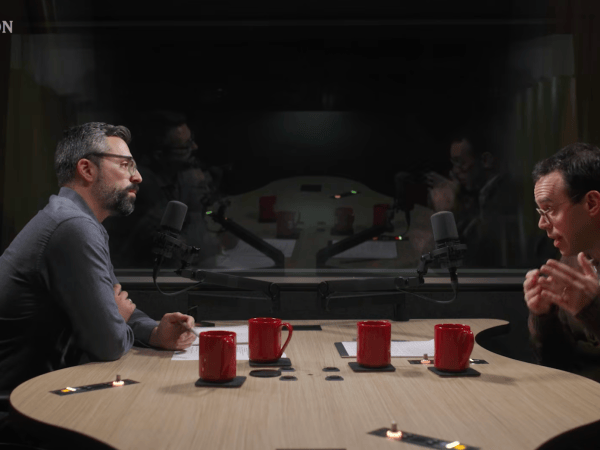
Here’s an interview Ezra Klein did with a guy named David Robinson. And that interview is about a piece Robinson, a member of the Open AI safety and safety documentation team, wrote in The Atlantic announcing his resignation from OpenAI — a decision and announcement he is self-aware enough to note has become something of a cliche. I found the interview interesting and edifying, largely on the front I mentioned earlier about finding reliable narrators.
Robinson isn’t a data scientist or a programmer. His role at OpenAI was essentially being the conduit between the teams building the LLMs and the knowledgable and interested public, specifically the people who write the documentation — what does this model do, how does it work, what are the possible safety risks. As is usually the case in any highly technical space, the people doing the work aren’t going to be writers and they’re usually not going to speak a language outsiders can necessarily understand. So you have people who are close enough to the work and the workers to understand what is happening and also able to speak human so they can communicate it to everyone else. Robinson led the team that served in that role.
Read More








This is an update to my post from Tuesday about the “existential risk” panic. A good friend of mine reached out to me and said, in so many words, yes, all that techno-babble is weird. But that doesn’t mean these risks aren’t real. And as I tried to make clear in my piece, I agree with that, at least to the extent that if Group A isn’t made up of reliable narrators, I’m not clear who the reliable narrators are. He pointed me to this recent report put out by the Rand Corporation, which is kind of the original think tank and has always been closely tied to the U.S. government and for lack of a better word the U.S. military-intelligence-industrial complex. It’s an interesting report. Or at least I found some interesting and I think sensible prescriptions in it once I got through the first half or two-thirds of it, which contained very Randian decision trees, definitions and a lot of what seemed like assumptions about existential risk and coexistence with AI that I didn’t understand. It eventually sets out a sensible if hard-to-execute approach which generally amounts to a safety-first regime of governing AI (make sure new things don’t endanger us before we build them or make them widely available) and, critically, open the decision-making up to public institutions with public accountability.