
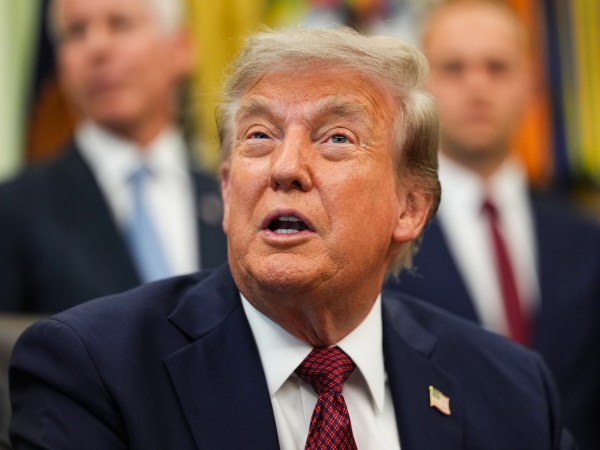

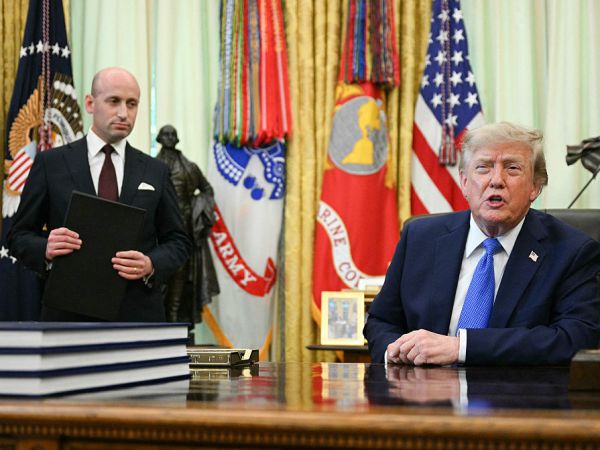
One of our great doctrines here in the Editors’ Blog is that all power is unitary. Lose or gain it in one place, and you lose or gain it in equal measure everywhere else. That’s catching up with Donald Trump. He got into the Iran War as a way to escape the emotionally crushing experience of declining popularity and power at home. But his ebbing power went with him to the Persian Gulf. And now it’s arrived in Israel, too. This was obscured for a while by the fact that the U.S. has almost unimaginable military power and a constitution which, as it has evolved if not how it was originally intended, puts almost no short-term limits on a president’s ability to wage war. But the two were always umbilically connected. It was the pain of bad news at home that spurred Trump to jump so recklessly into his Iran debacle. And it is the same unpopularity that has him so desperate to end high gas prices and inflation before the midterms. They’re all connected.
Trump has no poker face. To live in Trump’s era is not only to see his inner life but to be engulfed by it. It’s hard to think of a case in which the deciding player between warring powers has more clearly signaled his desperate desire to get out of a conflict on almost any terms. The Iranians have internet too. And they can see all of this. They have now issued a fresh set of new demands: end sanctions, leave the region, pay reparations, release frozen assets and more — in addition to make the Strait of Hormuz a permanent Iranian toll road. More or less total capitulation.

Can you do me a favor and subscribe to our new TPM YouTube channel? It’s a way to keep up on a lot of good stuff our team is producing, podcasts, discussions of breaking news, etc. But even if you never look at it again, just clicking and subscribing helps us build the channel. Just takes a second. Here’s the link.


We’re getting near our goal for this year’s Annual TPM Journalism Fund Drive. We call it a goal. It’s more like a necessity. But we’re getting close. This is very important. It’s a critical part of our whole system for keeping TPM strong and moving forward. Please take a moment right now and make a contribution if you’ve been considering it. We really need it now. Just click right here. Thank you.
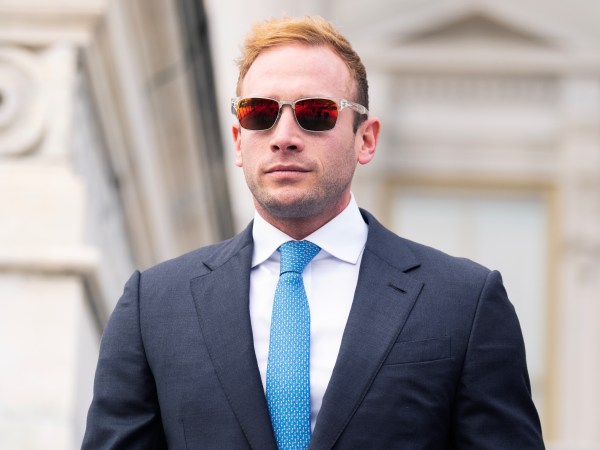
Very interesting piece. According to Politico a big reason Rep Andy Ogles, one of the slimiest and terrible members of the GOP House caucus, went down to defeat is that he was targeted with $2 million by a SuperPAC funded by solar industry execs. They didn’t hit him on renewables or environment policy. They used garden variety attacks about Ogles’ missed votes while playing up the conservative credentials of his primary challenger. Of course, climate and environment advocacy have close to no supporters in the contemporary GOP. But Invest in Tomorrow Coalition PAC is going after the much smaller group which goes out of its way to hurt the renewables industry in any way it can. It’s their third win this cycle.
A week ago I wrote about a new CNN poll and how it showed Democrats were pretty evenly divided over “left” vs “centrist” politics (should the Ds “move to the left” or “move to the center”) but very united over fight vs accommodation. So focus on the latter and agree to disagree on the former. I also noted however that these terms are wildly over-determined and mostly don’t mean very much. For this specific question, those polling results are still broadly valuable because those are the catchphrases by which a major intra-party debate is identified. So if that’s the language being used and people split roughly down the middle, you know it’s very divisive and no one side is going to beat the other. It’s a standoff, and what you really want going into a critical midterm is unity.
But it’s still important to remember how little these terms actually mean, and to consider the complexities and uncertainties they paper over. I was reminded of this when I saw Axios describing a Reuters poll which Mike Allen said showed that independents are “progressive-curious.” The evidence was that substantial majorities of independents support higher taxes on corporations and billionaires (64%) and government-provided health care for all Americans (60%). But 43% are less likely to vote for a candidate who identifies as “democratic socialist.”