This is kind of a secondary issue. But it’s important to focus on for a number of reasons. In the past, generally speaking, you could use formal communications and background briefings from federal law enforcement, within important parameters, as a guide to the state of an investigation. It’s a given that they would be sure to make you think that whoever they thought was guilty was definitely guilty. They could also be relied on to speak in the institutional interest of their department or agency. But for a general understanding of what an investigation had uncovered, you could learn a lot from it, so long as these critical points of skepticism were borne in mind. Federal law enforcement, certainly off the record, could also often provide some constraint or filter on what the administration was saying. My point isn’t to romanticize the old system. But it was, from a journalistic perspective, often a key source of information.
In the current environment I think it’s fair to say there’s really no reason to believe anything we’re hearing from federal law enforcement, either formally or on background to reporters.
Read More



This is a post about TPM. So that’s just as a heads-up. It’s not about the news of the moment. It’s inwardly looking about this website.
On Friday, I did an interview tied to our 25th anniversary celebration. It should be out closer to the date of the anniversary in mid-November. Toward the end of the conversation, the interviewer asked me if I thought TPM had stayed true to the vision I originally had for it and, if so, what that was. I began by referencing a point I’d made earlier in the interview which was that it couldn’t be true to the original vision because I didn’t have any clear sense of what I was trying to do at the beginning. But pretty quickly I did. When I thought about the site and its continuity I realized there are three things that make up TPM. Oddly, in the interview, I only mentioned two of them. I probably just lost my train of thought. It was toward the end of an hour-long interview. But I wanted to share with you what those three things are.
Read More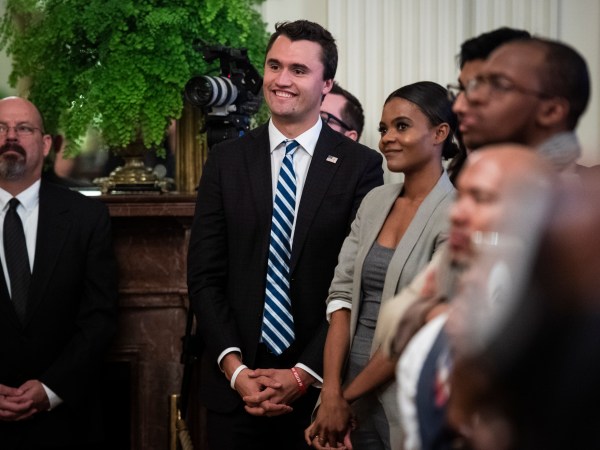


I’ve written several times over the last few days not only about the scourge of political violence which we must not only denounce but be genuinely against in every way. Notwithstanding my own personal inclination to say little of the dead for a respectful period, I want to note a particular dynamic that the right is creating in the reign of firing terror it’s unleashed in the aftermath of Kirk’s death. On X over the last few days, countless numbers of high-profile right-wing accounts’ feeds are made up almost entirely of screen grabs of random people’s reactions to Kirk’s murder and demands that they be fired from their jobs. In many cases the demands are heeded and then that fact is triumphantly posted as well.
Read More

I was thinking about this post this morning and then I saw someone reference it on Bluesky. It’s from July 2016 (“This Is Not the Natural State of Things“) and notes that not only is the world of the last 80 years not permanent or unchangeable. It’s not even the natural state of things. The world we all grew up in, from the late 1940s to some point in the last decade, was the product of very conscious and deliberate decisions made largely in the United States but also in the capitals of Europe. For all its many imperfections and discontents it was a period of prosperity and security essentially unrivaled in history.