

For years there’s been a running conversation in the United States about whether the country is heading towards a second Civil War. That conversation often stumbles on the fact that America’s profound divides today don’t line up on any clear regional lines, despite what the maps of presidential election results might seem to show. Divisions are at best intra-regional. So any kind of replay of the 1860s is highly unlikely. But of course plenty of civil wars either had no clear regional breakdown or at least don’t start with one — the Spanish Civil War, the Russian Civil War, the Chinese Civil War, the Syrian Civil War. Before going further I should note that as a general matter I’m a “no” on this question of “are we headed to a second American civil war?” But events yesterday and those of last month suggest the possibility of something more realistic and still ominous.
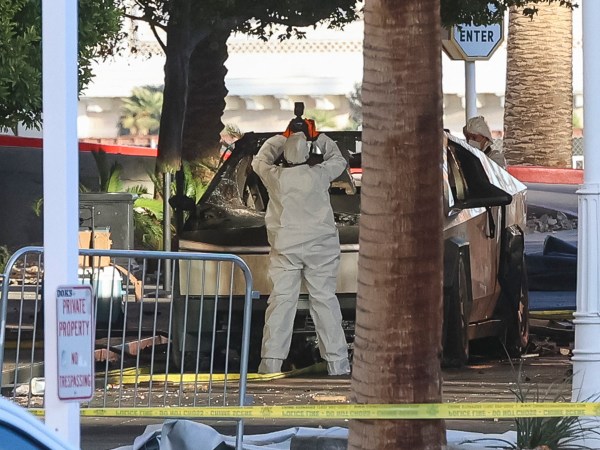
Let’s quickly review the details: yesterday in New Orleans we had what appears to be an ISIS-inspired lone wolf terrorist attack. The FBI is now discounting initial suspicions that others might be involved. Events like these happened with some frequency in the U.S. for a number of years. But there’s been some respite, more or less since the Pandemic. Then a Tesla Cybertruck exploded in front of a Trump building in Las Vegas. The driver was killed and the car appeared to be filled with high-powered fireworks and gas canisters. It’s still not clear what this incident was about. That’s not remotely how you’d build a car bomb if you wanted to injure anyone. But it certainly doesn’t seem like an accident either.





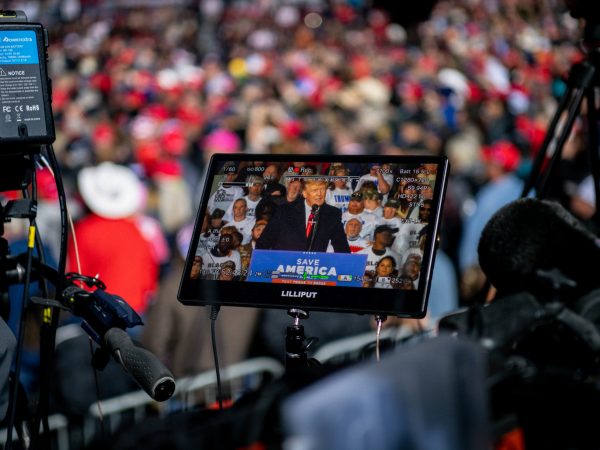
I wanted to flag this article to you. It’s a fascinating look at right-wing South Korean YouTubers and President Yoon’s recent attempt to impose martial law in the country, which ended with Yoon being impeached and removed from power. It matches with bits and pieces of what I’ve been able to pick up in the English language press in South Korea as well as from various commentators who write in English on social media.
One big takeaway is that South Korea is similarly awash in right-wing and left-wing YouTubers who have similarly either destabilized trust in traditional media or taken advantage of that lack of trust, depending on whether you’re on Team Chicken or Team Egg. The trajectory there seems more recent. A lot of it is over just the last two or three years, while in the U.S. these trends date back significantly further. But the most interesting detail is that this world seems to be a big part of the answer to a question that still looms over the whole attempted coup, which is: “what was President Yoon thinking?”
This isn’t the Cold War where you could either be fearing a communist takeover or exploit those fears as a justification for a coup. While South Korea’s democratic era only goes back to the late 1980s, it’s deeply entrenched. And while there was a protracted political crisis of sorts in the country, it really wasn’t one that anyone imagined leading to a replay of things that happened in the country in the 1960s of 1970s. And this isn’t some statement of naiveté: how the whole thing played out vindicates this perspective. The country’s reaction to the attempt can best be described as a widespread “What the fuck?” Like not even, “this won’t stand!” or “we’ll defend our democracy!”, though those were there too. The immediate reaction to Yoon’s move was as much bafflement as fear or anger. The whole thing was so crazy and out of left field that people struggled to understand what Yoon had even been thinking. That’s why the attempted coup played out as it did and why Yoon is currently out of power and looking at likely treason charges.