





I wanted to flag to your attention this post by John Ganz, someone who, if you’re not familiar with him, is well worth becoming familiar with. Ganz and I see the questions about Israel, the Palestinians and Zionism differently. Indeed I disagree with the title of the post I’m sending you to. But what is most important in writing, especially in commentary, is not that it be “right” but that it be illuminating. Reading what is “right” is often reading a more polished version of what we already think — the utility of which is limited. Ganz manages to approach these questions with insight as well as texture and elegance, no simple feat.
On that matter of disagreement, I want to note something about what I have written on this issue. If you read carefully, I seldom make positive arguments for any particular position or question on this topic. I tend to point up what I see as disconnects or inconsistencies in pat arguments and responses. This is partly temperamental. I don’t like making arguments or claims that aren’t packaged with strong and concrete defenses. It’s also because with all the internal media and imagery there’s a huge amount of what is going on that we simply don’t know. One such question is whether Israel’s retaliation in response to the October 7th massacres is justified.






I had a clarifying moment this early afternoon sharing notes with TPM Reader MH via email. This was about the situation in Israel/Palestine but more particularly how it is impacting both people’s views and politics in the United States. What I think has happened is that the events, which began with the Hamas massacres in southern Israel on October 7th and has continued with Israel’s merciless retaliation, has pushed the discussion among not just Democrats but everyone to the left of the 50 yard line of American politics from “should Israeli policy be different” to “should Israel exist.”
The first is fairly unifying. The second is profoundly divisive and, for a non-trivial chunk of the Democratic coalition, existential.
Read More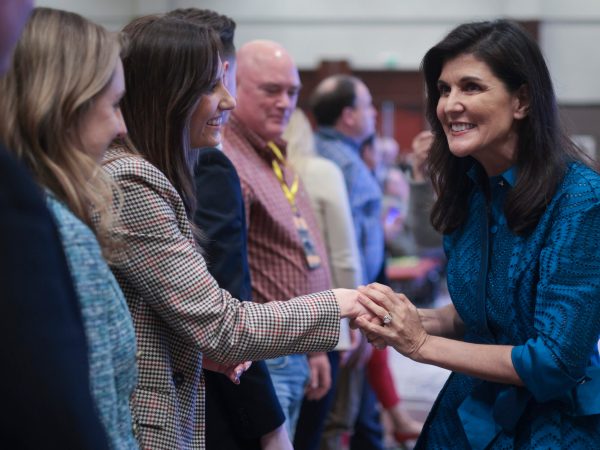

We’re back to another of those comical developments in the Republican Party and it’s relationship with its leader, Donald Trump. This morning the Koch Network announced it is supporting Nikki Haley, former South Carolina Governor and the latest forlorn hope of the billionaires who fund the GOP. She joins the heap of broken political bodies like Ron DeSantis, Glenn Youngkin and others. It raises the question: Does this completely not matter or mostly not matter? It may surprise you to learn that I’m only at “mostly doesn’t matter.” There may actually be some limited significance.
When I first started writing this post I decided to double check the latest polls. Haley is in the midst of a meteoric rise in pundit and GOP elite esteem. Lots of observers point either to polls or other evidence suggesting that if only Haley could win the nomination she’d be a lock to beat President Biden. (I actually doubt that’s true. But that’s a different story.) Candidly, I was surprised by just how much Trump is now crushing the entire GOP field. Trump is no longer sitting at about 50% or so in a big field, what by really any measure is more than enough to make him nominee. He’s now consistently 10% or 15% higher. He’s no longer at 50% support. He’s now usually 50% or more ahead of the second place vote getter.
What Haley is now accomplishing is being on the verge of surpassing the crumpled carcass of Gov. Ron DeSantis. Enough to win the small trinket, not the full stuffed animal at the fair.