




Yesterday Kate Riga and I held a TPM Newsmaker Briefing with Brendan McPhillips — a lot of very interesting details about how the campaign unfolded from the inside. Did it seem like a jump ball in the last week on the inside? Apparently so. What happened with that NBC interview? What about the debate? We get into all of that. If you’re a member and you weren’t able to join us live yesterday, you can watch the whole thing after the jump.


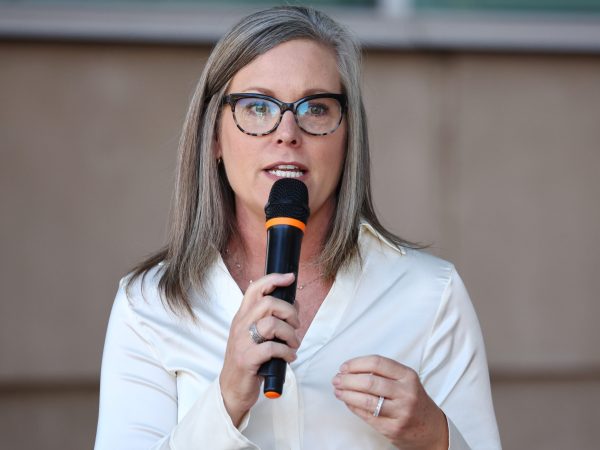
NBC News and now all the other networks have called the Arizona Governor’s race for Democrat Katie Hobbs. Hobbs defeats arch-election-denier Republican Kari Lake.
This was a pretty close race, according to the polls. But Lake was expected to win this one. She had been consistently running two or three points ahead of Hobbs. There was also a lot of Democratic backbiting about Hobbs’ decision to refuse to debate. That can make sense to stigmatize and deny legitimacy to an opponent, to say this person is too outside the norm for me to validate them by agreeing to debate.
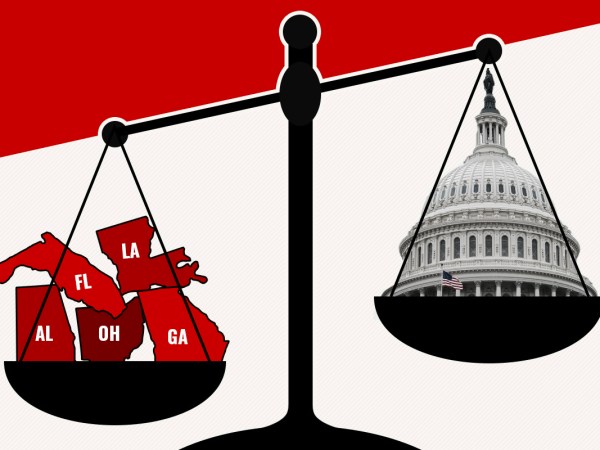
But that rings kind of hollow if that opponent who lacks legitimacy as a potential governor is actually beating you. Whatever the merits of that, Hobbs won. So either it was a good strategy or if it was a bad one then she got away with it. Democrats now hold the governorships in Pennsylvania, Michigan, Wisconsin and Arizona, four critical states going into 2024. Republicans hold them in Nevada and Georgia.
Kate Riga and I just did our TPM Newsmaker Briefing with Fetterman campaign manager Brendan McPhillips. We got a lot of fascinating details. One was that the idea that the race looked basically like a jump ball in the final week of the campaign wasn’t just an artifact of spending too much time refreshing 538. It looked really tight based on the internal polling and other data that the campaign had on the inside. Another was the difference between in-state media’s reaction to Fetterman’s debate performance and the national media’s. A fairly stark difference, as he described it. McPhillips also told us that focus group reactions to Fetterman’s stroke recovery tended to be pretty sympathetic, even to a degree which was perhaps a little surprising to his own campaign. So we got the sense that the Fetterman team was able to have relative confidence that Pennsylvania voters were seeing Fetterman’s stroke recovery through a more sympathetic prism than most in the national press assumed or shared.
If you’re a member and you didn’t get a chance to join us live, we’ll be published the video here tomorrow in the Editor’s Blog.