

One notable thing about a nakedly political Supreme Court majority is that a handful of legal academics, wholly cocooned from everyday life, aren’t terribly adept at politics. You can see this in the reaction to the Court’s effort to moonwalk Roe v Wade out of existence earlier this week. They seem to have thought they could throw up their hands and pretend they weren’t really doing anything or didn’t have any choice in the matter. Even John Roberts showed them the path toward overruling Roe through the normal review process some time next year. The majority both couldn’t hide its impatience to strike down Roe but also wanted to do so in the middle of the night – by not acting rather than acting – and that somehow no one would notice.
People noticed.


There’s a fairly anemic jobs report out today. The economy added 235,000 jobs in August. That’s just okay in normal times and pretty disappointing compared to recent months when closer to a million jobs were created. Commentary I’m seeing is pointing to a weaker than expected recovery. And that’s true as far as it goes. But what jumps out to me is that the dialog about the economy, the robustness and consistency of the recovery, hasn’t really caught up to the fact that COVID isn’t actually over.
Everything’s relative. We’re in a much better position than we were a year ago. Getting gravely ill from COVID is now mostly voluntary. But over 1500 people died in the US from COVID yesterday. Schools are opening but with various kinds of in-person mitigation. Most people I know are still not dining out or socializing or traveling in just the same way they did before the pandemic. More than a year ago, definitely. But not the same as two years ago. I’m not telling you anything more than we all know. My point is that we still appear to be operating in – or at least economics and politics talk seems to be operating in – this model of how quickly we’re bouncing back even though we’re still in it. So it’s not a huge surprise that we’re not bouncing back that quickly. Or that the bounce back is partial and limited.


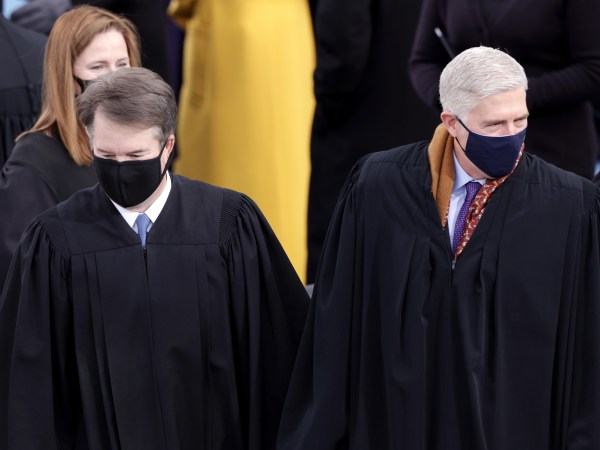




Sen. Ted Cruz (R-TX) put out a rather nebbishy statement today addressing the disastrous abortion ban that went into effect in his state this week, perhaps in part to cut through the curious silence on the part of GOP leadership on an issue it has campaigned on for decades.
So what’s Joe Manchin up to? I don’t know exactly. It certainly sounds like he is threatening to upend the Democrats entire legislative agenda and probably doom Biden’s presidency in a bid to dramatically scale back the budget reconciliation bill. How much lower than $3.5 trillion that means I have no idea. But it sounds like he means by a lot? Down to $2 trillion, $1.5 trillion? This is a positioning statement, like basically everything Manchin does, and subject to haggling and negotiation, like every position he stakes out. But certainly progressives will refuse to vote for his prized bipartisan mini-bill if this is what he plans to do. And they’ll be right to do so. There was a cross party deal: both factions support both bills. So no reconciliation bill, no bipartisan mini-bill. No nuthin.


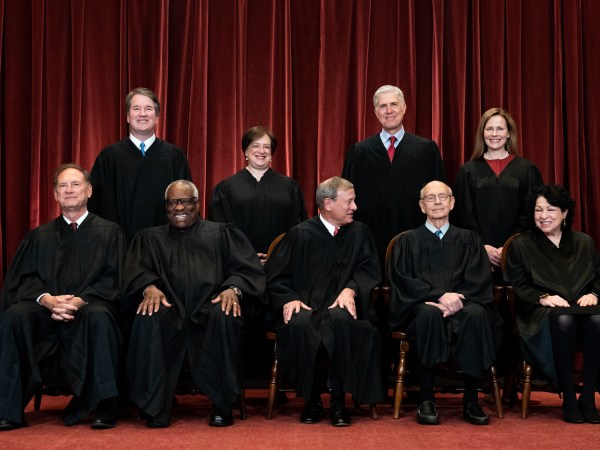
There’s nothing I can add to the overnight news out of the Supreme Court and Texas that we haven’t discussed previously: the Supreme Court is both corrupted and corrupt. One of the court’s nine members sits illegitimately. At least five of the current conservative majority have opted for a parodic version of what the judicial right once denounced as “judicial activism.” The conservative majority’s jurisprudence is a results-oriented approach abandoning both precedent and the more basic interpretive traditions to arrive at the preferred outcomes of either the Republican party or conservative ideology generally. A 6 to 3 Court doesn’t require extraordinary measures to overrule Roe. It seems prepped to do so next year in a case from Mississippi. The overnight decision – which rather overstates what the Court did – is another example of the injudicious exuberance to use the Court to remake the nation’s laws in ways that mere democracy will not allow.
The Court’s corrupt. The solution is to expand the number of justices on the high court to at least thirteen in order to break its power. I don’t know when this will be possible. We don’t know the future. But it is important to know what the correct and proper solution is.
For the immediate issue of reproductive rights the logical decision is to take the standing precedent of Roe and Casey and enact it into law right now. Given the aforementioned corruption I think it is quite likely the Court will strike such a law down, in whole or in part. If it does the Court will simply indict itself and I believe hasten the political will to break its power.
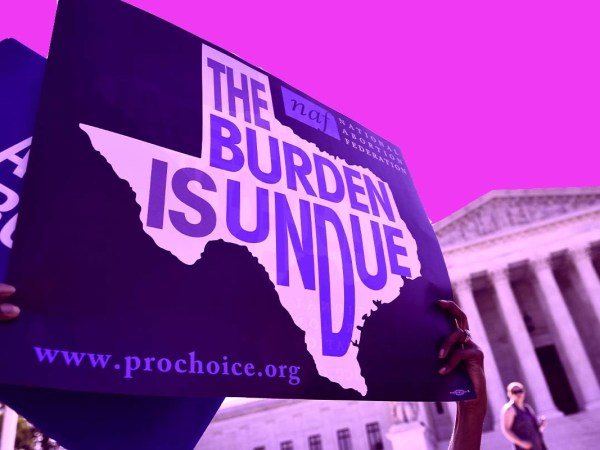

A new episode of The Josh Marshall Podcast is live! This week, Josh and Kate discuss the Supreme Court’s action on a new Texas abortion ban and the conclusion of the U.S. pullout from Afghanistan.
Watch below and email us your questions for next week’s episode.
You can listen to the new episode of The Josh Marshall Podcast here.