







I wanted to flag to your attention this opinion piece for Robert Kagan in The Washington Post. It is an overarching look at the US mission in Afghanistan. Fundamentally it is an apologia, a defense. But Kagan is significantly more sophisticated and thoughtful than most of the more editorially kinetic defenders of the mission. So even while I think he’s mostly wrong and often disingenuous about recounting these events in which he played an important role you can nonetheless learn a lot about the last twenty years from reading his account. Be cautious, though, because the real essence is the many things left out.
One thing that Kagan is right about is this: Many retrospectives say the US went into Afghanistan with hubris and optimism and a mission to build a Western style democracy in Afghanistan. That’s not true. The US invaded Afghanistan because we were scared and angry. Kagan focuses on the “scared.” “Angry” was just as much it. But it was in the nature of that moment that the two were so fused that it was difficult to distinguish them.




You could remove every ad on this page right now and help TPM while you’re at it. Please try out our free two-week trial of Prime Ad Free (AF). It’s simple. Free. No obligation. Just click here.
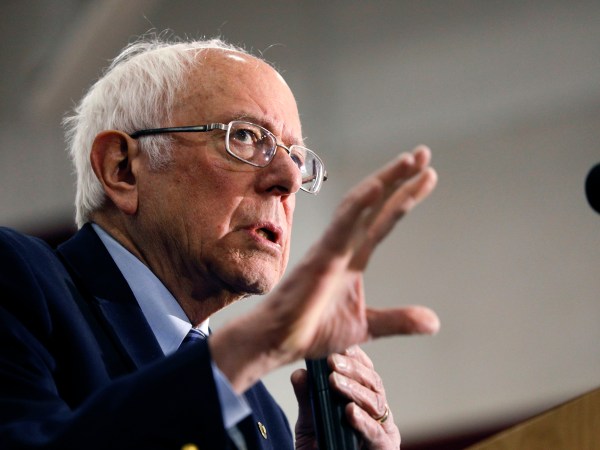

While Sen. Bernie Sanders’ (I-VT) centrist colleagues in the House try to flex their muscles ahead of the party’s $3.5 trillion reconciliation package reaching their chamber, Sanders is planning to spend the next few weeks selling the bold legislation to Americans — specifically, Republican voters in the Midwest.
I’ve been working on a piece about critiques of the American people’s lack of “strategic patience” as evidenced by our withdrawal from Afghanistan. Then I got this note from TPM Reader PT and thought, yes, that’s exactly what I was thinking.
I suspect that you, like me, have seen at least some commentators who argue that the Taliban “won” in Afghanistan by simply waiting us out, or that this demonstrates to other nations that consider an adversarial stance towards the US that we’re a paper tiger now that they know that even if we do take military action against them, all they have to do is wait for us to withdraw, which we inevitably will. I have a different perspective that I’d like to offer, starting with an analogy: