


Hello, and welcome back to the Franchise!
The news of the week is, of course, the Virginia referendum, a setback for the Trump administration in its flailing plan to secure control of the U.S. House through a relentless months-long gerrymandering blitz. On Tuesday, Virginia voters approved a Democratic-led redistricting proposal, giving the party four additional congressional seats.
That’s not the end of the story: There are numerous legal challenges against the Virginia referendum pending (which we will get more into shortly). But should Tuesday night’s outcome stick, Democrats will be poised to control all but one of Virginia’s 11 seats, significantly improving their chance to control the U.S. House in November.
Virginia Democrats argued for their redistricting push by framing it explicitly as a way to offset the damage of Trump’s larger gerrymandering assault in red states. In the summer of 2025, Trump began pressuring Republican-controlled state legislatures to redraw their congressional lines mid-cycle as a way to ensure that Republicans maintained control of the U.S. House in the midterm elections.
The gerrymandering crusade started with Texas and continued with North Carolina and Missouri, which all approved new, Republican-favoring maps.
California and Virginia Democrats soon put redistricting proposals before their states’ voters as a way to counter the damage in Texas and elsewhere.
Okay, so now to the legal challenges. On Wednesday, wasting no time at all, a Tazewell Circuit court judge (who had previously blocked the state from holding the referendum at all), temporarily blocked the state from certifying the results of this week’s election, describing the ballot language as “flagrantly misleading.”
Virginia Democratic Attorney General Jay Jones is appealing the decision.
“As I said last night, Virginia voters have spoken, and an activist judge should not have veto power over the People’s vote. We look forward to defending the outcome of last night’s election in court,” Jones told 7News.
There are a few other Republican-led legal challenges to the referendum currently in motion that have to be decided in state courts. The state’s Supreme Court, which blocked two earlier lower-court rulings that would have stopped the referendum, still has to weigh in on some of these challenges, and has said it would do so only if the constitutional amendment creating the new maps passed, which it now has. We will keep you posted on these developments. Stay tuned.
As always, there is a lot more to cover this week. Let’s dive in.
Yet Another Expansion of Trump’s “Election Fraud” Probe
As you may have heard by now, the Trump administration has expanded its baseless election probe into the Detroit area.
Assistant Attorney General for Civil Rights Harmeet Dhillon, in a letter last week to Wayne County Clerk Cathy Garrett, demanded 2024 ballots for, in her words, “the purpose of ensuring that the foregoing federal election laws were not violated in the November 2024 federal election.”
This (absurd) demand comes against the backdrop of the administration’s campaign to get sensitive voter data from at least 44 states and Washington, D.C., as well as its attempts to substantiate voter fraud conspiracy theories from elections past.
The DOJ recently seized 2020 voting records from Fulton County, Georgia, and obtained them from Maricopa County, Arizona, in an effort to find fraud of the sort that has repeatedly been confirmed not to exist. All three are populous counties in swing states and were hotbeds for election misinformation during recent elections, so it’s no surprise that the administration is targeting these places specifically.
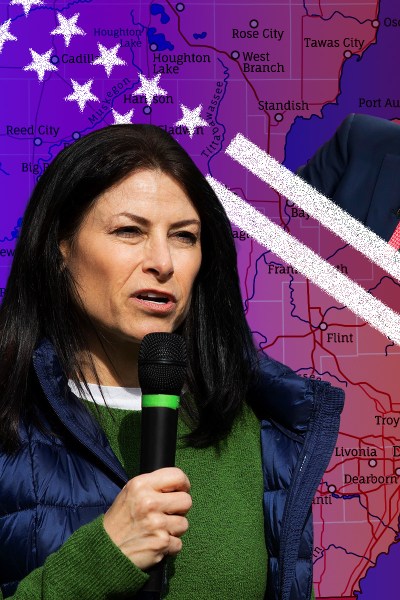
Michigan Attorney General Dana Nessel, Secretary of State Jocelyn Benson, and Gov. Gretchen Whitmer, all Democrats, have fired back at Dhillon, saying they would not acquiesce to pressure from the administration.
“If this administration wants to bring this circus to our state, my office is prepared to protect the people’s right to vote,” Nessel said on X this week.
“Michigan’s elections are safe and secure, and any attempt to suggest otherwise is an attempt to take away Michiganders’ constitutional right to vote,” Whitmer said in a statement. “This demand is a poorly disguised attempt to justify more doubt and misinformation about our elections as well as direct federal interference. Let’s keep working together to uphold the rule of law and protect voting rights.”
“We stand with Wayne County to ensure we protect the integrity of our elections and the privacy of Michigan voters,” Benson similarly said in a statement. “And we are ready to do the same with any other Michigan clerks DOJ threatens in this way. As always, we will follow the law and fight to protect our secure, accessible election system against this administration’s ongoing abuse of power.”
Virginia’s Voter Purge Program Is No More
After a yearslong legal battle, Virginia has agreed to end its voter purge program, which would have disenfranchised thousands.
Let’s back up a little because this saga begins more than a year ago.
In August of 2024, then-Gov. Glenn Youngkin (R) signed an executive order which allowed the removal of 6,000 supposed non-citizens from the voter rolls. In that order, he also announced a new program which would allow the state to continue to purge alleged non-citizens from the rolls.
Keep in mind that in 2024, the myth of non-citizens voting was a particular area of fixation for Republicans. (It continues to be, of course, but it loomed particularly large in the wake of Trump’s 2020 defeat.) Republican officeholders were regularly embracing false claims that non-citizens were voting en masse in elections. This wasn’t a thing then, and it’s not a thing now, but, of course, the claim continues to pop up periodically to perpetuate fear about the security of our election system.
In October 2024, days before the presidential election, the U.S. Supreme Court blocked a lower court ruling that said the program, which would have removed almost 1,600 voters from the rolls, violated the National Voter Registration Act, which prohibits voter cancellation or systematic list maintenance within 90 days of a federal election.
Aside from the district court finding that the program violated the NVRA, the program relied on unreliable and incomplete data from the Department of Motor Vehicles, which means that if implemented, it almost certainly would have disfranchised eligible voters.
This week a federal court approved a settlement to force the state to stop participating in this voter purge program. The state is once again forbidden from purging voters from the rolls within 90 days of an election.
Voting Rights Groups Sue DOJ For Its Voter Roll Seizure Campaign
Several voting rights groups filed a federal lawsuit against the DOJ this week, challenging its ongoing and unprecedented campaign to seize sensitive voter data from various states across the country. The lawsuit argues that the Trump administration is trying to establish a national voter list in advance of the midterm elections and that, in attempting to do so, it is violating the Constitution and multiple federal statutes, including federal data protection laws.
The DOJ has been trying for many months now to compel 44 states and Washington D.C. to hand over protected identifying voter data, including drivers license numbers and social security numbers.
Few states have complied with the demand, so, in turn, the DOJ has sued 30 states to compel them to do so. The administration has so far lost every case that has gone to court.
“Never before has a federal agency centralized this volume of Americans’ voting data in a single system of records. And in doing so, DOJ has flouted statutory safeguards designed to ensure transparency and public participation in the federal government’s collection of Americans’ personal information,” the lawsuit reads.
“DOJ is using this highly sensitive data to build — without statutory authorization — a sprawling new voter surveillance and purging apparatus that endangers millions of Americans’ fundamental voting and privacy rights,” the suit adds.
The lawsuit is asking the court to stop the administration’s campaign and order it to get rid of the data it already has from the states that have complied with the demand.
In Other Election News
Politico: The Clock Is Ticking to Secure the Midterms — Here’s What the Experts Say
Louisiana Illuminator: Louisiana sues federal officials for denying proof-of-citizenship change to voter form
PBS: Judge sides with Arizona election official in ruling that could affect midterms voting
CalMatters: Internal emails show how fringe groups fueled Sheriff Chad Bianco’s ballot seizure




“You [demagogues] are like the fishers for eels; in still waters they catch nothing, but if they thoroughly stir up the slime, their fishing is good; in the same way it’s only in troublous times that you line your pockets.” ― Aristophanes, The Knights
I am so sick and tired of the constant whining by the GOP every time things don’t go their way. They are the most graceless losers to ever see the light of day,
The easy sleep of someone who’s never been on the Internet:
Former police officer arrested for allegedly planning mass shooting at New Orleans festival
A former law enforcement officer who expressed interest in harming Black people was arrested Wednesday after authorities found information suggesting he planned a mass shooting at a festival in New Orleans, according to authorities.
Christopher Gillum, 45, from Chapel Hill, North Carolina, was taken into custody Wednesday evening at a hotel in Destin, Florida, where a handgun and about 200 rounds of ammunition were recovered from Gillum’s room, the Okaloosa County Sheriff’s Office said.