


Where Are We Two Months Out From the Election?
Following last night’s election in Massachusetts — which, in the most closely-watched race, saw Democratic Sen. Ed Markey demolish a primary challenge from the much younger Rep. Seth Moulton — we’re coming to the end of primary season and turning to the general election. New Hampshire, Rhode Island and Delaware still need to hold their nominating contests, which will happen over the next two weeks.
So, I wanted to take today to assess what kind of general election we’re likely to see, and examine some of the factors likely to shape it.
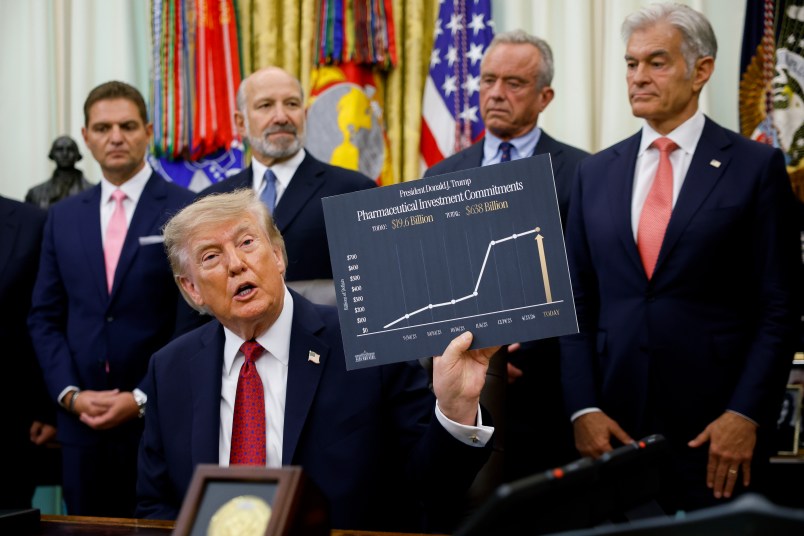
Hanging over all of it, of course, are Trump’s schemes to meddle in the results. His allied, right-wing influencers are, daily, cheering him on, pushing him to go further.
He’s already done quite a bit.
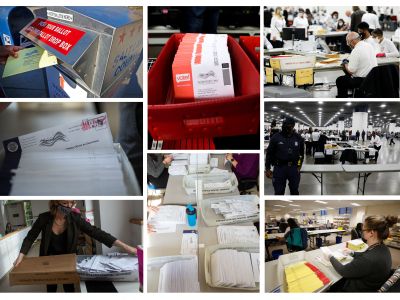
According to a postal service whistleblower who spoke to the Senate, that agency, scrambling to comply with Trump’s executive order on mail-in voting, is in the midst of implementing a brand new system for sending ballots to voters. “Catastrophic failure would be a feature rather than a bug,” the whistleblower’s lawyers wrote of this “slapdash” effort.
It will require state election officials to feed into two USPS systems lists of voters which must match up exactly. Each ballot will then get a bar code, which will then be matched with the lists and, again, must align exactly. The system as described creates huge opportunity for human and technical error — and, the whistleblower warned, an error on a single ballot could lead to a whole tranche being rejected. “As presently designed, if even one bar code on one single ballot in a bulk-mailing of 10,000 ballots fails to properly scan during the verification process, the entire batch is rejected and sent back to the state – effectively stopping the ballots from being mailed to voters,” the whistleblower complaint reads.
I asked the postal service about these claims, and a spokesperson did not contest them, instead saying that the agency would provide state officials “who voluntarily wish to familiarize themselves with the platform” with “tools, presentations, and other resources.”
It will be up to the Supreme Court whether this program moves forward. If it does, it stands to have a considerable impact on who votes, and how they do it.
Trump and his allies may well threaten the election in other ways, too. As I wrote yesterday, a federal law enforcement agency within Immigrations and Customs Enforcement, Homeland Security Investigations, is surging resources to root out “voter fraud,” seemingly seeking to substantiate the baseless Republican talking point that noncitizens are voting en masse. (To be clear, there is absolutely no evidence this is happening; each state has systems in place to match ballots to registered voters, and noncitizens are barred by law from registering to vote in federal elections. The extremely infrequent exceptions to this — such as a data error in New Jersey that erroneously allowed noncitizens to register, which was made public by the state — did not impact the outcome of any election.)
Worries persist that Trump administration officials will order ICE to the polls, declare a national emergency to meddle with the election outcome, or try to prevent Democrats from being seated when the next Congress is sworn in on January 3. Laws bar each of these things from happening, but the Stop the Steal campaign of 2020 and early 2021, culminating in but not ending with Jan. 6, teaches us not to underestimate how far Trump may go to create and exploit chaos, and administration officials avoid every chance they get to disabuse the public of its concerns about each of these scenarios.
Turning away from Trump and toward the electoral map, things look pretty good for Democrats (though, as Off Message’s Brian Beutler writes and I agree, the self-imposed, left-of-center, national media struggle session around streamer Hasan Piker is doing no one any favors; especially when one of the top Republican Senate candidates is seemingly surrounded by white nationalists and antisemites). “Republicans should brace themselves: The three most plausible outcomes are that it will be bad, really bad, or truly horrible,” Charlie Cook of Cook Political Report wrote yesterday.
On the other hand, theres the possibility our sense of things right now is overly favorable to Democrats — there’s the spectre of a polling error that has reared its head in recent elections, where Democrats come out of the summer with inflated numbers that draw closer to reality as Election Day approaches. There’s really no good way I’ve read about to figure out if that’s happening again.
There’s still room for a surprise, too, beyond Trump’s almost-inevitable effort to meddle. Though we’ve been told we’re on the cusp of a recession for years, the bond market is looking very ominous.
So anyway, those are the factors I — and, to some extent, TPM — have in mind as we look toward Election Day. It is my job to think and talk about this all day, but I’m just one person. You can email me at john@talkingpointsmemo.com, or, if you’re receiving this by email, simply hit reply. Let me know what you’re paying attention to.
A New Take on the 2026 Dynamic

The headline race in Massachusetts was a little unusual — an 80-year-old progressive incumbent versus a more moderate, younger challenger who had drawn the party base’s ire with his on again-off again criticism of trans athletes in sports. In races across the country this year we’ve seen younger, often more progressive challengers oust veteran incumbents, part of a push among the base for generational change. It seems that the Massachusetts voters who chose Markey over Moulton found that, in this case, the older man would best bring the fight to Trump
Here are some other takeaways from the primary.
- Two other older guys held on — Reps. Stephen Lynch and Richard Neal won the nomination against younger challengers.
- Dan Koh, a veteran of the Biden administration, won against a more progressive opponent, Tram Nguyen.
- This wasn’t on the ballot last night, but it will be in November: Massachusetts is looking to move to a top-two primary system. “It’s a terrible idea!” writes political scientist Jonathan Bernstein. “The whole idea behind it is to destroy the ability of political parties to nominate candidates as they see fit, which is pretty much the basis for party health.” After watching the stressful spectacle in California earlier this year, I find that argument convincing!
Tabs
- New York Mayor Zohran Mamdani and Governor Kathy Hochul said Tuesday that Trump reneged on a promise to restore $187 million in counterterrorism funding his administration had withheld. The city and state got $100 million, but is still awaiting the rest, officials said. “Release the $87 million you owe us. Because if you don’t release the counterterrorism funding, you’re betraying every family that lost someone on 9/11,” Hochul said at a press conference, per Politico.
- The Atlantic tracked down the family whose child’s death formed the basis of a political fight over measles in Pennsylvania. It’s a moving piece about an Amish family that has no idea about the political battle their child’s death set off, or even who the main participants — HHS Secretary RFK Jr. and Pennsylvania governor Josh Shapiro — are.
Man of the Hour
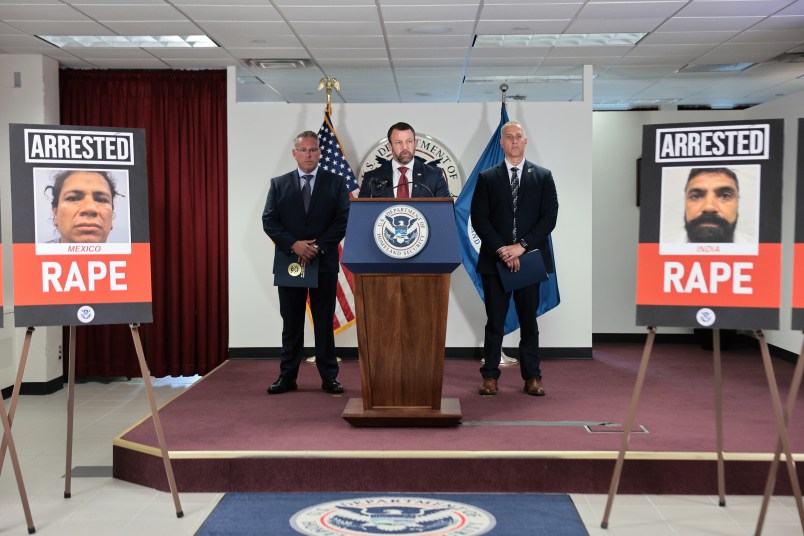
It’s Department of Homeland Security Secretary Markwayne Mullin, continuing to entertain the theoretical possibility there might be valid reasons to send ICE officers to the polls this November. (He describes a far-fetched scenario in which a noncitizen individual whom ICE is actively pursuing basically flees into a polling place, leaving officers with no choice but to follow him in: “The only reason why we would be at polling places is if there is a threat to that polling place or we’re serving a warrant on someone that we have been actively tracking down.”)
Are We at War?
New strikes on Iran — perhaps this is an attempt to “mow the lawn” — amid a global bond selloff that is fueled, in part, by the economic effects of the war. It comes as the Pentagon has completely cut off the press. “Frankly, they don’t even think they owe the public any information,” a reporter who works for a trade publication told the Columbia Journalism Review. “They’re hiding behind this idea that they can just say, ‘It’s a war, so we don’t have to communicate with you.’ This is often what we hear from public affairs officers.”
Correction: This post originally said we are three, not two months out from the election. How embarrassing. We are two months out.



Math is not my strong point, but I count 2 months not 3 until November.
I sense a possible disconnect in the way the Postal Service is handling this ballot issue. I don’t know about other states, but in Ohio, the state does not send out the mail-in ballots, the counties do. That would create 88 ways to screw up ballot distribution in just one state.
Markwayne Mullin is giving stupidity a bad name.
I’m from Massachusetts and voted for Markey. As far as I’m concerned Moulton is Republican lite. I haven’t trusted him since he was part of the attempted coup to oust Nancey Pelosi.
Not certain how I feel about the top two primary. I like the idea of removing the influence of parties from the electoral process. But I see this as an attempt by republicans to give themselves a chance to win seats in a state that is majorly democratic. Almost a reverse gerrymander.
If you don’t agree, please try to change my mind.