


This new piece in The Atlantic captures what the article’s author, Ron Brownstein, portrays as the current air of pessimism, or at least deep sobriety, within Democratic campaign and political operative circles. The general gist is that Harris hasn’t sealed the deal with voters, hasn’t closed the sale, whatever metaphor you choose. And the shortcoming is that in her effort to build up a positive brand, she hasn’t focused voters enough on the horrors of another Trump term. (Of course, one of the earlier lines was that it wasn’t enough to demonize Trump. There had to be a positive agenda. So that seems to have changed. Let’s not worry about that difference of opinion.) I’ve always been of the mind that the other guy being scary and dangerous is among the best reasons to vote. (In medicine, “first, do no harm” is seen as a pretty good general approach.) In any case, that’s the idea, the emerging argument, that Brownstein picked up among Democratic insiders. He fleshes this out by noting a series of recent polls showing voters have a rising perception of retrospective Trump approval — in other words, how they remember their approval of Trump’s presidency, even if their recollection of how they felt is actually substantially more positive than it was at the time. There’s no denying there is a small but measurable movement in the poll averages in Trump’s direction. But it’s less clear whether that tilt is picking up a real change in the situation on the ground. And I think it’s even less clear whether outside observers know why it’s happening, if indeed it is. Mostly people are reading their pre-existing assumptions and fears into bumpy data, the drivers of which are largely inscrutable.
Read More
The first I heard of this was late this afternoon from TPM Reader EM. But even after EM shared a link verifying the story, I still couldn’t quite believe it was true. But it really does seem to be true. Not only have reporters from multiple local news outlets covered it, they also have pretty clear photographic evidence. Mailers going out in support at least of Colorado’s GOP House candidates Gabe Evans and Jeff Hurd are being sent and paid for by the Arizona Republican Party.
So here’s the deal. The Colorado GOP appears to be under the control of one weird dude, Dave Williams, who spent most of the party’s money on preventing people from firing him as party chair, trying and failing to get himself nominated for a House seat and … oh yeah, one other thing, Lauren Boebert. Other Colorado Republicans tried to oust Williams but a judge ruled against them. El Paso Country District Judge Eric Bentley ruled against state party chair pretender Eli Bremer and confirmed that Williams is in fact the chair of the Colorado Republican Party. In any case, the point is that, for the moment, the Colorado GOP is basically the personal property of this guy Williams. Once that happened, Coloradans in at least two congressional districts started getting mailers for the local Republican candidate coming from the Arizona state Republican Party.
So what’s going on here? Why is the Arizona Republican Party, which has a contested Senate and presidential race, among others, funding campaigns in Colorado?
Here’s what appears to be happening.
Read More
I’ve had a few of you take me to task recently for writing so much about polls. I’ll take that under advisement, though I hear from many readers that they like those posts. The reality is that most political people follow polls closely, even if they wish they didn’t, and they want insights into just what they mean and how to interpret them. But today I want to discuss something a bit different, albeit still somewhat adjacent to polls. That is, what’s with the Democrats’ tendency to freak out, even in the face of the most limited kinds of disappointing news in polls or other markers of campaign performance?
We’ve discussed this phenomenon from various perspectives in recent years. But, big picture, why does this happen? Why do Democrats freak out like this?
Read More
I heard from a reader yesterday who saw one of the country’s top political journalists give a public presentation about the race. The run-down I got of that event crystallized something I’ve been giving a lot of thought to over the last few months and writing about here and there. At the elite level, political journalists have a basic contempt for Democrats. It’s not even very concealed because in a way it’s hardly even recognized as such. This continues to be the case despite the fact that most of the people I’m talking about, if they vote, probably vote for Democrats. They are socio-economically and culturally, if not always ideologically, the peers of Democrats. We often confuse cosmopolitan social values for liberalism. If anything, this basic pattern has become more the case over the last decade. These people are highly educated. They are affluent. They are the creatures of the major cities.
Are they secretly rooting for Donald Trump? Hardly. Or at least not in the great majority of the cases. Trump is a tiger on the savanna, dangerous but also fascinating and above all alien. That’s why the notorious rustbelt diner interview stories were and are such a staple. They’re safaris. It defines the coverage, and in ways seldom helpful for Democrats in electoral political terms.
Read More
Before social media foreign subversion became a staple of partisan politics in the U.S., the first journalist to write about the topic for a big mainstream audience was Adrian Chen. He published a piece in The New York Times Magazine in June 2015. It was called “The Agency” and it told the story of the Internet Research Agency, the government-linked Russian troll farm which would become a centerpiece of the 2016 U.S. presidential campaign and the long investigations that came after it. The IRA was owned by Yevgeny Prigozhin, the head of Wagner Group whose star would continue to rise over the next decade until he mounted an ill-fated rebellion against Moscow and later died “mysteriously” in a plane crash.
Read More
I wanted to share with you a few ideas, possible insights and caveats about campaign polls. These aren’t original to me in most cases, just some general points, observations, etc.
First, herding: Herding is the phenomenon in which even professional, good-faith polling operations start grouping together in the latter stages of a campaign because you don’t want to go too far out from the consensus numbers. Right now the national top lines have been between 2 and 4 points in Harris’ favor for a couple months. If you do a poll that gets you plus 10 in either direction, you’re going to think or are liable to think something’s wrong with your numbers. Somehow you’ve just got a spoiled set of data. Maybe you don’t release that poll or maybe you look again at the numbers and decide there are too few of some demographic subset and you re-weight that and it brings the topline back close to that 2-4 range.
It’s also the case that voter choice gets more settled in the final weeks of a campaign. So maybe the voters are actually herding themselves. There are lots of possibilities. But the general point here is that there are factors which can drive even ethical and professional pollsters in this herding direction.
Read More
The Beltway demand for Kamala Harris to do her ninth or twentieth “substantive” (read: mainstream media) interview is reaching a fever pitch in the wake of Harris’ campaign announcing a new round of podcasts, Late Night and influencer interviews coming right after her appearance on 60 Minutes. Yesterday’s Politico’s Playbook captured the mood in a newsletter edition that managed to be both catty and frivolous, a churning mix of trying to make “fetch” happen and “debate me, bro” hectoring. Yes, she’s doing a bunch of interviews, they announced. But sorry lady, they just ain’t the right ones …
Read More
Over the weekend a number of people, independently, asked me if there was some shift in the presidential campaign, some shift in the vibes, some shift in the polls, etc. When I asked what prompted the question, it was usually chalked up to a number of articles over the weekend suggesting that Harris’ campaign is faltering or stalled or somehow blowing the election. The through-line through most of this commentary is that Harris’ campaign is too risk-averse or not running an aggressive enough campaign, which she needs to be doing. There are actually some so-so polls out this morning. But we’ve been in a period of small ups and downs for about a month. So I wanted to tell you what I told these people.
Read More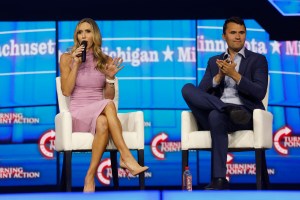
So, I’ve been trying to poke around further into my new favorite mystery: the GOP ground operation and what on earth is going on with it. So far, I’ve been looking back at articles I’d read on publication and rereading them, and at articles I had not read and reading them for the first time, for clues into the Trump/RNC ground game question that I’ve been discussing in recent posts. One thing I hadn’t fully grasped or perhaps had forgotten is that Turning Point USA and its chieftain Charlie Kirk had a big role in pushing for the ouster of Ronna McDaniel at the RNC. And the push seems to have been in significant measure about wanting to take over or play a bigger role in GOP field operations. So a substantial amount of the impetus for all of this appears to have originated with Turning Point and its campaign arm, Turning Point Action. So that’s one clue.
Read More
As I’ve explained, this issue of turnout operations and what we can glean about them is one of the things I’m most interested in finding out more about as we hurtle into the last 30 days of the campaign. None of the information I’ve found so far gives any definitive answers. I’m not even sure definitive answers are possible. But I’m going to pass on some interesting hints I’m finding. The thing you hear again and again about canvassing and ground operations is that you cannot just overwhelm it with money. Money is obviously critical. But you need a lot of institutional experience and time to make it work. With TV ads you really can overwhelm it with money. Get a billionaire with unlimited funds, cut some good ads and get them on TV. Done and done. One of the big factors operating now in swing states is that outside groups are paying 10 to 25 times the ad rates of campaigns. But still, unlimited money can help with that. Canvassing and field operating takes time and institutional experience.
Read More