



I went to my college reunion this weekend. It was cold and rainy at a time of the year when it’s supposed to be warm and sunny or at least warm and rainy. So I didn’t stay as long as I’d planned. But in the short time I was there, I had a number of people come up to me and say that I’d brought them around on the idea of Court reform. This was about things I’ve written here in the Editors’ Blog but, interestingly and somewhat surprisingly to me, far more of the comments were about things I’ve said on the podcast. This was of course gratifying to hear personally. But I note it here because it was an example, out in the wild if you will, of the broader pattern: a sea change in ideas, goals and judgments of the Supreme Court and the necessity of reform. I saw it at this elite university reunion. I’m seeing more and more examples of it within the legal academy – at least the beginnings of it. And perhaps most importantly we’re seeing discussion about it from elected members of Congress.


I want to share with you a letter from fellow TPM Reader DA. He makes a point I fully agree with but didn’t make clear enough in yesterday’s post. I fully agree there is such a thing as legal expertise. I’ve made that clear in my actions over a couple decades by paying for some of the very best (and priciest) legal counsel — mostly though not exclusively on 1st Amendment and libel law. It of course goes beyond this. Law, in its largest scope, is a complex set of rules and practices that we as a society have agreed on — sometimes explicitly, usually implicitly — to govern ourselves by and through which we resolve the countless range of disputes — civil and criminal — that arise among us. But it is in the nature of any specialized and professionalized craft to cast a penumbra of authority beyond its actual area of expertise.


If you’re not a regular listener to our podcast, I hope you’ll listen to the episode that will come out later this afternoon. It was, I think, a particularly good episode, in large part because we had such critical issues to discuss: Callais, the wave of emergency redistrictings across the southern tier of the old Confederacy and what seems to be a sea-change moment on Supreme Court reform among establishment Democrats. I want to expand today on some points about Supreme Court reform, offering some of the historical background for this present moment.
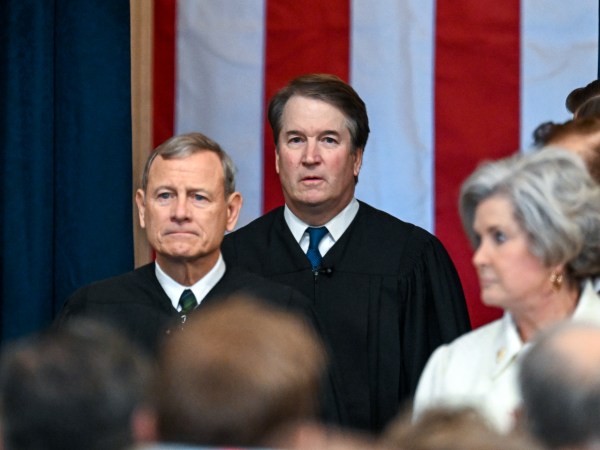
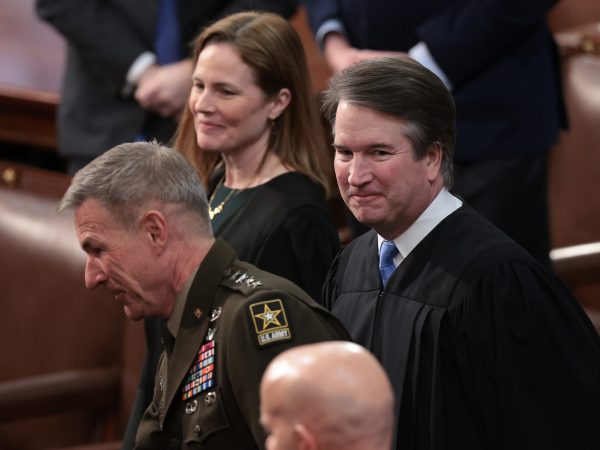
Every current member of the Supreme Court comes out of what we might call the elite academic-judicial nexus, which is to say they’ve been law professors at elite universities and judges in the federal judiciary. I believe this applies to all the current justices. It didn’t used to be this way. It used to be relatively common to have justices who had never served as judges before and had never been law professors. Frequently they were ex-politicians. Famously, William Howard Taft was an ex-president when he became chief justice. Earl Warren was a popular Republican governor of California who had never served as a judge until president Eisenhower nominated him as chief justice. If you go further back, many justices never even went to law school, though this was more a matter of the evolution of legal education. The last non-law school justice was James F. Byrnes. (In earlier history, you generally learned the law as a kind of apprentice and then passed the bar to practice.) There was a brief boomlet of chatter when Bill Clinton was elected that he should or would try to re-inject this “politician on the Court” tradition back into the system. Of course that didn’t happen. The idea has scarcely been entertained since.
Some of the most consequential and trust-shattering Supreme Court decisions of late have been ones that could have been predicted decades ago. Certainly that’s the case with the Dobbs decision. Callais doesn’t have quite as long a history, in terms of attempts to overturn the precedent. But certainly it’s been in the cards for at least a decade. Still, it’s some of the smaller decisions that tell us just who and what this corrupt court is. Kate Riga notes one of them here: Conservatives on the Supreme Court have previously invoked the “Purcell principle” to rule that a change couldn’t be made to districts on the “eve” of an election. Now it’s fine to do so in states like Louisiana and Alabama where primary elections are actually already underway and tens of thousands of cast ballots must be invalidated.
The message is simple: there are no rules. Only power. It reminds me of my hand tool woodworking shop. There are a big selection of tools. And it’s just a matter of what helps the GOP and the Court in that particular moment. In a way it’s clarifying. Even helpful.