





One of the key arguments for a great power — other than the great power itself wanting to be one — is that they act as a guarantor of stability and the status quo. That is far from the only public or global good. And a great power will ensure that status quo on its own terms and mostly to its own advantage. But if you have any acquaintance with history, you know you can do a lot worse than relative peace and the status quo. Trump’s Iran War has been a bracing illustration of all these realities. Once the great power starts letting things break, those breakages can start multiplying very fast. Eventually you’ll find a new equilibrium, of course. But eventually can take a long time. And again, even a passing acquaintance with history tells us that things can suck without end for extended periods of time.
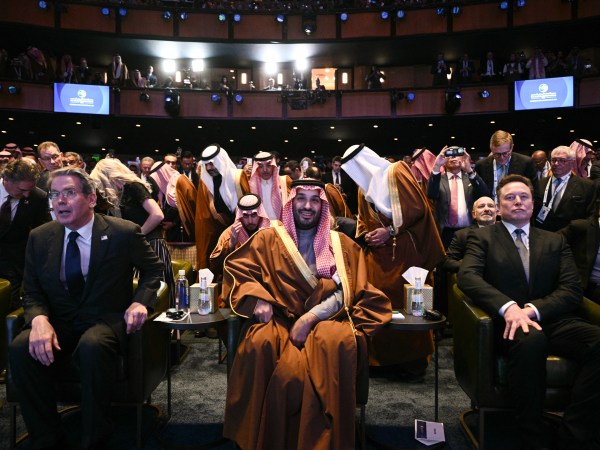
There’s an interesting New York Times piece from over the weekend that illustrates all these things. We know the outline. But it provides new details. As a knock-on effect of the U.S. war with Iran, the ongoing battle between Saudi Arabia and the Houthi rebel government in Yemen has again become hot. In recent weeks, the Houthis have partly cut off Saudi Arabia’s other path to the ocean. Put simply, the Saudis can export oil through the Strait of Hormuz or the Red Sea. The former has been mostly closed for months. Now the Houthis are in de facto or near control of the second. That’s a big crisis for the Saudis. This is part of the larger U.S.-Iran battle because the Houthis are clients of Iran. And Iran’s core strategy has been to create enough pain for the U.S.’s regional allies that they will force the U.S. to end the war. Remember, each time the U.S. attacks Iran, they respond by attacking the various Gulf emirates.




Over the last week, there have been a number of examples popping up on social media of Republicans, often very conservative Republicans in red states, removing President Trump from their campaign websites. It’s not terribly conspicuous. It usually amounts to taking an “endorsed by Trump!” button down and replacing it with some other innocuous tagline, or taking Trump out of a campaign biography. It’s very different from attacking Trump or doing anything publicly. But it still speaks volumes about the political moment, one in which Trump and everything about him if not everything he stands for is politically toxic, even in very conservative states and districts.
It allows us to look a bit over the horizon. What we see won’t surprise us. We probably know it already if we think about it. But it’s worth thinking about. If the midterms go more or less as expected, a lot of Republicans are going to be really, really pissed at Donald Trump. No, I’m not predicting some anti-Trump rebellion or reversion to the pre-Trump GOP. But it will be more than the standard disgruntlement after a bad election cycle. Because a Democratic wave won’t just be the expected thermostatic sloshing back and forth of modern politics. We’re still in a deeply sour public mood in which incumbents are always in some level of trouble. But in this case, Trump has taken step after step almost inviting a major backlash. The tariffs, the disastrous Iran War and resultant high fuel prices, the late fourth quarter trade war with Canada.
As a general matter, people who write about or strategize about politics greatly overestimate our collective ability to shape how an election will play out, the extent to which clever ideas can pivot the course of an election in any new direction. We’re more small sailboats on a big ocean than some kind of latter-day Neptune actually changing the waves or the wind. But, all that said, Trump may have handed a unique card for Democrats to play against Republican candidates, especially those bordering Canada, which include key states like Michigan, Alaska, and Maine, as well as states with strong trade dependencies like Iowa and Ohio. This part requires little explanation. Heading into an ugly midterm cycle with one damaging and needless war underway, it boggles the mind that he thinks it’s a good idea to start a trade war with America’s second-largest trading partner. Trade wars raise prices; and the cost of living is the largest single issue in the election.
But there’s an additional dimension to the politics.

There’s been a blizzard of commentary about the breakdown of U.S.-Canadian trade talks. Friend of TPM Paul Krugman has a good rundown of just how dependent the U.S. is on key Canadian exports — oil, lumber, hydropower electricity in addition to many other commodities. Of course, the U.S. is a net exporter of oil. But that’s in aggregate. As Paul explains, the details aren’t that simple. The upper Midwest gets most of its oil from Canada while a lot of oil produced in Texas, Louisiana and the Gulf Coast gets exported. These patterns could only be changed over many years and then at great expense. There are similar embedded dependencies on lumber and electricity. Then there are things like potash (for agriculture and some industrial production) where the U.S. gets almost all of its supply from Canada.
Of course, so far this is all hypothetical. Canada isn’t pulling these levers. The U.S. is conspicuously avoiding placing tariffs on these supplies on which it has a critical dependence. But that only highlights U.S. vulnerability. Nothing is stopping Canada from pulling those levers as Trump’s trade war of whim heats up.
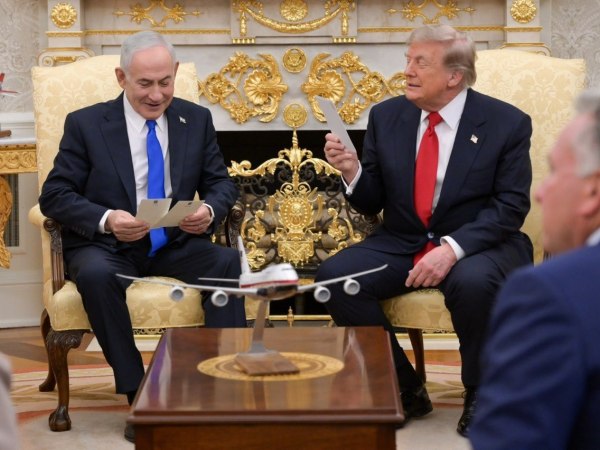
A follow up to last night’s post on Mike Huckabee, now U.S. Ambassador to Israel. Axios reports that Donald Trump is pretty conspicuously declining to endorse Benjamin Netanyahu for Israel’s October election. I would be remiss I didn’t explicitly note that it is unprecedented and outrageous that a U.S. president is even considering a formal endorsement in the election of an allied country. They’ve often had preferences of course. But we used to have respect for the internal affairs of foreign governments, especially allied ones. In any case, we don’t now. And here we are.
This appears to be part of Trump’s deliberate move away from Israel and the closely related annoyance that Israel continues to complicate his other priorities, which are one part conventional geopolitics and one part corrupt deals with various Gulf States. But there’s another factor Axios points to which we’re familiar with from the U.S. endorsement game. Netanyahu’s polls look bad. And Trump doesn’t want to back a loser.