

Top results for "lab"
I had a couple conversations today which turned on the role of private equity in today’s economy and the importance of business models that align with a company’s purpose. Both of them were relevant to our soon to be completed drive for the TPM Journalism Fund. In the new episode of the TPM Social Club podcast Joe Ragazzo and TPM head of product Derick Dirmaier talk about the impact of private equity on sports. This involves caricatures of course but I think of Venture Capital and Private Equity as sort of twin players, often with perverse and deleterious effects on the lives of companies, the first on the ascent of the rocket, the second on the descent. Both have had deeply negative impacts on the news and journalism industry. In both cases that’s because scale and market dominance don’t play the same role in the news business as they do for social media or the production of widgets and many other kinds of business. Most require being rooted in the lives of particular communities, often geographical communities, or having a more than transactional relationship with an audience.
Read More

We’re now flooded with articles about the threat of AI. Here’s another one from the Times op-ed page by a tech journalist, Stephen Witt, who’s written a history of Nvidia, the chip maker powering a lot of the AI boom. Witt describes a few possible approaches to legal intervention. Interestingly, he points to Sen. Bernie Sanders (I-VT) and Rep. Greg Casar (D-TX) as two legislators pitching new laws to get in control of the situation. Casar has a quote that captures it all and illustrates how absent “externalities” are to anything about how we regulate tech: “If the A.I. companies understood that their products have to be safe before they can advance, then they will make the kinds of investments that we need.” Of course, having two left-wing legislators from the party which isn’t even in power as the two guys on the case doesn’t inspire a lot of confidence that anything is going to happen any time soon.
Read MoreLet us say that TPM Readers are almost unimaginably over-represented in the country’s colleges and universities, and perhaps even more so in the research arms, which are of course primarily in the sciences and medical research fields. So we’re getting quite a lot of you writing in with various details and context for this new NIH directive that went into effect overnight which drastically reduces federal support for university research arms and academic medical centers. I’m going to be publishing more of them but I wanted to start with this one from TPM Reader RM …
Read More


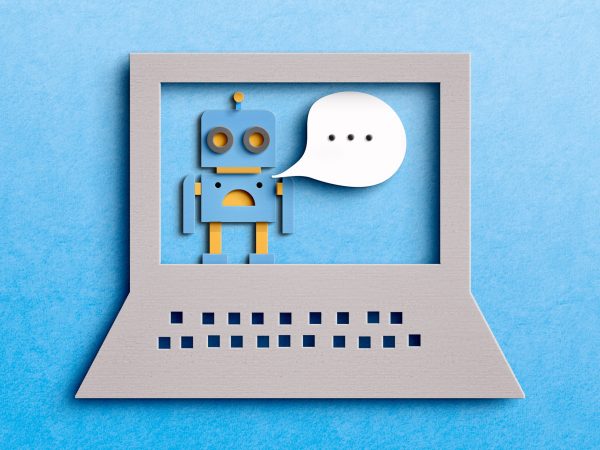


You’ve probably seen these reports of an employee of the AI company Anthropic who quit his job and issued a warning on X that suggested AI could, in next few years, escape control and lead to the extinction of humanity. These sound like not just wild but science fiction-type claims. And they’ve lurked around frontier AI labs for years. It’s one of the many weirdnesses of the AI world and those who lead it. The basic pitch: AI is awesome. We need to built it as quickly as possible. Also it might lead to human extinction. Quite an attractive offer! There’s always been a strong sense among many observers that these claims or suggestions or warnings are part of the AI hype machine itself, albeit of a kind of contradictory or paradoxical variety.
But this warning by the ex-Anthropic employee, Jacob Coxon, seems different and is unquestionably being reacted to very differently. That’s the one part of this that is new and real – the reaction to this warning/comment etc is much bigger and operating in the tech, financial and general media. Wired has a good interview with him here. (I think you can read it as a free article if you haven’t read other Wired articles this month.) The gist is that Coxon says it’s imperative to create a regulatory structure, or at least an ad-hoc agreement that can slow the competition between OpenAI and Anthropic, the two most advanced AI engines and research entities. (The inflection point people are focusing on is something called “recursive self-improvement,” which is when this generation of AI model builds the next one.) The problem is that you really need an agreement that brings China into some common framework too. Because they’re in this same hunt, running these same risks, even though I think the common consensus is that Chinese companies are running at least somewhat behind the most advanced U.S. companies. China’s strength has been building models which are only a bit behind the U.S. models but at dramatically lowest costs.
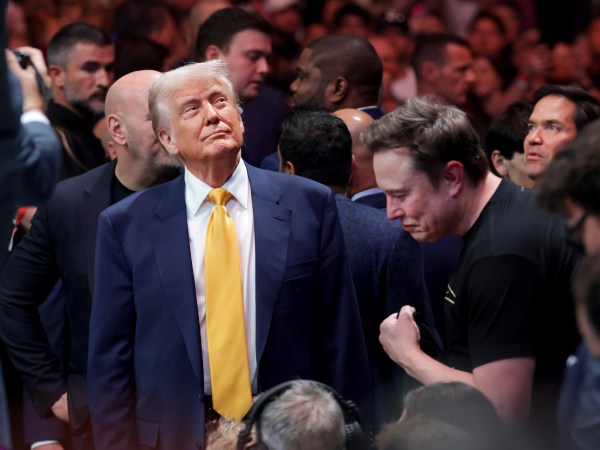

The Post has a good piece up about all the hidden ways the Trump White House is trying to break different parts of the government — through non-payment of grants (different from cancelations), arbitrary limits on purchase authority, etc. They note something very similar to the funds-ghosting I’ve reported on at the National Institutes of Health, only here with the EPA.
Here’s the key passage that TPM Reader SS flagged to my attention …
Read MoreMajor news out of NIH tonight, which I’m told will have a dramatic impact on all academic medical centers and research universities generally. Anyone familiar with the sciences knows that scientists bring in grant money for various research projects and the grant money is split between the grantee, who might be a researcher or a lab, etc., and the host institution. So the hospital or the university, etc. The new directive limits what goes to the institution for “indirect costs” to 15%. I don’t know this area well enough to get into the precise rationales for which rates make the most sense in the abstract. But that’s not really the point. From what I can tell this directive slashes the kind of government research funding available to these institution by as much as 60% or 70%. (I want to keep those percentages vague because this isn’t my area but I think that captures at least the general scale.) So these sound like huge budget shortfalls for academic research institutions, academic medical centers and so forth. And this is above and beyond the “freezes” that are still mostly in effect, albeit in many cases unofficially.
Read More
Like many others, I continue to be baffled and unnerved at how transactions that seem like definitional signs of a bubble (or possibly even fraud) are now so thoroughly baked into the very structure of the AI industry. This morning, Semafor’s Liz Hoffman starts a piece with this overview: “OpenAI and Anthropic need to borrow a lot of money but they don’t have profits or a track record of creditworthiness. Enter Jensen Huang.”
It goes on from there …
Read More