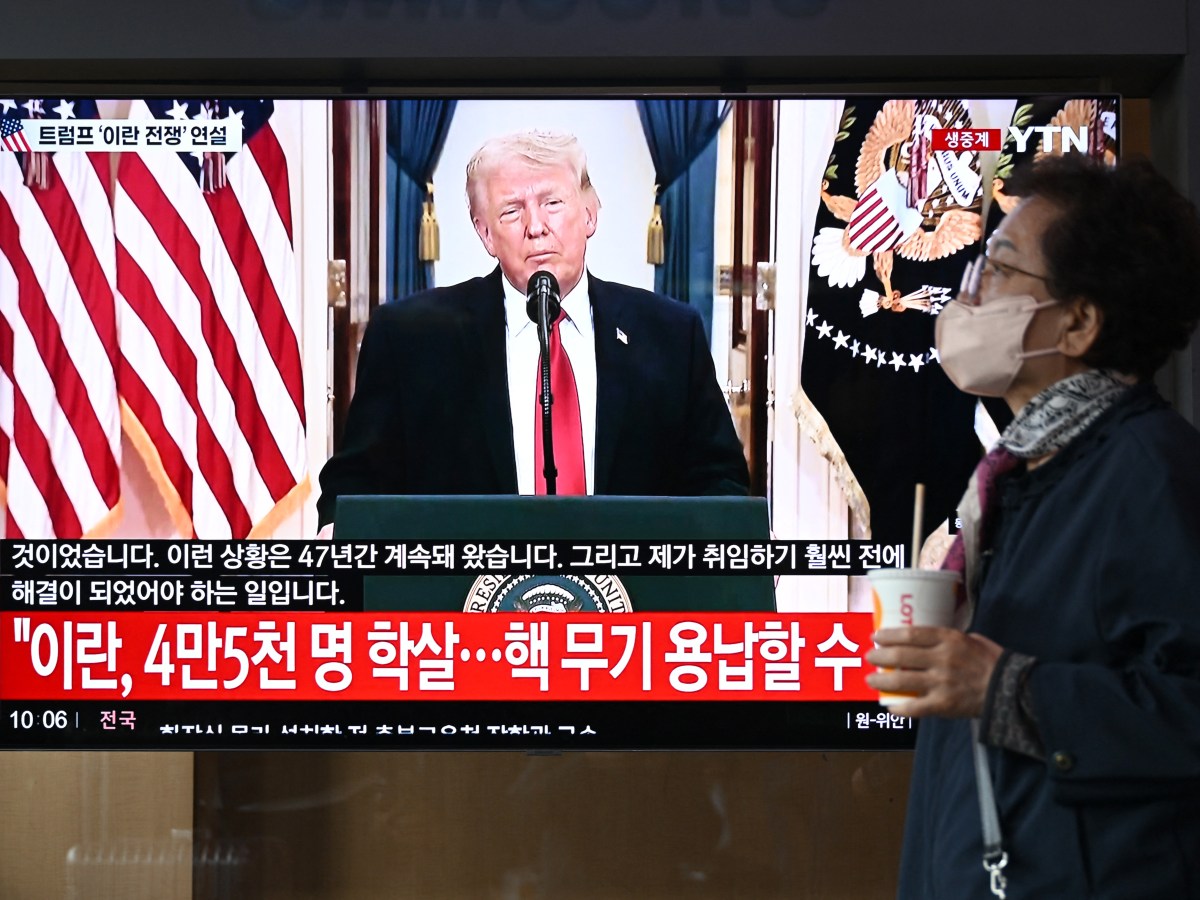
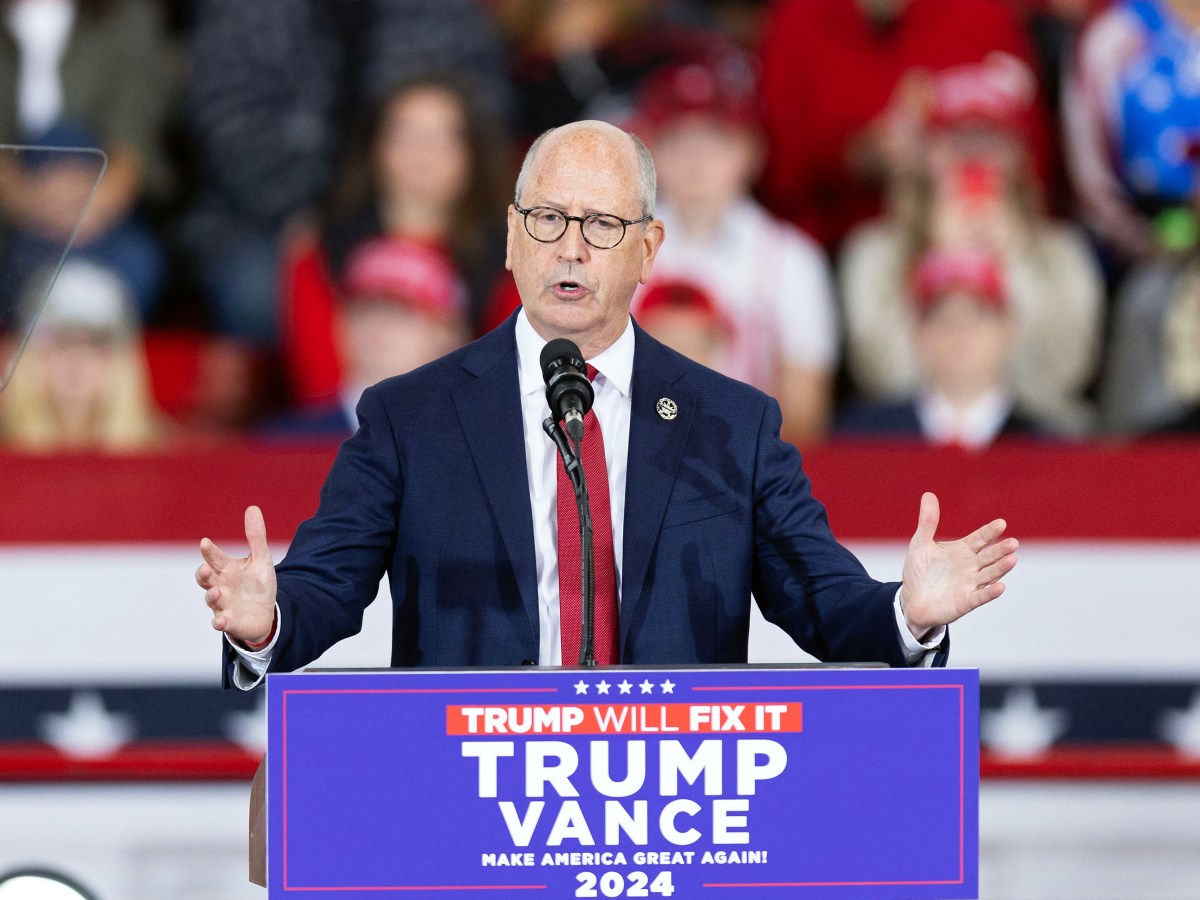
I think any press person who watched President Trump’s Iran cheer-up session speech on truth serum would have to concede that this was a speech he shouldn’t have given. He meandered. He looked bad and worn out. He had the requisite moments when his degenerate inner monologue creeps into the open: he said that free passage through the Strait of Hormuz is something for importer countries in Asia to deal with, that they should “grab and cherish” the Strait, as though it were some underage beauty pageant contestant Trump was hungering to assault. What is important is that in political and public opinion terms, there was nothing new or newsworthy in this speech. They didn’t even manage to accomplish this in the narrow and cynical sense of saying anything new that could be a fresh point of public discussion. It was a rambling set of unconvincing excuses no one with any real concern or anxiety about this war (the only real audience) would find convincing. Why are you complaining, he asks? This war hasn’t gone on nearly as long as World War II! LOL.
Market watchers will note that the White House is now solidifying around the idea that free passage through the Strait of Hormuz is something importer countries will have to deal with, that it’s not America’s problem. That means that the economic fallout of the war will continue unabated. This is simply rebranding a massive strategic defeat as some kind of America First swagger. Of course, oil markets are global. It doesn’t really matter if the US makes as much oil as it consumes. That’s not how prices work.
In Emine Yücel’s newly published piece about Republicans’ struggles to pass a slew of President Trump’s priorities ahead of the midterms, she digs in on a crucial point that isn’t getting much discussion.
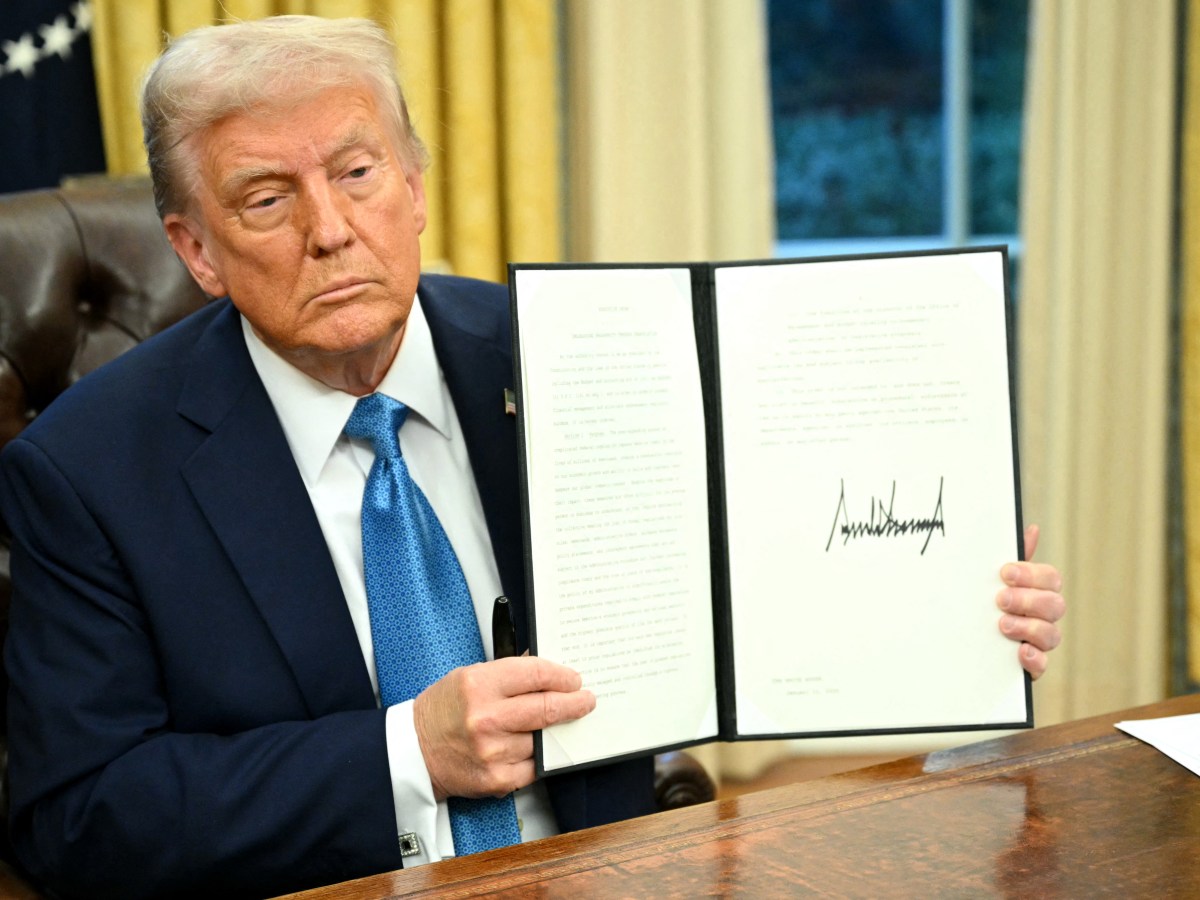
Since Republican leadership doesn’t want to nuke the filibuster in order to pass the SAVE America Act, they’re doing a big performance for Trump to show that they’ll figure out a way to cram all of his needs — passing the voter suppression bill and funding for his war in Iran as well as the Department of Homeland Security — into another reconciliation package. Republicans are considering paying for the new spending for Trump’s latest fixations with more cuts to the social safety net, under the guise of rooting out rampant “fraud,” the admin’s favorite new word.
But in many cases, they won’t actually have to do that. The new spending is just a convenient excuse for more cuts.
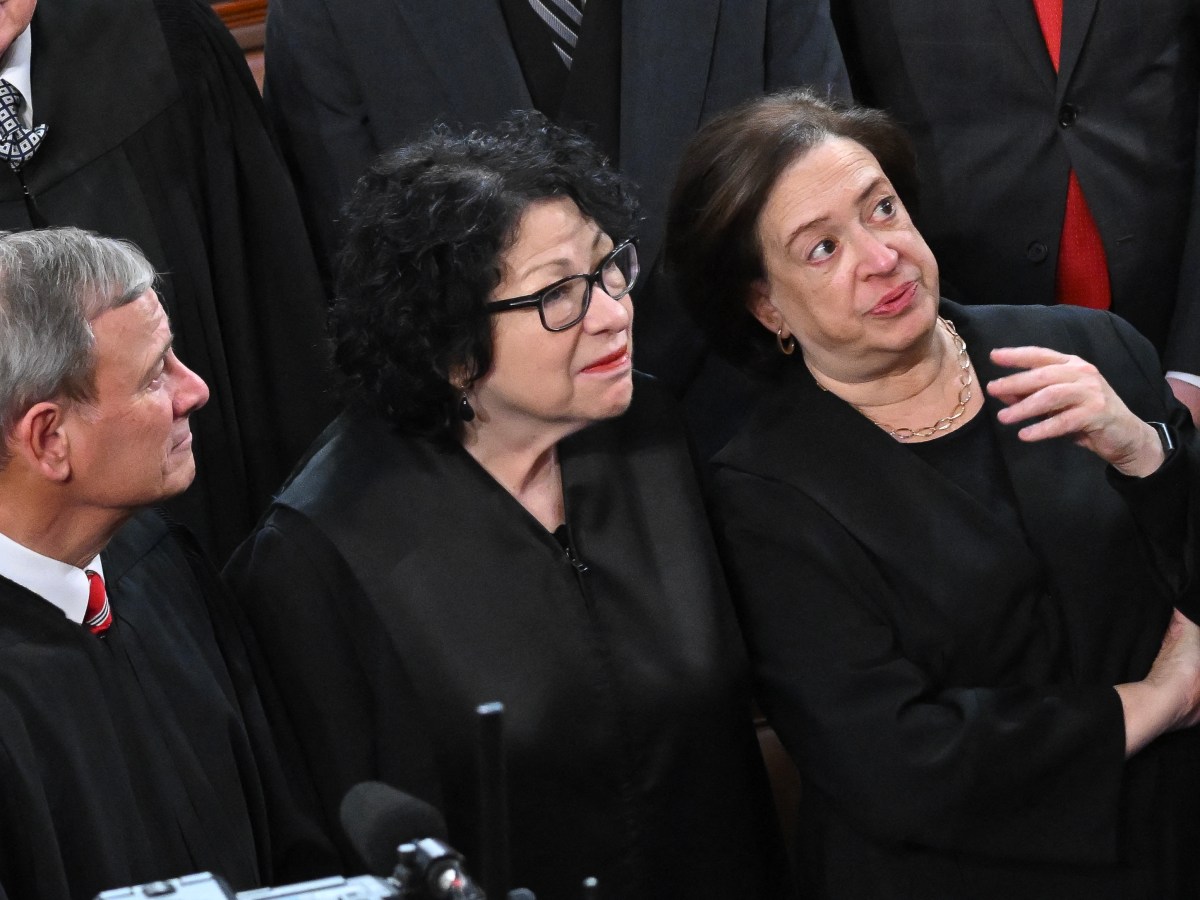
I wanted to share a few thoughts on questions that are adjacent to or secondary to the question the Supreme Court is being asked to take up today. That is in part because there is no real question they are being asked to take up. Birthright citizenship is the clear, intended and unambiguous law of the federal constitution. One might as well try to complicate or question whether the document creates a federal senate. I have a source and correspondent deep in the federal bureaucracy who is a specialist in a specific area of federal law unrelated to citizenship questions. And even though I’ve written about this at length over the years, by going over developments in this person’s area of law with them it has helped me crystalize my own thinking on this topic.
Almost all of these cases are based on the premise, the working assumption of what can the U.S. Constitution mean if we decide that words or established phrases simply have no meaning and we can simply piece the individual words together based on their dictionary definitions? So what does the “law of the land” mean? Well, it turns out some guy who did a stint at the Claremont Institute and now teaches at some obscure law school has written a bracing new law review article about how it refers to agricultural policy, mineral and agricultural rights and the law of farming. That’s really where we are here.
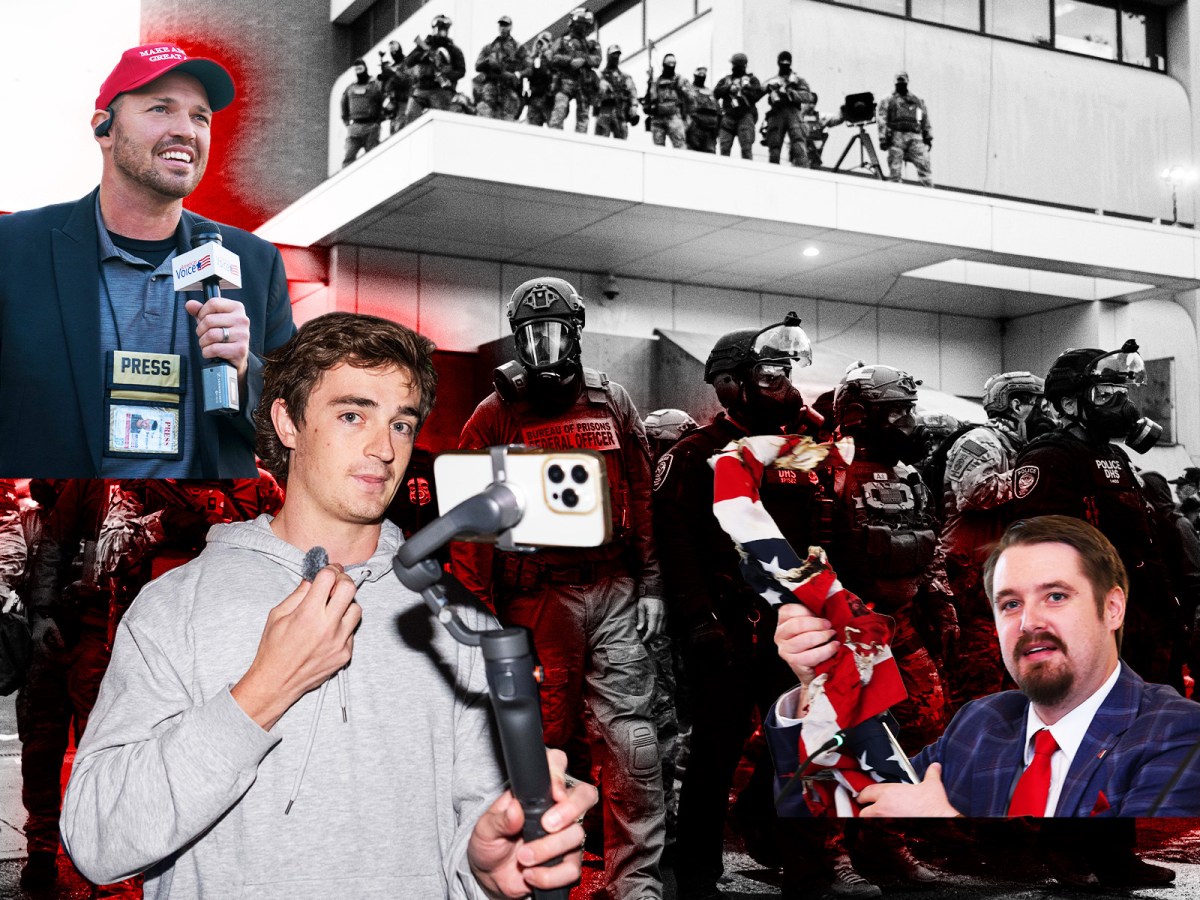
One of the most bizarre aspects of the city occupations in 2025 and early 2026 (and perhaps continuing under Markwayne Mullin? TBD) was the way in which the administration brought random social media celebrities inside its operations to produce propaganda. Through lawsuits and reporting, we’re learning more about how that all worked. Josh Kovensky takes a close look.
Longtime TPM readers know we always have been and always will be a small publication. We like to think we punch above our weight in terms of what we’re able to cover given our size. But we’re always looking for ways to do more.
That’s why we’re thrilled to announce the addition of Mike Rothschild and Sarah Posner as regular contributors to TPM. What that means is you’ll be seeing their bylines a lot more on our site, and hearing from them in our videos and Substack Live conversations.
Over the weekend I noticed an example of one of the most significant features of the last decade-plus in American politics, though it’s one that still remains too little remarked upon. Lauren Egan writes a newsletter covering the Democratic Party for The Bulwark. Sunday night’s edition was about pundit and political analyst Stuart Rothenberg, “He Was a Legendary Independent Pundit. Then Trump Arrived.” Basically, How did Stuart Rothenberg come down with, as MAGA puts it, Trump Derangement Syndrome? Toward the end of the piece, Egan gets at what I think is the underlying issue here and some of the commonality I’m about to note.
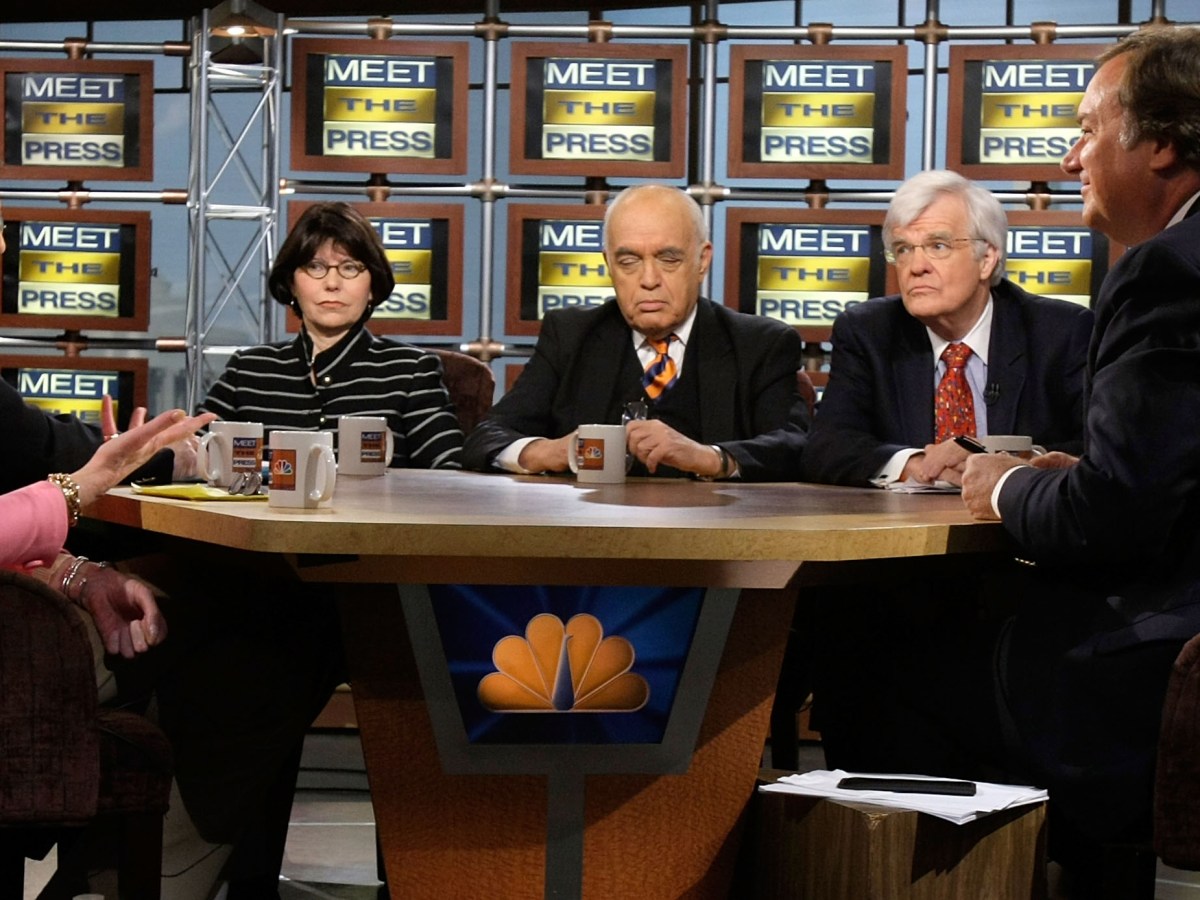
Let’s start this story in the late ’80s and early ’90s. At the time, there were a handful of men — pretty much all men, as I recall — who played a very specific role in the political-journalistic ecosystem. They were rigorously, perhaps obsessively, non-partisan and were go-to people on basic questions of politics. They’d appear on shows, be on call for quotes for journalists at the big papers. Rothenberg and Charlie Cook played that role in the electoral analysis and predictions space. Larry Sabato also occupied that space, though he also played in the political analysis one. In the latter space were Norm Ornstein (AEI) and Thomas Mann (Brookings). I think they were on PBS Newshour for a long time as a pair. Their analysis was on the mechanics of governing, less the explicitly political stuff and generally not electoral stuff.
Experts on social media platforms describe the dynamic as a symbiotic relationship: influencers get access to situations that result in outrageous, often-violent videos that suck in users.
Kate and Josh talk airports in crisis, Trump’s bewildering political calculus and, believe it or not, an optimistic vision of what a post-Trump world could look like.