How America’s Democracy Is ‘Ripe To Be Exploited’

This article first appeared at ProPublica. ProPublica is a Pulitzer Prize-winning investigative newsroom. Sign up for The Big Story newsletter to receive stories like this one in your inbox.

Voters in Sweden this month gave a leading role to a far-right party with neo-Nazi roots. Italy is also on the cusp of putting a party in power that has fascist origins. And of course, in the United States, one party has increasingly embraced election denialism and attempted to undermine the legitimacy of the electoral process.

To try to understand what, exactly, is happening, I talked with Barbara Walter, a political scientist at the University of California San Diego who studies democracies across the world. Her book “How Civil Wars Start” has become a bestseller. Rather than talk about the prospects for political violence, we discussed why many democracies are retrenching and how the U.S. stands alone — and not in a good way.

This conversation has been edited for length and clarity.

Can you walk through the vital signs of democracy that you and other political scientists have been tracking and that are trending the wrong way in the U.S. and elsewhere?

So there are probably five big data sets that measure the quality of democracy and countries around the world. They all measure democracy slightly differently. But every single one of them has shown that democracies around the world are in decline. And not just the fledgling democracies, but sacrosanct liberal democracies in Sweden, the U.K. and the United States.

These indices are like vital signs, but instead of for your body, it’s for our body politic. What are the most important ones?

So, empirically, we can’t rank order them. But we know what the good things are, and if you start attacking them, you’re attacking the vital organs.

One is constraints on executive power. You want lots of checks and balances on the executive branch. Here in the United States, you want to make sure that the legislative branch is strong and independent and willing to check presidential power. You want to know that the judicial branch is the same. Another one would be rule of law. Is the rule of law actually respected? Is it uncorrupted? You don’t want a system where certain individuals are above the law. If you want to become, say, Orban 2.0, you place loyalists in the Justice Department who are beholden to you and not to the rule of law.

You also want a free and open press, so that your citizens get high-quality information and they can make good decisions. Another one is you really want a competitive political environment, so that there’s a level playing field for people who are competing for power. You could make a very uneven playing field by party. So you can restrict the vote, you can make voting more difficult.

So these are all vital: Do you have constraints on the executive? Do you have the rule of law, so that there’s accountability? Do you have a level playing field, so that there can really be popular participation?

Another warning sign you’ve talked about is when a party becomes less about policy and more about identity, a shift one can see in the Republican Party in recent years. Can you talk about it?

The Republicans have always had a challenge that they were the party of wealthy Americans and business. The problem is wealthy Americans will always be a very small minority of Americans. So for wealthy Americans, they have to convince at least some nonwealthy Americans to support their platform. How do you do that? Well, you do it with issues of identity, their sense of threat, their sense of fear, their sense of the world is changing and “I’m being left behind.” It’s very effective.

I want to get to why we see these dynamics playing out across so many countries. You cite three dynamics. One is that the dominant caste in many nations, white people, is trending toward minority status. Another is increasing wealth concentration, where rural areas are often losing out. And then there’s a new medium that has risen that is unregulated and unmediated: social media.

On No. 3, the new medium, I would state it stronger than that. It’s not that it’s unregulated per se. It’s that it’s being driven by algorithms that selectively push out the more extreme incendiary messages.

You also wrote about another concept that I hadn’t heard before: ethnic entrepreneurs. These are politicians like, say, Slobodan Milosevic, the former Serbian strongman, who recognize an opportunity in appealing to the fears of a particular group.

Yep. He was not a nationalist. He was a straight up Communist. And again, that gets back to the difference between a political party based on ideology and one based on ethnicity. He became the leader of the Serb party.

So he saw which way the wind was blowing and he put up a sail. And that’s what an ethnic entrepreneur does?

Yes, but it can also be more strategic than that. Milosevic really had a problem in that communism was over. And if he wanted to stay in power, he was going to have to compete in elections. How is he going to get elected? And then he’s like, “Oh, like the largest ethnic group, and in this country are Serbs. I’m Serb!” If I can convince the Serbs during this time of change and insecurity and uncertainty when everyone’s a little bit on edge that unless they support a Serb, the Croats are gonna kill them, then then I can catapult myself to power. That’s classic ethnic entrepreneurship.

I want to ask you a last question I’ve been thinking about a lot myself. Like a number of news organizations, we’ve created a team devoted to covering threats to democracy. But after I read your book, I stopped referring to it as that because it occurred to me that the term threats to democracy reinforces a story that we Americans tell ourselves: that we already have a true democracy, the best darn one in the world, and we just need to protect it.

Our American democracy, even when we were happy with it and thought it was doing really well, it already had a whole series of undemocratic natures that no other healthy liberal democracy has.

Our electoral college, nobody has that. That was a compromise to rural states. We have the fact that our elections are run by partisan agents. No other healthy liberal democracy has that. Canada, this enormous country, has an independent electoral commission that runs all of the elections. Every ballot is the same no matter if you vote in Prince Edward Island or the Yukon. Or that we allow so much money to be injected into our system. Nobody else has this.

So we have not only these undemocratic features but a whole number of vulnerabilities that if you really did want to somehow cement in minority rule, you could do this legally. So in many ways we have a terrible system that’s ripe to be exploited.

Abbott’s Team Miffed That DeSantis Dehumanized Migrants Without Him

A lot of things happened. Here are some of the things. This is TPM’s Morning Memo.

Common Courtesy, Man

Aides and allies of Texas Gov. Greg Abbott (R) are privately bothered that Florida Gov. Ron DeSantis (R) pulled his Martha’s Vineyard stunt (which involved the Florida governor rounding up Venezuelan migrants at the Texas border) without telling Abbott first, according to the New York Times.

  • After all, Abbott’s team reportedly complains, the migrants came from the Texas governor’s turf, and he’s just as committed to exploiting them by sending them to “blue cities” just as much as DeSantis is!
  • DeSantis privately lamented to donors last year that he wasn’t as lucky as Abbott to have that delicious U.S.-Mexico border to use as racist political capital, the Times also reports.

GOP Rep. Clarifies That She Didn’t Fire Staffer Accused Of Sexual Harassment

Rep. Mayra Flores (R-TX) claimed on Saturday that she had fired her campaign’s district director over sexual harassment allegations against him because “[w]e will not tolerate any of that behavior.”

  • It turned out that Flores had “misspoke” and that the staffer had resigned, the GOP lawmaker’s campaign told the Texas Tribune later on Saturday.
  • The sexual harassment accusations against the (now-former) district director had allegedly spanned decades. He has denied the allegations.

Georgia To Replace County’s Breached Voting Machines

Georgia Secretary of State Brad Raffensperger (R) announced on Friday that the voting equipment in Coffee County will be replaced after pro-Trump operatives got access to it thanks to one of the state’s fake Trump electors.

  • The equipment is being replaced specifically to get “perennial election deniers and conspiracy theorists” to STFU, according to Raffensperger.
  • Arizona’s Maricopa County similarly had to toss away its voting equipment thanks to MAGA election denialism. The county paid nearly $3 million in taxpayer funds to replace the equipment because it had been subjected to the Arizona state Senate’s bogus 2020 election “audit” and election officials had no way of knowing if the equipment had been tampered with by the fake auditors.

Gaetz Unlikely To Face Charges In Trafficking Case

Career prosecutors have recommended not pursuing criminal charges against Rep. Matt Gaetz (R-FL) in the Justice Department’s sex trafficking investigation, according to the Washington Post. Politico has confirmed that the Republican congressman is unlikely to be charged.

  • The main issue is reportedly the dubious credibility of key witnesses, specifically Gaetz’s ex-girlfriend and his buddy Joel Greenberg, Gaetz’s indicted wingman who’s pleaded guilty to child sex trafficking and fraud.
  • DOJ officials reportedly haven’t made a final decision yet, but the Post notes that it’s rare for them to ignore that kind of advice.
  • Gaetz had reportedly pushed for a pardon related to the sex trafficking probe from Trump near the end of his presidency. At least, that’s what ex-senior White House aide Johnny McEntee told the House Jan. 6 Committee during his testimony, according to the Post.

Italy To Elect Most-Far Right Government Since Mussolini

The far-right Fratelli d’Italia (Brothers of Italy) party, led by anti-immigration firebrand Giorgia Meloni, is projected to emerge victorious in Italy’s snap election. The Brothers of Italy party is rooted in post-World War II fascism that was founded by Mussolini loyalists.

Cheney Plans To Campaign Against Election Truthers

Rep. Liz Cheney (R-WY), the vice chair of the House Jan. 6 Committee, on Saturday pledged to actively try to take down Big Lie acolytes Arizona gubernatorial nominee Kari Lake and Pennsylvania gubernatorial nominee Doug Mastriano.

Arizona Judge Allows 19th Century Near-Total Abortion Ban

Almost all abortions are now illegal in Arizona (the only exception being to save the life of the mother, none for rape or incest) after a state judge on Friday lifted a 50-year block on an abortion ban dating back to 1864–back when Arizona wasn’t even a state yet.

WTF Read Of The Day

“Students Say They Were ‘Duped’ Into Attending Twisted Religious Event” – The Daily Beast

Kids Will Be Able Buy Hard Drugs Without Fear Under GOP Policies, McCarthy Promises

Here’s House Minority Leader Kevin McCarthy’s (R-CA) big pitch ahead of the midterms:

Do you like Morning Memo? Let us know!

Election Deniers Are Walking Back Their Claims For The General Election

“I very much believe it and I think it exists.”

That’s what New Hampshire Senate hopeful Don Bolduc told the New Yorker last October when asked whether he genuinely believed that the 2020 election was stolen from former President Donald Trump through voter fraud.

Continue reading “Election Deniers Are Walking Back Their Claims For The General Election”

Kushner Company Agrees To Pay At Least $3.25 Million To Settle Claims Of Shoddy Apartments And Rent Abuses

This story first appeared at ProPublica. ProPublica is a Pulitzer Prize-winning investigative newsroom. Sign up for The Big Story newsletter to receive stories like this one in your inbox.

The property management subsidiary of Jared Kushner’s family real estate company has agreed to pay a $3.25 million fine to the state of Maryland and to reimburse many of the tens of thousands of tenants in the Kushners’ Baltimore-area apartment complexes for excessive fees and for rent they were forced to pay over the past decade despite serious maintenance problems in the units.

The agreement represents the settlement of a 2019 lawsuit brought against the subsidiary, Westminster Management, by the Maryland attorney general. The state alleged that the company’s “unfair or deceptive” rental practices violated Maryland’s consumer protection laws and “victimized” people, “many of whom are financially vulnerable, at all stages of offering and leasing.”

“This is a case in which landlords deceived and cheated tenants and subjected them to miserable living conditions,” said Attorney General Brian Frosh, a Democrat, at a press conference announcing the settlement Friday morning in Baltimore. “These were not wealthy people. Many struggled to pay the rent, to put food on the table, to take care of their kids, to keep everybody healthy, and Westminster used its vastly superior economic power to take advantage of them.”

Kushner Companies, which has since sold off most of the complexes, did not respond to requests for comment, but in a statement to the Baltimore Banner, it said: “Westminster is pleased to have settled this litigation with no admission of liability or wrongdoing. We look forward to moving past this matter so that we can focus on our ever-expanding real estate portfolio.”

Frosh took issue with that characterization. “You don’t pay three million two hundred and fifty thousand bucks if you’re not liable,” he said. “They may not have formally signed a piece of paper saying that they did it, but they did.”

The state lawsuit followed on the heels of a May 2017 article co-published by ProPublica and The New York Times Magazine describing the Kushner Companies’ highly litigious treatment of tenants at the apartment complexes it started buying in the Baltimore suburbs in 2012. The 17 complexes contained a total of about 9,000 units and provided a strong cash-flow ballast for a real estate company better known for trophy properties in New York.

The Dutch Village apartment complex is seen on July 30, 2019 in Baltimore, Maryland. Dutch Village is one of several apartment complexes in the Baltimore area owned by President Donald Trump’s son in law and senior White House advisor Jared Kushner’s real estate company. (Photo by Mark Wilson/Getty Images)

The article reported that the company had brought hundreds of cases against current and former tenants over unpaid rent and broken leases, including people who had moved out of the complexes before the Kushner Companies even purchased them. The company also pursued tenants who possessed evidence that they did not owe the money claimed, with all manner of court and late fees piling on top of the original claims.

The article also described the shoddy conditions that many tenants had to contend with at the complexes, including mice, leaky roofs and rampant mold.

At Friday’s press conference, Frosh and two former tenants elaborated on the deplorable conditions. Frosh showed images from squalid units, including one of a large cluster of mushrooms growing beside a toilet. Tiffany Dixon described the floor and wall damage in her family’s unit at a Kushner complex called Commons of White Marsh that she said was caused by a large hole under the kitchen sink of an adjacent unit. Dixon recounted the horrifying discovery, after her kitchen stove stopped working, of mice remains inside the oven. Vaughn Phillips described living in a unit in another complex, Fontana Village, that had water pouring out of the kitchen wall for months “to the point where there was a small pond in my kitchen and living area.” Phillips also said that gas leaked from the unit’s kitchen stove and that “mice that would come out and watch TV with me.”

Frosh displayed one of the many internal company emails that his office obtained during its investigation, showing that officials were well aware of the problems. “We desperately need your help at the Commons of White Marsh with the number of roof leaks that are still occurring due to the damage of the storm that was caused from the storm back in March,” the community manager at the complex wrote to the director of construction at Kushner Companies, in September 2018. “I am receiving at least 30 complaints per day and residents coming [in] and screaming in office. We have a large amount of drywall damage and potential for mold is becoming an issue.”

Before the state’s lawsuit in 2019, a group of tenants filed a class-action lawsuit in late 2017, alleging that the company was improperly inflating payments owed by tenants by charging them late fees that are often unfounded and court fees that are not actually approved by any court. That case made its way to the state Court of Special Appeals in early 2021, but a ruling has not yet been issued. (The Kushner entities have denied wrongdoing in that suit.)

The state case against the company won a major victory in April 2021, when an administrative law judge found that Westminster violated consumer laws in several areas, including by not showing tenants the actual units they were going to be assigned to before signing a lease, and by assessing them a range of “spurious” fees. The ruling came after a 31-day hearing in which about 100 current and former tenants testified.

The company had initially downplayed the lawsuit as a politically motivated stunt to embarrass Kushner, the highly influential son-in-law of then-President Donald Trump. But after the ruling by the administrative law judge, the company entered into negotiations with the state. “It became very clear that they had done wrong and we were not going to let them off the hook,” Frosh said.

Frosh said that the state was looking into whether other large landlords in Maryland have been engaging in practices similar to those employed by Westminster. The Baltimore Banner recently reported that Maryland landlords are far more aggressive in using the courts to threaten eviction as a routine practice for collecting rent than are landlords in other states.

Under the terms of the settlement, Westminster must make an effort to reach all of the estimated 30,000 tenants who resided in its Baltimore-area complexes to alert them that they may submit claims of restitution for rent they were forced to pay despite substandard conditions. Former tenants will be able to start submitting claims in three months and will then have a year to do so. The claims will then be assessed by a special master selected by the company with the approval of the state. Separately, the company will automatically reimburse former tenants for excessive court fees and late fees, based on its records; former tenants will not need to file claims for that restitution.

Westminster may end up paying considerably more than $3.25 million, since there is no limit on the amount of restitution the special master can order. (Of the $3.25 million fine, $800,000 will be treated as a down payment on the restitution.)

The former tenants at the press conference expressed satisfaction with the settlement. “I wasn’t looking for financial gain,” Dixon said. “I was just looking for justice. I was looking for someone to acknowledge the negligence so that other people didn’t have to endure what we did.”

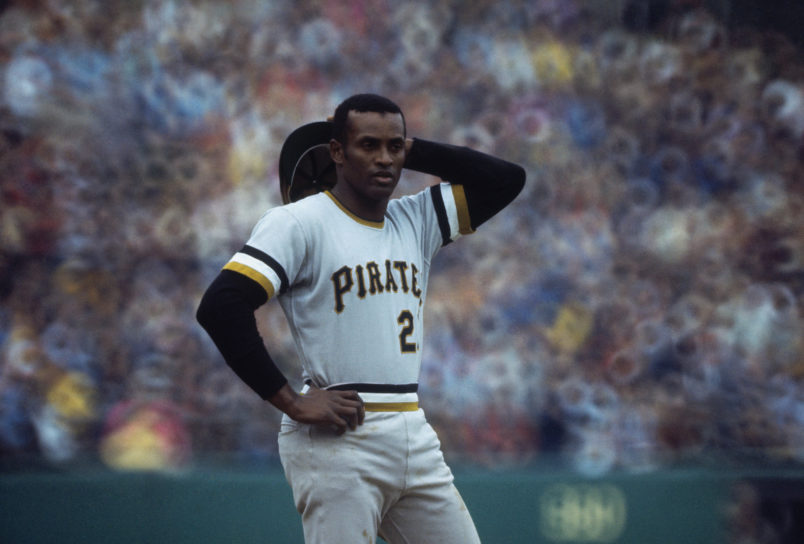
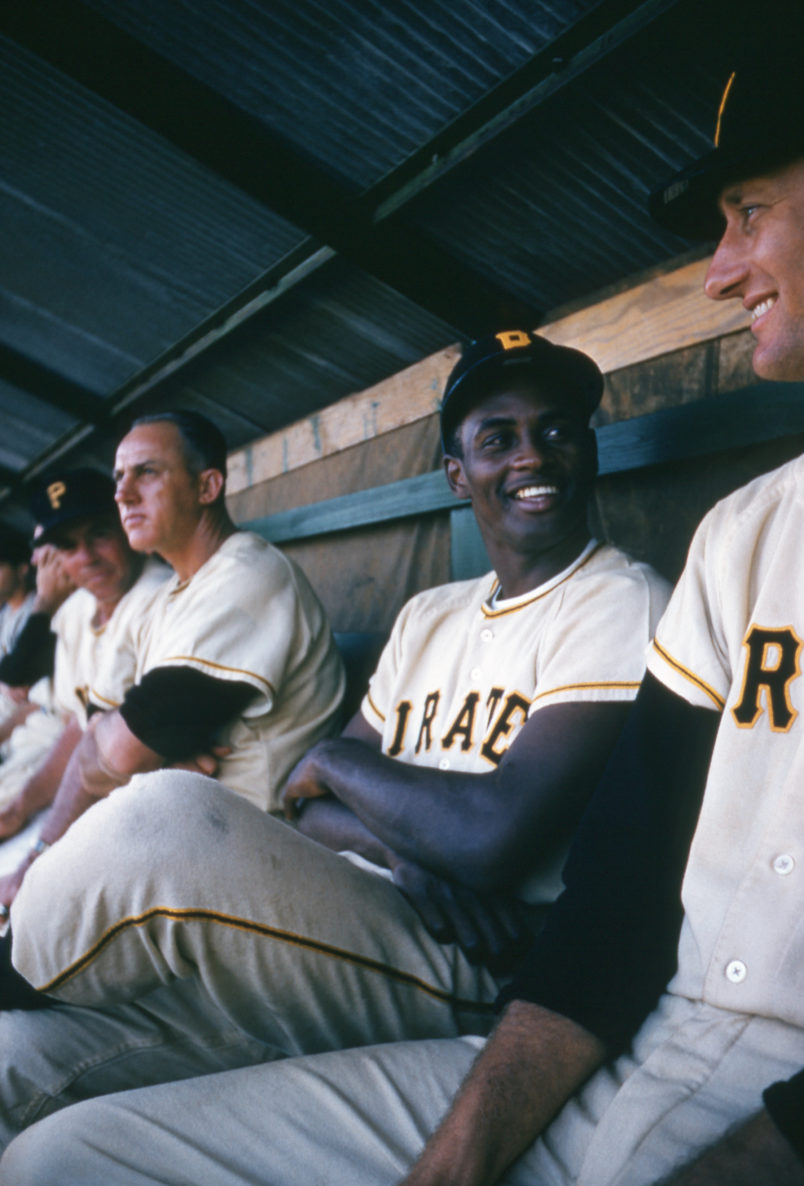
How Roberto Clemente Harnessed Celebrity To Change America

This article is part of TPM Cafe, TPM’s home for opinion and news analysis.

September 15 was not only the beginning of Hispanic Heritage Month but also Roberto Clemente Day. To honor the great Latino ballplayer, major league players wore his jersey number: 21. But the Tampa Bay Rays went further. On that day, for the first time in major league history, the Rays’ entire starting lineup was comprised of Latin American players – three from the Dominican Republic, two each from Venezuela and Cuba, and one each from Colombia and Mexico.

Clemente was not the first Latino to play major league baseball, but he was the first Latino superstar. He saw that as both a responsibility and an opportunity. Like Jackie Robinson, he used his athletic celebrity to speak out on behalf of social and racial justice. And like Robinson, he faced racism and pushback from owners, fans, sportswriters, and even some fellow players.

Clemente had an impressive 18-year major league career (1955-72), during which he played solely for the Pittsburgh Pirates. He played in 15 All-Star games, won four batting titles, was named the National League’s Most Valuable Player in 1966, lead the Pirates to World Series championships in 1960 and 1971, reached 3,000 hits in his next-to-last game in 1972 (a feat surpassed by only 10 other major leaguers at the time), and had a lifetime batting average of .317, with 240 home runs, 1,305 RBIs, and 12 Gold Glove awards as best fielding outfielder.

Born in 1934 in Carolina, Puerto Rico, Clemente starred as an all-around athlete in high school. His arm was so strong that he became an Olympic prospect throwing the javelin. But he loved baseball and signed with the Dodgers in 1954, at a time when there were few Black and few Latino players on major league rosters. After one year in the minors, the Dodgers sold Clemente to the Pirates.

Clemente fought constantly against negative stereotypes, prevalent at the time, of emotional and lackadaisical Latinos. He bristled over the racist way that sportswriters covered him.

Sportswriters and baseball card companies called him Bobby or Bob, instead of his preferred name, Roberto, while white players were always asked what they wanted to be called. Writers made fun of his accent, quoted him in broken English, and paid little attention to his powerful intellect and social conscience. He knew little English when he joined the majors, and naturally spoke with a Spanish accent. After winning the 1961 All-Star Game for the National League, for example, Clemente was quoted as: “I get heet. … When I come to plate in lass eening … I say I ’ope that Weelhelm [Hoyt Wilhelm] peetch me outside. …”

In contrast, reporters routinely corrected grammatical mistakes in English for white players. Clemente refused to remain silent. He pushed back when a reporter called him a “chocolate-covered islander.” “You writers are all the same,” he shouted at one critical reporter. “You don’t know a damn thing about me.”

Clemente was frequently hurt and sometimes required surgery. He suffered damaged discs, bone chips, pulled muscles, a strained instep, a thigh hematoma, tonsillitis, malaria, stomach problems, and insomnia. Even so, between 1955 and 1972 he played more games than anyone in Pirates history. Yet some sportswriters, teammates, and managers repeatedly accused him of being lazy or faking injuries if he missed a game. To the contrary, Clemente repeatedly played through pain, and excelled nevertheless.

Clemente was a proud Black man, Puerto Rican, and American. From 1958 to 1964 he served in the Marine Corps Reserve. Coming from Puerto Rico, a more racially integrated island, he was shocked by the segregation he encountered in mainland America, especially during spring training in the Jim Crow South. Black players on the Pirates during Florida spring training in the late 1950s and early 1960s couldn’t stay in the same hotels or eat in the same restaurants as their white teammates. While on the road, white teammates had to bring Black players’ food out to the team bus. Clemente refused to sit and wait on the bus. He demanded that the Pirates provide Black players with another vehicle so they could drive to Black restaurants where they would be served. He and other Black players were also excluded from the Pirates’ annual spring golf tournament at a local country club, while their white teammates participated.

Even some of his teammates used racial slurs when referring to Clemente and other Latino players. Clemente pushed the Pirates to hire more players of color. By the early 1970s, half the team’s roster was Black, Latino, or Spanish-speaking, and in 1971, for the first time in major league history, the Pirates fielded an all-Black and Latino lineup, thanks largely to Clemente.

Roberto Clemente smiles as he sits in the dugout during an MLB Spring Training game on March 7, 1957 at Terry Park in Fort Myers, Florida. (Photo by Hy Peskin/Getty Images)

Clemente played during the peak of civil-rights activism. He closely followed the movement and identified with its struggles. He witnessed a speech Martin Luther King Jr. gave at a Puerto Rican university in 1962. They later became friends and met often, including a long visit on Clemente’s farm in Puerto Rico, where they discussed King’s philosophy of nonviolence and racial integration. Clemente voiced these ideas both inside and outside the clubhouse. As teammate Al Oliver recalled: “Our conversations always stemmed around people from all walks of life being able to get along. He had a problem with people who treated you differently because of where you were from, your nationality, your color. Also, poor people, how they were treated.”

After King was assassinated in Memphis on Thursday, April 4, 1968, Baseball Commissioner William Eckert announced that each team could decide for itself whether it would play games scheduled for the day of King’s funeral. On Friday, the next to last day of spring training, the Pirates’ 11 Black players (six of them also Latino) met at their hotel and agreed that they would refuse to play on Opening Day and the following day, when America would be watching or listening to King’s funeral. The following day, all 25 Pirates met at the ballpark and, after Clemente spoke, agreed to boycott their first two games.

Clemente and Dave Wickersham, a white pitcher, contacted Pirates general manager Joe Brown and asked him to postpone the season’s first two games or else the players would refuse to play. Then they wrote a public statement on behalf of their teammates that was published in the Pittsburgh Press the next day. They wrote: “We are doing this because we (white and black players) respect what Dr. King has done for mankind. Dr. King was not only concerned with Negroes or whites but also poor people. We owe this gesture to his memory and his ideals.”

The idea spread and players on other teams followed their lead. Commissioner Eckert, his back against the wall, reluctantly moved all Opening Day games to April 10. No sportswriter at the time described the players’ action as a strike. But that’s what it was – a two-day walkout or wildcat strike, not over salaries and pensions, but over social justice.

In 1969, Cardinals outfielder Curt Flood asked the Mayor League Baseball Players Association to support his lawsuit challenging the reserve clause, baseball’s version of indentured servitude, which made players properties of their teams. They could be traded to another team against their will, which is what happened to Flood. At Clemente’s urging, the players union held its annual executive committee meeting in San Juan, Puerto Rico. Some players were skeptical about Flood’s lawsuit, but the tide turned after Clemente spoke out on Flood’s behalf. He declared that Flood was the only player with the courage to take on the owners and the reserve clause. “So far, no one is doing anything,” he said. The players voted unanimously to back Flood’s lawsuit.

Clemente’s activism went beyond fighting against racism and for players’ rights. Besides sponsoring philanthropies to distribute food, medical supplies, and baseball equipment, Clemente routinely visited sick kids in hospitals and held frequent baseball clinics for low-income children. He campaigned to use sports to counter drug problems in Puerto Rico and elsewhere. Most ambitiously, he began building a Sports City in Puerto Rico, seeking to replicate it throughout the United States to provide athletics and counseling but also intercity and interracial exchanges to challenge all forms of discrimination.

During the 1963-64 offseason, Clemente developed a lasting bond with the Nicaraguan people when he played winter ball for the Senadores de San Juan, who represented Puerto Rico in the International Series in Managua, the country’s capital. Clemente became a fan favorite during the series, making many friends and pledging to return.

On December 23, 1972, a massive earthquake devastated Managua. Over 7,000 people died, and thousands of others were injured. More than 250,000 people were left homeless. Back home in Puerto Rico, Clemente decided to help the recovery, using the media to organize a massive campaign of food, clothing, and medical assistance. Funded by Clemente, two cargo planes and a freighter began delivering the aid.

But Clemente found out that the U.S.-backed Nicaraguan dictator Anastasio Somoza Jr. was siphoning off the international aid flowing into Managua (including $30 million from the United States) and stockpiling it for his corrupt government. For example, when a private American medical team arrived in Managua, it had to fight local Somoza officials from confiscating the supplies it brought. President Richard Nixon dispatched a battalion of US paratroopers to Managua, which only further helped Somoza loot the country. Nixon claimed he didn’t want the earthquake to provide opportunities for communists.

Clemente vowed to personally deliver the relief he had gathered. He believed that his presence would ensure that the aid would get to the people who needed it.

On December 31, 1972, the 38-year-old ballplayer boarded a broken-down and overloaded plane. Some warned him against making the trip, but he said, “Babies are dying. They need these supplies.” Several minutes after takeoff, the plane exploded and crashed into the Atlantic Ocean, killing Clemente and four others.

Roberto Clemente takes a breather on the field during the 1960s. (Photo by Focus on Sport via Getty Images)

The Pirates retired Clemente’s number in 1973 and the Baseball Writers Association of America waived the normal five-year waiting period to elect Clemente to the Baseball Hall of Fame that year; he became the first Latino player ever inducted. MLB established an annual Roberto Clemente Award (for community service) and Roberto Clemente Day. In 2002, President George W. Bush posthumously awarded him the Presidential Medal of Freedom. In 1974 the Roberto Clemente Sports City opened in Puerto Rico and has since served hundreds of thousands of kids, including future major league stars Juan González, Bernie Williams, and Iván Rodríguez. Clemente has been honored by dozens of schools, hospitals, coins, stamps, post offices, bridges, parks, housing developments, ballparks, streets, and museums in his name in the United States, Puerto Rico, and Nicaragua.

On Opening Day this year, Latinos (including U.S. players and those from Latin America) represented 28.5% of all players on major league rosters and 13% (four out of 30) of all big league managers.

Perhaps if Clemente were still alive, he’d be drawing attention to the Costa Rican factory that is partly owned by Major League Baseball and where workers toil under sweatshop conditions to manufacture all 1.2 million baseballs used during a major league seasons

Like Jackie Robinson, Clemente was an outstanding athlete and fierce competitor who used his celebrity to challenge baseball’s, and America’s, racism and to fight for better living and working conditions for everyone, regardless of race.

Clemente once observed: “If you have a chance to help others and fail to do so, you are wasting your time on this earth.”

Peter Dreier is professor of politics at Occidental College and co-author of the forthcoming Baseball Rebels: The Reformers and Radicals Who Shook Up the Game and Changed America.

Anonymous DHS IG Staffers Call For Biden To Fire Inspector General Plagued By Controversy

On Friday morning, an anonymous group of staffers at the Department of Homeland Security’s internal watchdog called for President Joe Biden to fire their boss, Inspector General Joseph Cuffari.

“[T]he highest priorities of an inspector general are integrity and independence,” the staffers wrote in a letter published by the Project of Government Oversight (POGO). “IG Cuffari and his inner circle of senior leaders have fallen short in these areas time and time again.”

The letter was signed by “Concerned DHS OIG employees representing every program office at every grade level (for fear of retaliation, we cannot identify ourselves).”

Cuffari has gotten wrapped up in quite a few scandals since he was appointed to the role by former President Donald Trump in 2019. Most recently, he’s been embroiled in an ongoing scandal related to the attack on the Capitol complex on January 6th. After a former White House aide testified before the House select committee investigating the attack that Trump had had an altercation with the Secret Service on Jan. 6, Congress renewed its year-old inquiry for written correspondence from employees across several agencies, including the DHS.

They later found out that almost all of their text messages were deleted — and that Cuffari had known for months, but had not made the fact public.

There were other controversies. Earlier this year, Cuffari garnered unfavorable attention when watchdog groups revealed that he had not published a federal watchdog report finding that over 10,000 DHS employees said they’d experienced sexual harassment or misconduct. After the unpublished reports were revealed, DHS Secretary Alejandro Mayorkas said the drafts “underscore the need for immediate action.”

Cuffari also became the target of an investigation by the Council of the Inspectors General on Integrity and Efficiency (CIGIE) after being accused of retaliating against a former top agency official.

Various good government and watchdog groups, including POGO, have repeatedly called for Biden to remove Cuffari. 

In the letter released Friday, the anonymous staffers add a few more complaints to the pile. They allege that Cuffari refused to “move forward with important proposed work without reason,” delayed the release of audits, inspections and investigations for prolonged periods of time, and edited reports to remove “key findings,” among other things.

They also lambast the inspector general for throwing his employees under the bus in a letter to Congress explaining why he never published the internal review that contained allegations of sexual misconduct. Cuffari “refused to take responsibility for his own actions and instead undermined his own career staff,” they write.

The letter “served as a warning to all employees of what would happen if they push back against or question the IG and his team,” the staffers said. “This letter deeply impacted his entire workforce and fully demonstrated his inability to be a servant leader.”

Instead, they write, the letter simply reinforced that “he cares about no one but himself and his survival.”

The staffers close the letter by requesting that Biden ensure that Cuffari and his leadership team, including Chief of Staff Kristen Fredericks, step aside from their positions.

“You are the only one who can help us before DHS OIG are forever damaged by IG Cuffari,” they write. “We need help.”

Revisiting the Ukraine War

Back on March 30th, little more than a month into the Russo-Ukraine War, I published an email from TPM Reader BF who I identified as from the U.S. national security world. You can read the post here. But the gist, according to BF, was that I had it all wrong, that “notwithstanding its battlefield embarrassments and mishaps Putin is on the verge of getting everything he wants and Ukraine is on the verge of what amounts to surrender.”

Last week I heard from another reader asking for an update from BF in light of the last six months. That follow-on note was a bit ungenerous in its tone and somewhat tendentious in its read of BF’s comments. But the overall suggestion seemed worthwhile. When I asked, BF was game. So here’s his response …

[ed. note: BF’s response was written on September 15th, so before the recent mobilization announcement.]

Continue reading “Revisiting the Ukraine War”

Judge Rules Alaska GOPer Is Likely Barred From Office For Being An Oath Keeper

An Alaska judge ruled on Thursday that Alaska state Rep. David Eastman (R) will likely be found ineligible for office in a lawsuit seeking to oust the Republican over his lifetime membership with the Oath Keepers, a far-right militia group.

Continue reading “Judge Rules Alaska GOPer Is Likely Barred From Office For Being An Oath Keeper”

Into the Storm

The congressional generic ballot continues to drift slowly in the Democrats’ direction. But there’s been some tightening in key Senate races that have looked promising for Democrats. These are all very small shifts that are as likely to be noise as actual trends. But the fact that most of these small moves are in the GOP direction suggests it’s something more than noise. The simplest explanation is that a variety of factors allowed Democrats to dominate the airwaves through the late summer. Republicans had fundraising challenges; they hadn’t settled yet on nominees; their various committees and mega-donors were feuding among themselves. That’s changed now. And that change seems to be showing up in the polls.

Continue reading “Into the Storm”

Pelosi And Other Democrats Sound Off On SCOTUS Case That Could Be ‘Disastrous’

House Speaker Nancy Pelosi (D-CA) and other high-profile Democrats filed an amicus brief in Health and Hospital Corporation of Marion County v. Talevski Friday, the case barrelling towards oral arguments that could leave beneficiaries of major programs like Medicaid with little recourse should states neglect their care. 

Continue reading “Pelosi And Other Democrats Sound Off On SCOTUS Case That Could Be ‘Disastrous’”