

Rep. George Santos (R-NY) got funding from the cousin of a Russian oligarch, worked for a firm whose founder said he sought capital investments in Belarus and reportedly connected said firm with said cousin.
Continue reading “CEO Of Santos-Linked Ponzi Scheme Claimed To Seek Funding In Belarus, Russia”Did The Justices Get Asked If They Did It?
About that Supreme Court report … It does not state it explicitly. But the plain language of the report strongly suggests that the investigation did not investigate or question the justices themselves. It repeatedly refers to investigations of and questioning of Court “personnel” (temporary and permanent) and Court “employees.” We can’t say those terms have a definitive legal meaning in this context. But the justices certainly aren’t employees of the Court. They are the Court. “Personnel” also seems to refer to the same class of people: everyone who works at and for the Court, not the justices. I suspect most Court observers would agree that this is at least the most obvious interpretation of those word choices, if not the only possible one.
It’s not terribly surprising that the investigation didn’t investigate the justices themselves. But it’s worth noting that that is at least the most obvious reading of the wording of the report. We’ll follow up to see if we can learn more.
Listen To This: But His Classified Docs
A new episode of The Josh Marshall Podcast is live! This week, Josh and Kate discuss the classified document false equivalency and the newest adventures of George Santos.
You can listen to the new episode of The Josh Marshall Podcast here.
Supreme Court Releases Report On Dobbs Leak, Fails To Find Suspect
The Supreme Court released a report Thursday after its Marshal spent months attempting to determine who leaked a draft of the Dobbs v. Jackson Women’s Health Organization decision in which the conservative majority overturned Roe v. Wade.
Continue reading “Supreme Court Releases Report On Dobbs Leak, Fails To Find Suspect”We Need a Better Understanding of ‘Fake News’
Recently I was reading an article on the January 8 insurrection in Brazil. The writer noted Jan. 8 along with Jan. 6 in the U.S. as examples of what can result from the maelstrom of global authoritarianism, “fake news” and pervasive misinformation. Brazil has also witnessed its own version of the “Big Lie” claiming fraud was behind the ouster of Jair Bolsonaro, and there are various scare stories about the new President Lula da Silva freezing bank accounts or forcing middle class homeowners and renters to house poor people in their homes. You can imagine the kind of stuff I’m talking about and how it can create hysteria in segments of the population in both countries.
But it’s a reminder of something I’ve thought a lot about and written some about over the last few years. We simply don’t have a good theory or understanding of what we’re talking about when we talk about “fake news” and “misinformation.” In most cases we know it when we see it: Jan. 6 was an Antifa operation, millions of “illegals” voting in 2020 gave the election to Joe Biden, young people around the world dropping dead because of COVID vaccines, mass shootings conducted by crisis actors to justify gun confiscation.
Continue reading “We Need a Better Understanding of ‘Fake News’”MAGA-Loving, Conspiracy Theorist MTG Picking Fights With Far-Right Allies To Try And Appear Legit
Rep. Majorie Taylor Greene (R-GA) appears to be changing her public approach to politics, leading to speculation that the famously far-right member of Congress may be trying to pull off a “remake” or “rebranding.” And while her new style might not be terribly convincing, it is getting attention. She recently has been picking fights with fellow far-right allies to make her case.
Continue reading “MAGA-Loving, Conspiracy Theorist MTG Picking Fights With Far-Right Allies To Try And Appear Legit”Has There Ever Been Anyone Like George Santos Before?
A lot of things happened. Here are some of the things. This is TPM’s Morning Memo.
You Do You, George Santos!
I came into today determined not to lead a third Morning Memo in a row with the saga of George Santos. But I am a mere mortal running a small political tabloid, and Santos is a demigod of political scandal, bamboozlement and chicanery. I stand no chance against his formidable powers of cunning deceit and absurd scams. I bow before thee, George.
George Santos As Drag Queen
The current Republican congressman from Queens was for a time in Brazil more than a decade ago competing in drag queen pageants:
No, George Santos’ Mom Was Not a 9/11 Victim
My colleagues Nicole Lafond and Josh Marshall each tackled this new revelation based on a FOIA by The Forward of the immigration paperwork of Santos’ late mother. The New York Times has similar reporting: “Mr. Santos’s apparently fabricated link to Sept. 11 marks yet another entry in a long list of falsehoods that he shared as he sought elected office.”
George Santos Duped The Russians, Too???
Andrew Intrater, a cousin of the sanctioned Russian oligarch Viktor Vekselberg, has told associates that he was conned by Santos just like everyone else, Mother Jones reports.
I Just Can’t Get Enough Of Santos And That Poor Dog
The alleged scam that George Santos pulled on a disabled vet trying to get care for his dying dog is just the worst of the worst. GoFundMe says it suspended Santos’ account at the time, back in 2016. Meanwhile, the veteran was on CNN last night:
The GOP’s Hostage-Taking Has Begun
Happy Debt Ceiling Day to all those who celebrate.
Scott Perry Lands A Slot On Oversight
Despite having his phone seized by the FBI as part of its investigation of Jan. 6, Rep. Scott Perry (R-GA) has been assigned a seat on the House Oversight Committee.
As I mentioned yesterday, the new GOP lineup on the committee is chock full of the craziest of the crazies, which is totally consistent with the goal of Speaker Kevin McCarthy (R-CA) and committee Chair James Comer (R-KY): to use the panel to target political foes under the guise of “investigations.”
White House Sees Upside To Crazy Oversight Committee
I suspect this is overstated a tad, but this Politico report on the White House reaction to the craziest of the crazies landing on Oversight does offer a pretty good read on what the next two years will be like: House Oversight GOPers overreaching dramatically and the White House easily popping them for being fringe whackjobs.
It’s going to be a loooong two years.
I Guess There’s A Logic To It
For the second day in a row, a major news outlet has all the excruciating details on the Biden White House’s rationale for how it’s handled the discovery of mishandled classified documents from his vice presidency. Yesterday, it was the Wall Street Journal. Today, it’s the Washington Post.
It’s not a surprise to see pushback from the White House on the emerging narrative that it was not transparent enough about the discovery of the classified docs. But the granularity and specificity of the accounts on what the Biden lawyers were doing and why is a bit unexpected. They’re clearly feeling the sting of the political blowback, but more particularly they seem to be trying to correct the impression that they’re a bunch of bleeping idiots to have mismanaged the political and legal crisis in the way they have.
They make some compelling points via the WaPo story, summarized by former Obama DOJ spokesperson Matt Miller (speaking for himself here, if I understand it properly): “Oftentimes when you’re doing something that from the outside doesn’t appear to make sense, it’s not because you don’t know what you’re doing — it’s because you face some choices people don’t understand.”
Frenzied Trump Ramps Up Attacks On FBI
With Special Counsel Jack Smith now on the Mar-a-Lago case, former President Trump is becoming increasingly frenetic on his fake Twitter site. The two big takeaways from yesterday’s rant:
- Trump is now calling the FBI the “Gestapo.”
- Trump may have made yet another admission of his culpability in the classified documents case. He’s now saying the empty folders marked classified that the FBI seized during its raid were just “a ‘cool’ keepsake” that he kept after leaving the White House:
Remember, these were just ordinary, inexpensive folders with various words printed on them, but they were a ‘cool’ keepsake. Perhaps the Gestapo took some of these empty folders when they Raided Mar-a-Lago, & counted them as a document, which they are not. It’s also possible that the Trump Hating Marxist Thugs in charge will ‘plant’ documents while they’re in possession of the material.
Big Oops
Former President Donald Trump mistook a picture of Jean Carroll, the woman who has accused him of raping her in the mid-90s, for his second wife Marla Maples – wait for it – in a deposition he gave in the Carroll case.
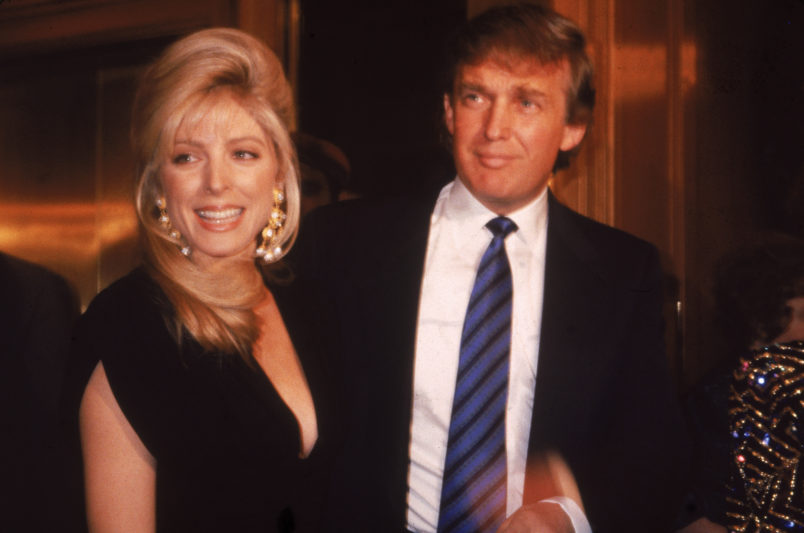
Carroll is, of course, the woman Trump has repeatedly said is not his “type.”
Florida Congressman Injured In Accident At Home
Rep. Greg Steube (R-FL) is in the hospital with injuries he sustained after reportedly falling 25 feet from the roof of his home. His office confirmed that the congressman sustained several injuries after an accident at his home but provided few other details.
New Zealand PM Resigns
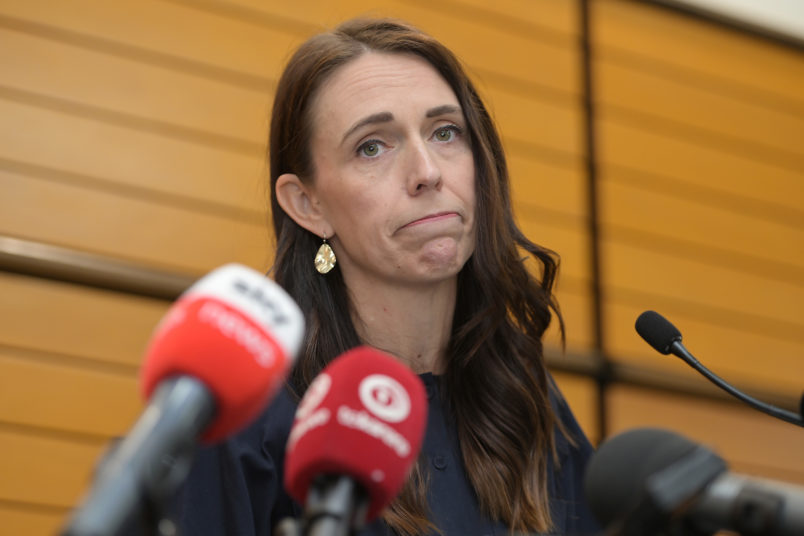
The progressive icon Jacinda Ardern, only 37 when she became New Zealand’s prime minister, is stepping down at age 42, amid plummeting approval ratings and a tough re-election environment. The crisis-embattled PM said she doesn’t have “enough in the tank” to continue in the role, and she will not seek re-election to her seat in Parliament.
NEW: Never Miss A Morning Memo!
Get Morning Memo as an emailed newsletter. It’s fast and free! Sign up here:
Decision Expected Today On Charges In ‘Rust’ On-Set Shooting
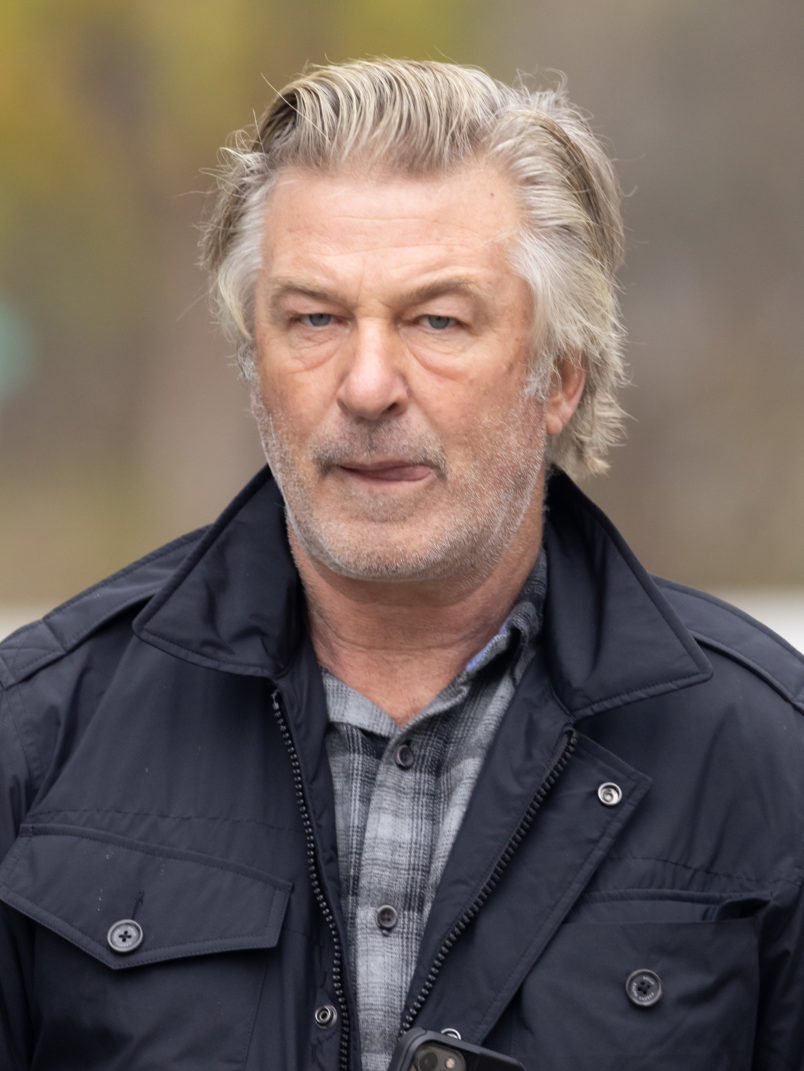
The district attorney in Santa Fe is expected to announce a decision today on whether to charge anyone in connection with the 2021 fatal shooting on the set of the low-budget Alec Baldwin western “Rust.”
Do you like Morning Memo? Let us know!
BREAKING: Santos a Citizen! Maybe?
As Nicole notes below, The Forward has a new article out based on the immigration files of George Santos’s mother, Fatima A.C.H. Devolder, who died in 2016. A researcher apparently got the file under a FOIA request and shared the documents with the reporter. The key point of the article, unsurprisingly, is that Santos is a huge ass liar. In this case, a big fat liar about 9/11.
His story about his mother dying as the result attack on the Twin Towers broke down somewhat when it turned out she died in 2016. He then claimed that she had been in the Towers on 9/11 and at Ground Zero on subsequent days. She developed cancer because of her exposure to the toxic fumes circulating in the air at the time. That is a very real issue. Numerous first responders and others who spent time at Ground Zero in the days and weeks after 9/11 later developed cancers and other illnesses. Since it’s hard to prove a negative, it’s been difficult for people to definitively state that Devolder was not working at the Towers on 9/11.
Continue reading “BREAKING: Santos a Citizen! Maybe?”Where Things Stand: Of Course George Santos Mom Was Not In NYC On 9/11
The Jewish Daily Forward, the same news outlet that broke the story that Rep. George Santos (R-NY) lied about his heritage, has now seemingly confirmed another suspected Santos fib — that his mother was in the vicinity of World Trade Center on 9/11 and survived the attack.
Continue reading “Where Things Stand: Of Course George Santos Mom Was Not In NYC On 9/11”New Mexico Authorities Say They Have Evidence Needed To Prosecute Election Denier And Alleged Shooter
Bernalillo County District Attorney Sam Bregman said New Mexico officials believe they have “the pieces of the puzzle” and “the evidence” needed to prosecute Solomon Pena, a failed Republican state House candidate and election denier who was arrested this week in connection to multiple shootings at the homes of state Democratic officials.
Continue reading “New Mexico Authorities Say They Have Evidence Needed To Prosecute Election Denier And Alleged Shooter”