


Let me add a few more nuggets of information on this emerging topic.
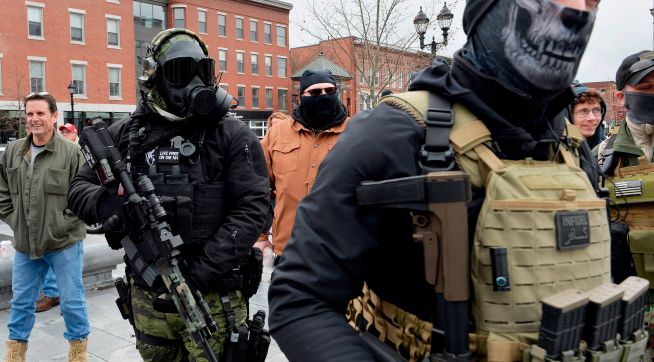
The protests we’ve seen in a handful of locations around the country have bamboozled a lot of the national press. Look closely and a lot of the turnout is heavily stocked with militia types and the kinds of groups who turned out for the Charlottesville protests a couple years ago. But the bigger thing is that for now they appear highly orchestrated. In Michigan, they appear to be in part in reaction polling showing severe declines in public support for President Trump. They’re organized by groups funded in large part by the DeVos family. These are basically Trump loyalists supporting Trump at his request and mobilized by key rightist groups. The key question, as TPM Reader TS explains, is whether what starts here as orchestrated and largely inorganic takes on a life of its own and gains political traction. They now have Fox and an incumbent President cheering them on as a demonstration of political identity.
As for the “open the economy” protests right now, I am keeping an eye on them. A modest number of places so far, and participants in the tens to hundreds to around a thousand apiece. These early events look very orchestrated by a few key national professional organizations – and more electorally aimed than early Tea P or resistance protests were in 2009 and 2017. The orchestrators are Americans for Prosperity, Freedom Works, Club for Growth, and the Trump reelect campaign, all national professional operations. The advocacy groups are all ultra-free-market operations that most certainly do not want most Americans to become reliant upon public benefits or more trusting of government.
Read More
In the last couple years I’ve seriously upped my daily exercise game. Until about six weeks ago I spent about an hour on an elliptical machine almost every day. An elliptical was key because a few years ago I tore my ACL and in consultation with my doctor decided not to have it repaired. It didn’t hurt and I had basically full function. Jogging as a regular exercise was out. But I never liked jogging anyway. But without access to a gym that became more of an issue. Don’t get me wrong. I can run and even sprint. But I can feel in my knee that an hour of it a day over time is not a good idea. So I’ve resorted to long walks which meant I needed something to listen to.
That led me to the back catalog of our house podcast. It’s pretty good! If you haven’t checked it out definitely give it a listen. For me though it has been fascinating to retrace the last eight weeks in reverse: the slow machinery of impending crisis half a world away accelerating into a full national emergency and perhaps the greatest public crisis of our lifetimes.
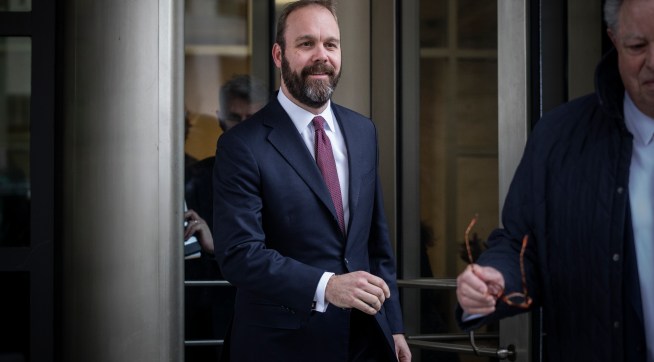
The pandemic and the Russia probe have collided, in more ways than one.
I’ve told you a few times that the news business has been thrown into severe crisis by the COVID19 epidemic. It’s not necessarily the most hard hit industry. Hospitality, travel and related service industries have been far more drastically affected in absolute terms. But those industries were all doing well pre-crisis. They faced no structural challenges to their business models. The news business has been in an evolving and protracted crisis for years.
You remember the controversy. To me it was one of the most unconscionable acts of the whole COVID19 Crisis in the US, which is saying a lot. The Wisconsin GOP forced an in-person in election in the midst of a deadly epidemic because they believed that a low turnout election would help them retain a seat on the state Supreme Court. As it happened, they lost the seat. But did forcing Wisconsinites out of their houses and to voting stations spur new infections in any documentable way?
Let me start by saying the evidence looks ambiguous to me at least. But it’s gotten some discussion online. So I put together a chart to see what happened.
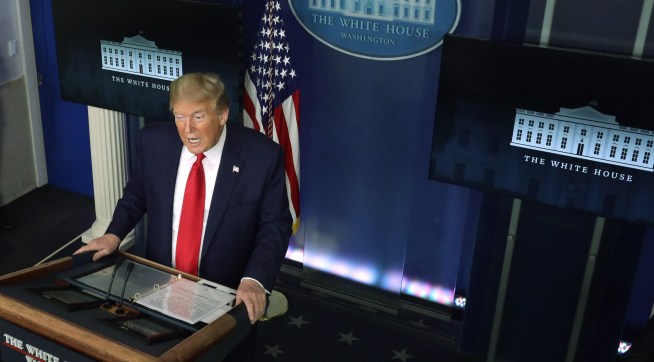
Beyond perpetuating his own political objective, President Trump’s latest Twitter announcement on temporary immigration action likely won’t bring much substantial change to policies or programs his administration has already halted in the wake of the pandemic.
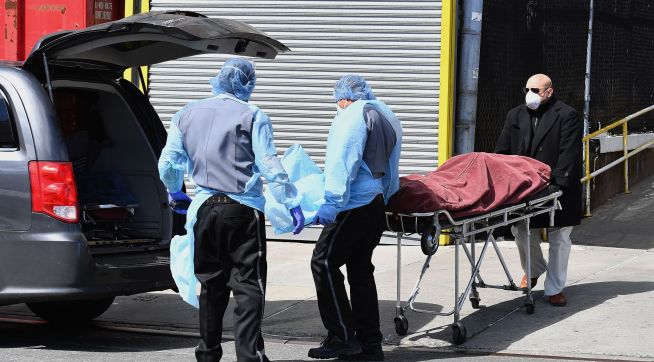
There’s been a lot of discussion about how deadly COVID19 is. It’s always seemed highly unlikely that the number of fatalities per lab-confirmed cases is at all representative of the true percentage of people who die from being infected with COVID19. That number was over 3% in China, about 5.4% in the US currently and has ranged as high as 10% in Italy. Far too many cases are escaping lab confirmed detection for those to be close to accurate.
It’s still an initial study, not the kind of double blind controlled study that is the gold standard of drug studies. But the largest study to date, based on data from the VA, shows that hydroxychloroquine, the purported miracle drug repeatedly touted by President Trump, showed slightly MORE deaths from COVID19 among those who were treated with the drug. Read More
Since the first reports in January of a novel coronavirus spreading out of control in China, people around the globe have been trying to figure out just how lethal the disease is. As the pandemic has ravaged the United States and shuttered large sections of the national economy the question has only become more controversial and politicized. An infected individual’s chances of dying or becoming gravely ill from COVID19 are not only important in themselves. They directly inform what costs society should be willing to incur to slow or halt the spread of the disease.
That question is now engaged again in the furious public debate over when or how quickly to restart economic life in the country. We’ve seen the crazy talk and denial on Fox News and other pro-Trump media. But I want to discuss a version of this debate being carried on by real doctors and public health scientists, with very direct impacts on what Americans do next as they combat COVID19.