


It’s difficult to imagine anything more perverse, authoritarian, diseased or corrupt than the immediate push to back President Trump’s “ballroom” as a response to security failures revealed in the shooting incident at the White House Correspondents Dinner. It involves so many overlapping bad ideas, bad motives and even bad people that it requires a some organization and staging to cover them all.
Let’s dive in.
First, despite the chorus of claims, this was not in any sense a security failure. It was a success. A man rushed a security perimeter inside the Washington Hilton — far from the actual festivities and protectees — and he was stopped. Initial reports suggested the gunman was stopped just before or even while entering the ballroom. Neither is true. He was on a different floor. The point of Secret Service security is not to prevent every violent incident but any that endanger the President or other protectees.
This isn’t a semantic point. Presidential security is a balance between protection and allowing a chief executive to be among the public to the greatest extent possible. It is also a balance between the safety of the president and collateral imposition of force and surveillance around the president. Yes, we could make sure no one gets within one mile or five miles of the president with a gun. But we don’t want to live in that kind of society. We don’t want a president to have that kind of relationship to the rest of civilian society. We don’t want a presidency that crenellated with force and violence and separation from the rest of society. Nothing about this incident suggests anything like that is necessary. The assailant was stopped (surprisingly without serious injury to himself or law enforcement) before he got anywhere near any of the protectees.
Let’s begin by stipulating that the new ballroom rationale is just another bad faith effort to justify the tacky, strongman-y monstrosity which is a monument of the mind to Trump’s gaucheness. Only recently in court, his lawyers were justifying it on national security terms because a new super-sized White House bunker is apparently going to be built underneath it. Somehow the ballroom is necessary to cover the security bunker.
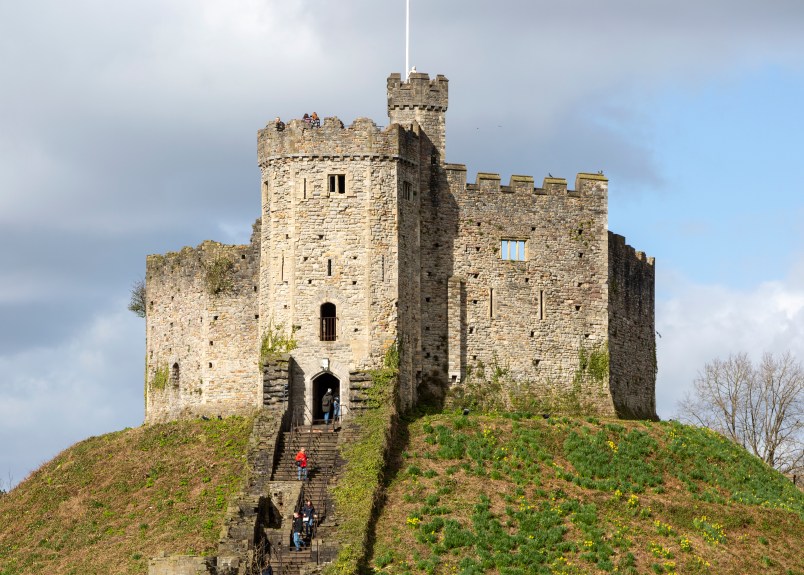
These are, of course, all ex-post-facto rationales to justify Trump’s new toy. But it’s edifying to consider the new rationale at face value. Because disingenuousness aside, it’s part of a clear trend: the slow building of a sort of motte-and-bailey presidency, the at-first crude fortifications evolving into castles which the invading Normans used to overawe and pacify the conquered English. At least six top Trump administration officials now do or did live on military bases purportedly for their security. One was former DHS Secretary Kristi Noem who may still be living on one. Others include Secretary of State Marco Rubio, Defense Secretary Pete Hegseth, former Attorney General Pam Bondi, White House Deputy Chief of Staff Stephen Miller and Army Secretary Dan Driscoll. These are all the top members of the administration, including the heads of the top three departments — State, Justice and Defense. They’re all living on military bases (rent free) because none of the civilian rules of conduct apply on a military base. The press can’t go near these homes. Protesters can’t. None of the things that apply to all civilian life apply on a military base. They’re living outside of civilian society, despite the fact that these are some of the highest ranking civilians in the US government.
These grandees aren’t on military bases to protect them from violence. They’re there to protect themselves from annoyance, from the raucousness of civilian, democratic life, which can definitely be annoying. This is why some people don’t want to go into public service.
The fact that Trump’s rationale may be fake doesn’t mean the trend outlined here isn’t real. The president already lives in a highly fortified mansion which has a security perimeter extending significantly out into the surrounding neighborhood. The latest idea for the ballroom appears to imagine a new era in which the president doesn’t even venture out for social or public events. The social or public events come to him, or rather come into his fortified and likely militarized encampment.
The safety of the president is unquestionably important, though we may feel that more palpably when it is a head of state we support than when we don’t. It is not the life of the individual person but the continuity of government and state power that is at stake. Three or four people have credibly threatened Donald Trump’s life during his decade at the pinnacle of political life in the United States. These are facts we have to grapple with. His cabinet ministers and other high-profile figures would likely point to the murder of UnitedHealthcare CEO Brian Thompson as evidence that the rising tide of political violence isn’t limited to presidents. They’re right.
But his consistent desire to create a monarchical and militarized presidency predates those attempts and has to be resisted quite apart from them. Just as vulnerability to criminal prosecution is part of holding power, some level of physical danger has to be accepted, even as we should prioritize the safety of the president to the greatest extent possible. But the militarization of the office of the presidency, the separation of the president from the broader civilian society should also always be considered a necessary evil. At a time when civic democracy is beleaguered and in need of a rebirth, we need to be pushing in every way we can to resist this tendency and in fact build a more downsized presidency altogether.