
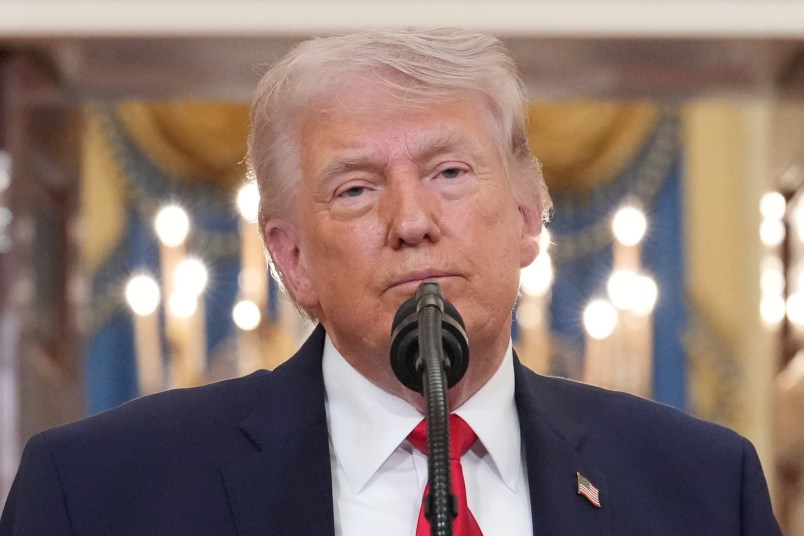
There is a dimension to the latest developments in the redistricting wars that isn’t hidden precisely but isn’t getting the attention it should. Put simply, Donald Trump’s interests are rapidly diverging from those of his House Republicans.
Florida Governor Ron DeSantis just introduced a new Florida House map which purports to net Republicans an additional four seats in November. But Florida incumbents are more than a little spooked about it. They don’t like it. When you aggressively gerrymander a state, you do more than create more seats for your party. You also create some level of risk that that map will amplify a wave election into a true blowout. Thin the margin of your safe seats enough to create some more safe or favorable seats and all those existing seats become a bit more vulnerable. It’s only a real danger in a wave election. But that’s precisely what 2026 looks like.
It’s just basic math. And that danger is always there. But it takes on a new salience because of Trump’s personalist perspective on all politics. Put simply, the difference between a 10-seat Democratic majority in 2027 and a 40-seat one is basically meaningless to Trump. Obviously it means a lot to those 30 additional Republicans who lose their seats.
This changes the stakes pretty dramatically. I think a Democratic House is virtually a certainty next year. I strongly suspect most House Republicans know that too. But let’s say for the sake of argument that these redistricting moves increase the odds of holding the House 10% or 20%. Those are actually great odds if the downsides don’t matter to you — which to Trump they do not.
Florida is probably the last big bite at this apple for this cycle, though today’s VRA-gutting decision may open up some more possibilities. So most of this is locked in. There’s nothing current incumbents can do about it. But keep a close eye on this dynamic nonetheless.