


John Fund, top player in the voter suppression and vote fraud bamboozlement racket, takes to National Review to announce that the court decision is “actually a victory for civil rights.”
I still remain generally hopeful, over the medium term, certainly the long term that the changing nature of the electorate will prove too strong to be bridled by Republican voter suppression efforts which will undoubtedly redouble in response to this wildly activist ruling by the Supreme Court. In the short term, it’s not so clear, though, particularly with regards to 2014. Indeed, the 2012 election and this decision fit together like two pieces of a puzzle. Read More
Quick reminder on which jurisdictions were covered by Section 4 of the Voting Rights Act — until today.
Andrew Ross Sorkin apologizes for suggesting he’d arrest Glenn Greenwald.
I still remain generally hopeful, over the medium term, certainly the long term that the changing nature of the electorate will prove too strong to be bridled by Republican voter suppression efforts which will undoubtedly redouble in response to this wildly activist ruling by the Supreme Court. In the short term, it’s not so clear, though, particularly with regards to 2014. Indeed, the 2012 election and this decision fit together like two pieces of a puzzle. Read More
Senate Judiciary Committee Chairman Patrick Leahy (D-VT): “I could not disagree more with this result or the majority’s rationale. … I intend to take immediate action to ensure that we will have a strong and reconstituted Voting Rights Act that protects against racial discrimination in voting.”
In his concurring opinion, Justice Clarence Thomas writes that he would have struck down Section 5, too: “By leaving the inevitable conclusion unstated, the Court needlessly prolongs the demise of that provision. For the reasons stated in the Court’s opinion, I would find §5 unconstitutional.”
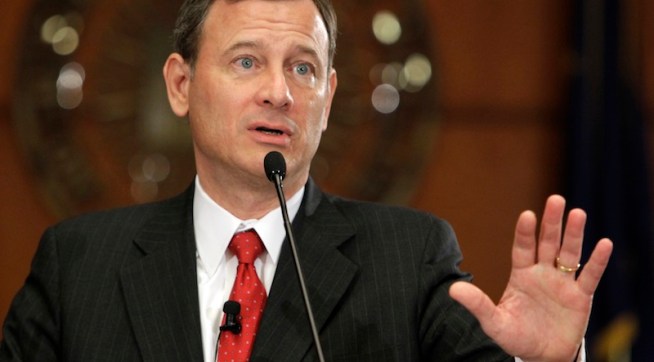
Here’s the concluding section of Chief Justice Roberts’ majority opinion in the Voting Rights Act case:
Our decision in no way affects the permanent, nationwide ban on racial discrimination in voting found in §2. We issue no holding on §5 itself, only on the coverage formula. Congress may draft another formula based on current conditions. Such a formula is an initial prerequisite to a determination that exceptional conditions still exist justifying such an “extraordinary departure from the traditional course of relations between the States and the Federal Government.” … Our country has changed, and while any racial discrimination in voting is too much, Congress must ensure that the legislation it passes to remedy that problem speaks to current conditions.
Sahil Kapur has more.
Much of the focus in advance of the Supreme Court’s decision on the Voting Rights Act was on Section 5, which requires preclearance from the Justice Department or federal courts before a jurisdiction subject to the Voting Rights Act — those with histories of racial discrimination — can change their voting laws.
But the court did not rule on Section 5. Instead it struck down Section 4, which establishes which jurisdictions are subject to the extra scrutiny involved in preclearance. Think: old Confederacy states. So arguably the court went further in invalidating the law. More soon.