


A few days back, I got an email from TPM Reader JL asking me not to give in to the Luddite or reflexively anti-AI tendency he sensed I might have. It was a very interesting note and led to an interesting exchange, because JL is far from an AI maximalist or promoter and our views ended up not being that far apart. I explained at greater length that my general skepticism toward AI is based on four interrelated points.
The first is that even very positive technological revolutions (say, the Industrial Revolution) end up hurting a lot of people. Second, this revolution is coming to us under the guidance and ownership of tech billionaires who are increasingly wedded to and driven by predatory and illiberal ideologies. Both those facts make me think that we should approach every new AI development from a posture of skepticism, even if some or most may end up being positive. Trust but verify and all that. Point three is closely related to point two: AI is being built, even more than most of us realize, by consuming everyone else’s creative work with no compensation. It’s less “thought” than more and more refined statistical associations between different words and word patterns. And that’s to build products that will be privately owned and sold back to us. Again, predatory and illiberal … in important ways likely illegal.
Join
I’ve been observing the ongoing debates about which of the several “reckonings” Democrats need to have to improve their fortunes with what I can only describe as a mounting frustration and disgust. There’s the one over Joe Biden being old. There’s the one about Democrats becoming too “woke” and speech police-y. There’s the one about having betrayed or fallen short about this or that left-leaning cause. On the merits I agree with some of these more than others. Some I think are genuinely important. But as things Democrats should be focusing on now, taking accountability for, repositioning, whatever(!) they all, taking together, strike me as different sorts of pathetic, out-of-touch and myopic distractions.
Parties succeed and gain traction by doing far more than by self-analyzing. And my own theory of the case is that core driver and cause of the low standing of the Democratic Party right now is not wokeness or immigration or Joe Biden’s age but the fact that Democrats are simply not effective at advancing the policies they claim to support or protecting the constituencies they claim to defend. Put simply, they are some mix of unable and unwilling to wield power to achieve specific ends.
Read More
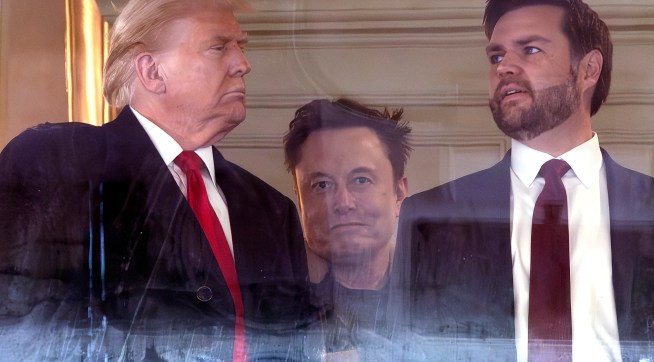
We’re in the midst of a storm of articles — variously encomiums, valedictories, friendly morality tales — about Elon Musk’s purported departure from service in the federal government. I’m going to note a couple quite unflattering pieces in a moment. But for now, I want to focus on the bulk of them, which tend to portray Musk as someone who tried to tame government spending but was simply over-matched by “Washington’s ways” and finally failed. You get the image of a guy who is chastened, heading back to his regular life, no match for Sodom any more than most of us would be.
JoinThe Office of Personnel Management has a new hiring plan which instructs government agencies to cease collecting any demographic information on their workforces and rolls out a political loyalty tests which asks new employees to list their favorite presidential executive orders and how they envision bringing the President’s EO vision to fruition.
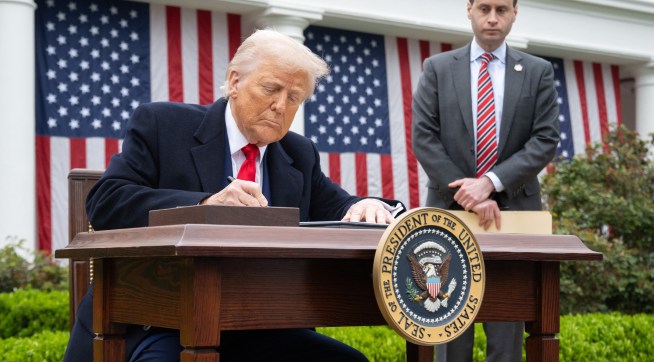
The trade court’s decision that Trump’s entire trade war was based on powers President Trump didn’t actually have is a big, big deal. But there are some details that are important to consider. As we’ve discussed in earlier posts, this isn’t the only law in which Congress has delegated authority over trade and tariffs to the President, a power which the Constitution gives entirely and unambiguously to Congress. In fact, this law doesn’t deal with tariff authority at all. That’s the whole point of the decision. Yes, Congress has given you a lot of authority over tariffs and trade. But not with this law, the court is saying. Just why he chose this one is important and gives us some visibility into what comes next.
JoinA new episode of The Josh Marshall Podcast is live! This week, Kate and Josh discuss the Supreme Court killing off independent agencies, Elon Musk’s sad trombone interviews and the latest news cycle about Biden’s age.
Read MoreIt’s been about a month since I introduced the “DOJ-in-Exile” idea. So I wanted to give you an update on my progress getting it off the ground. First of all, I got quite a lot of interest and excitement from a lot of TPM Readers who were interested in being involved in some fashion. I also got, in response to I think one passing mention about looking for funds, a number of soft commitments in the 5- or 6-figure range. “Commitments” slightly overstates it. I wasn’t trying to discuss anything at that level. I was just interested in hearing about general interest and willingness. Based on those conversations I thought that even from the small group of people I was in touch with, there was likely at least a few hundred thousand of funding available. That’s a pretty good start on the funding front from such a low-key ask.
Read MoreYou have probably seen that a three judge panel of the U.S. Court of International Trade has ruled that Trump’s tariffs are unlawful. So done and done, subject to appeal of course. Trump imposed the tariffs under a 1977 law called the International Emergency Economic Powers Act. The three judge panel said he greatly exceeded his powers. That means that most of the tariffs which have dominated American and even global politics for the last couple months are out, subject to appeal. I need to dig a bit more into this but I believe some of the tariffs imposed on Canada and Mexico were under separate legal authorities in which the President has clearer power. So I don’t know precisely which is which. But the gist is that most of the tariffs are out and all the “reciprocal” ones.
Read More
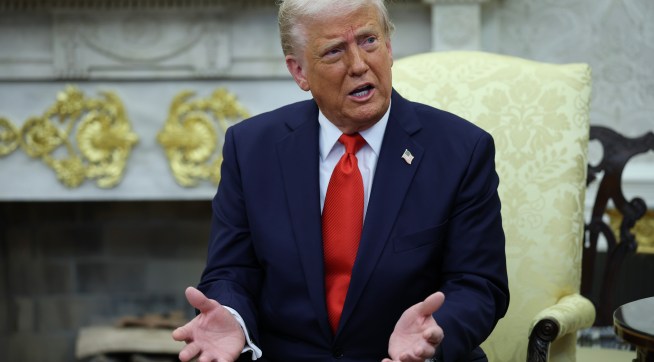
Yesterday, the Conference Board reported that in May consumer confidence surged by 12.3, the largest monthly increase in four years. Bloomberg said the surge was bigger than the estimates of any private-sector economists Bloomberg contacted for its survey. The data suggests consumer confidence was already moving up and then surged forward after Donald Trump made a series of “deals,” most notably with China, reducing the fear of tariffs or an economic slowdown tied to them. It’s important to note that these weren’t “deals” in any meaningful sense. He just agreed with the countries in questions, most importantly with China, to go back to the way things were before he introduced his tariffs, with small, continual, residual tariffs. In a way Trump is getting credit for caving. But in reality these shifts in consumer sentiment are rational reactions to Trump’s actions. The strangling tariffs were the problem. Trump decided to mostly get rid of them, at least for now. So people’s expectations about the economy improved. It makes perfect sense.
Join
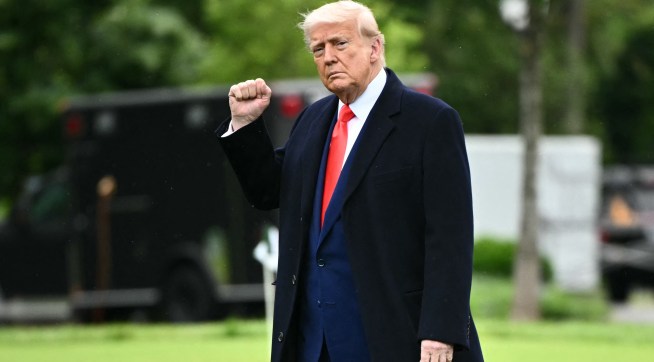
I want to start this week with a comment about the meta-news environment. It’s a point that may not surprise you. But it shapes everything we’re seeing today and does so with an uncanny silence. Quite simply, lots and lots of things are not being said or reported because people are afraid to say them. “Afraid” may be too strong a word in some cases, though the fuzzy, murky spectrum separating “fear” from something more like calculation is a key feature of what is happening. I’m far from the first to note this. But when people do note it it doesn’t get a lot of attention because there’s not a clear empirical basis for it. What’s your basis for noting, at a society-wide level, what people aren’t saying? How do you prove — or, perhaps better to say, illustrate — that reality? And yet it is happening and it’s not difficult to see it observationally if you look closely in any one place.
Join