


A new episode of The Josh Marshall Podcast is live! This week, Kate and Josh discuss the Trump administration’s muteness on abortion (so far), their losses in recent Alien Enemies Act cases and the sweet, sweet downfall of eagle Ed Martin.
Read More
A short time ago, President Trump announced in the Oval Office that he is pulling the nomination of Ed Martin as U.S. attorney for D.C.
Saying he was “disappointed” that Martin’s nomination foundered in the Senate, Trump floated the possibility of bringing Martin into the administration – and specifically into the Justice Department – in some other way.
So we may not be rid of Martin quite yet.
Read MoreFrom an anonymous TPM Reader …
Read MoreAs a former OPM appointee, this seems suspect for numerous reasons. Going through the Federal News Network article, the first thing that doesn’t make sense is in the second paragraph. Leading with retirement applications and RIFs is really odd, since the federal retirement process is a government-wide problem that a central OPM system isn’t going to fix alone, and OPM has no real role in RIFs for other agencies. The small price tag you cite is another huge red flag. This must be for OPM systems only (internal, not in a government-wide capacity) and I know from experience working with Workday and companies like them that $300K doesn’t go very far. I think they got rid of too many people at OPM too quickly (a mix of policy expert people and hands on execution people) and this is a desperate effort to fill that gap.


After firing much of its staff, the Office of Personal Management, under Elon Musk’s effective control since late January, has handed out a no bid contract to cloud-AI-based HR company Workday to help handle the mountain of terminations, retirements and layoffs built up over the first three months of the Trump administration. OPM stated in justification for the sole-source, no-bid contract that “an urgent confluence of operational failures and binding federal mandates that require immediate action.”
JoinI am reading an April 21, 2025 letter from Acting Assistant Secretary of Defense for Health Affairs Dr. Stephen Ferrara which provides guidance for discontinuing treatment of minors with gender dysphoria at military medical treatment facilities. After noting the Pentagon policy banning the initiation or continuation of treatment with puberty blockers or cross-sex hormone therapy, the letter allows clinicians to offer a tapering-off regime which can last between 6 and 12 weeks, during which military doctors can write prescriptions. Anything longer than 12 weeks must get express approval from Ferrara’s office. The letter also notes administrative changes which will require patients to fill tapering prescriptions “at private sector pharmacies at their own expense.”
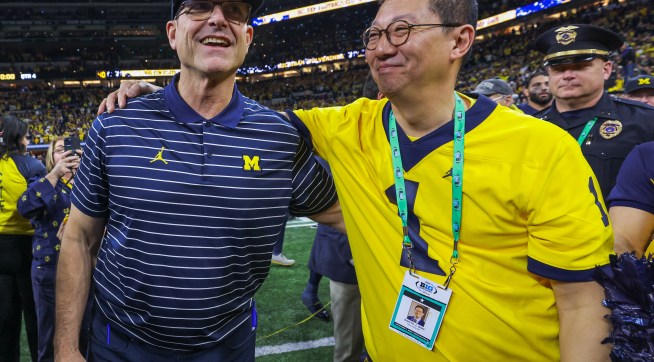
Over the weekend, University of Michigan President Santa Ono announced that he was leaving his post to take up the leadership of the University of Florida. It was an interesting choice. It’s been reported that Ono had been warier of resisting or challenging the dictates of the Trump administration than the majority of the University’s Board of Regents, the members of which are elected in statewide elections. The majority of appointees to the University of Florida’s board are appointed by the state’s governor, Ron DeSantis.
Read More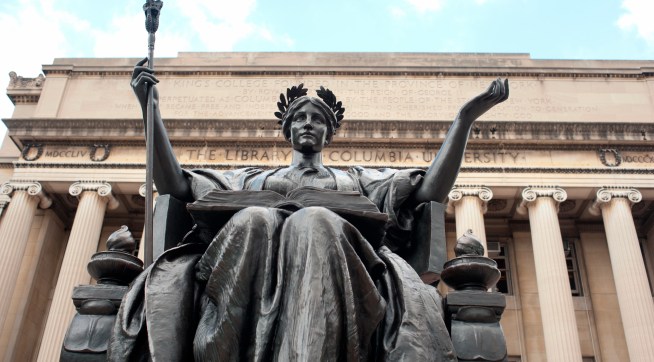
This is largely preaching to the choir, but it’s absent enough from the news coverage that is worth stating clearly. Most right-thinking people are aghast at Trump’s onslaught on higher education. The range of reasons is endlessly discussed and doesn’t need to be enumerated here. But through those discussions is the subtext that higher education is dependent on federal subsidies. There is some truth to this when it comes to Pell grants and backstopping student loans. But with grants to fund scientific research, it turns the reality on its head. It’s the federal government which is the initiator here, both historically and also in terms of the ongoing dynamic of grant-making.
Read More
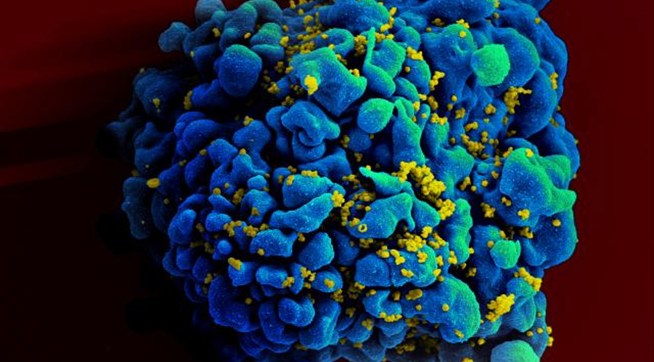
Here is a brief follow-up on the question TPM Reader MA addresses in an earlier post: why does the Trump administration have it in for biomedical/disease research? It’s a really good question and one I have not seen an adequate explanation for. But having been reporting on this for a few months now I think I do get the outlines of it.
JoinA note from TPM Reader MA on biomedical research. I’m sharing it because it’s a good simple explanation not only of the nuts and bolts reality of “your cure isn’t going to be there when you need it” but the massive hit to global competitiveness and economic advantage …
Read MoreI’m racking my brain trying to figure out why Trump would want to kill funding for curing cancer/Alzheimer’s etc. I guess, as is often the case, with Trump, the simple explanation is the most likely. He sees the university as the enemy and wants to use whatever federal leverage he can to attack them, even if it ends up destroying one of the areas in which the US has a huge comparative advantage. There are significant economic consequences to spiking medical research in the universities: this subsidizes the training of people who will work in the industry, and it drives the types of blue sky research that industry doesn’t want to do, but that it benefits greatly from. It creates a vacuum that other countries will rush to fill. If it persists, the comparative advantage that the US has gained by attracting top global talent will collapse.