


Last week I asked some questions about the law firm “agreements” with Donald Trump that seem very unclear from the available news coverage. Namely, where are the agreements? Are they formal agreements committed to writing? Who are the parties? Are they signed?
Sources from the Big Law firms who inked (maybe?) new agreements last week gave me a lot more visibility into what these deals are about. So I want to share that with you.
First, I want to renew my request to lawyers at the big firms to reach out and share information. I can not only protect your confidentiality, I can keep your firm anonymous as well. See more in the addenda at the end of this post.
Now let’s get down to business. Let’s start with what and where are the agreements?
JoinYou’ve likely seen that Harvard officially and publicly refused the Trump White House’s latest set of demands. You can see the letter here. I would say that if you’re going to read only one letter, it should actually be the one the White House (notionally the GSA, HHS and Education) sent to Harvard, which the university published along with its response.
It’s a very clarifying letter. It’s not too much to say it essentially demands operational control over the whole university or perhaps more specifically a kind of receivership of the sort police departments sometimes go into under consent to decrees after they’re caught framing or torturing prisoners. When I first read it I was not … well, certainly not happy to see it but it occurred to me that the demands were not only substantively of an indefensible character but also very tenuous legally. It’s good to have this fight on these grounds because, as I said, they demand to put the entire university under the direct control, down to hiring, curriculum, admissions and more, of MAGA operatives. It’s been suggested to me by one person familiar with the university’s decision-making that waiting for the White House to spell out all its demands on paper may have been by design to put the university’s refusal on the surest legal footing. If that’s the case, it was smart to wait.
Read More
Here’s how I look at today’s White House spectacle.
I don’t really care what these two men say. The only next step I’m focused on is the one that now faces the Supreme Court. The White House is now brazenly ignoring the crystal clear import and goal of the Court’s order which is not to facilitate merely the return of Mr. Abrego Garcia, but his “release from custody in El Salvador.” The Court will now rapidly have to decide whether to knuckle under to this institutional humiliation or stand its ground. I don’t know which course it will choose. But I am very eager to find out.
Nayib Bukele is actively and publicly conspiring not only to violate American domestic law but the orders of American courts. El Salvador is a minor power, essentially a city-state, which even in our current degraded state requires the friendship and almost always the aid of the United States. Bukele is interfering not only in American domestic politics but the American legal and constitutional process. These are grave offenses against the sovereignty of the American people and the American constitutional order.
Trump won’t be in power forever. The next Democratic administration won’t be like the last one. He needs to know that, and the consequences of that, today.
Any Democratic politician who doesn’t understand this and say as much publicly should have no future in elected office.
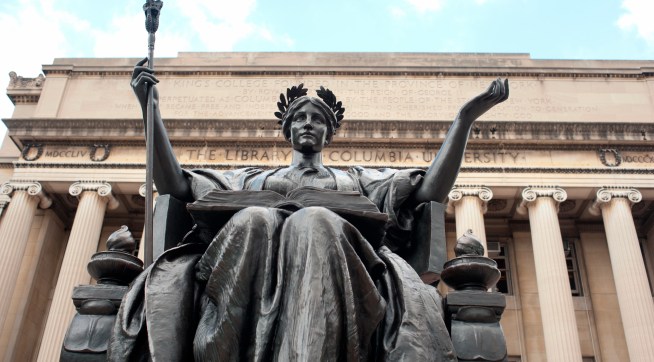
I’ve heard from a number of you in response to my posts about the fate of universities in the Trump era. I’ve published a couple of these responses below and I’ll post more. They are fascinating and illuminating replies. Most are generally supportive. A few are in the category of “Dude, you have no idea what you’re talking about.” But there are a number which I would put in the category of, “I agree. The universities have to fight. But I’m not sure you get how big a bloodbath we’re talking about.”
I wanted to expand on those earlier posts. And much of this will be meant to address that last category of responses.
I haven’t been directly involved in university life for a couple decades. So there are lots of details I don’t know, and plenty of things I didn’t learn during my time as a grad student and TA. But I think I do get the broad outlines. I know that what we’re talking about is full of risks, probable damage and levels of damage that are existential. So let me expand on what I’ve said by distilling points I’ve made in most of these email exchanges with readers over the last several days. To be clear, this isn’t meant as any sort of manifesto: just a distillation of what I think and some additional detail that expands on those earlier posts.
Most of what I said in these exchanges came down to five points.
JoinFrom TPM Reader XX …
Read MoreSometimes analogies illuminate but sometimes they don’t. Docs go into the business knowing the high likelihood of confronting danger-to-oneself at some point over career, if not from a pandemic than from a “routine” infectious agent that takes a virulent turn. Universities at least in the US are not built and financed in a way to take account of the risk of an authoritarian “burn it down” mood in the national leadership which is prepared to proceed in a lawless, destructive way.
From TPM Reader CA …
Read MoreThank you very much for the piece on universities. The connection you draw between social authority and public goods is exactly right. Indeed, their status of tax-exempt non-profits depends on a version of this bargain. But I would add to your analysis a problem that I think exists as a condition of possibility for the war being waged by the Trump administration. This is the twofold shift that took place c. 1980, regarding who pays for education and who benefits from research.
From TPM Reader AK …
Read MoreJust read your posts about this. I realize that law is quaint right now, and I haven’t researched the details. Maybe I’m missing something basic, or alternatively maybe it’s just so obvious that nobody is bothering to say it. But if Trump is extorting millions of dollars of value in his *personal* capacity in consideration for taking or desisting from taking official government action, that seems like a textbook definition of bribery or some other form of criminal misconduct, presumably with no official immunity.
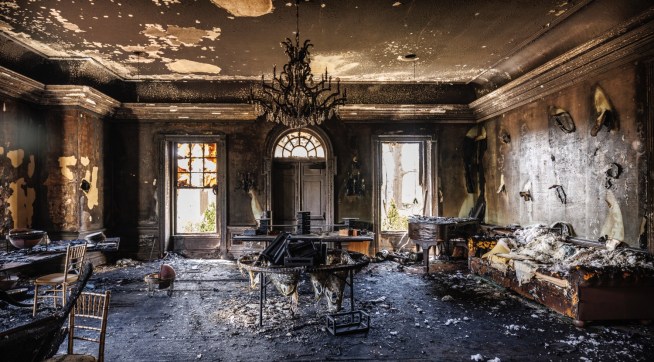
You probably saw the reports that there was an arson attempt of some sort at the Pennsylvania governor’s mansion last night on the first night of Passover. The original reports, at least the ones I saw, did not capture the gravity of what happened. “Firebombing” would be the only accurate way to describe the photos released this afternoon by the governor’s office. It’s possible that the original accounts provided to local media themselves didn’t capture the scale of the incident. A late afternoon press conference described it in more detail and released video and photographs. You can see the full collection of photos here. I’m republishing four of them below.
Read MoreHere’s one thing that’s hardly been discussed as far as I can tell. We know about the Trump “deals” with various law firms. We know about the “deal” with Columbia University, which the administration has now violated to the extent it was ever actually a deal. But where are these deals? What are they exactly? I mean, have these agreements been committed to paper? In every one of these that I have seen each side has a general description of what’s been agreed to but there’s no document that you would have in the real world — or the real non-corrupt world — when two parties agree to something.
Another important question: Who are the parties to the agreements? Are they with the government of the United States or Donald Trump? I think it must be the latter since I’m not sure how you would legally structure such agreements. But that’s another matter. Where are the agreements? Why can’t we see them?
In the mid-80s, when I was a teenager, I had a brief conversation with a successful, well-off doctor. I wasn’t a patient. This person was sort of a family friend. In that conversation he said matter-of-factly but with the air of a let’s-be-real statement that he wouldn’t want to treat AIDS patients because he didn’t want to run the risk of getting AIDS himself.
Some context is important. This was still very early in the AIDS epidemic. The first blood test for HIV only became available in 1985. This was not a callous or uncaring man. And, at least at the margins, it wasn’t yet as clear as it would eventually be just how much risk physicians faced. But the comment stuck with me and I kept thinking about it. I still haven’t forgotten it 40 years later.
Join