


Feinstein: “I am announcing today I will not run for reelection in 2024 but intend to accomplish as much for California as I can through the end of next year when my term ends.”
I’m not sure I’d advise the political strategy TPM Reader JA suggests here. But he does get at a point I alluded to this morning. Current beneficiaries aren’t safe in GOP plans either. On paper, this is what they claim. No cuts for anyone over, say, 55. But Social Security is an inter-generational compact. Once you tell younger workers they will get lower benefits for the same tax contribution, you weaken support for current beneficiaries. If you’re 30 today, how do you feel about working the next 35 years at the current tax rate to support current beneficiaries when your own benefits will be cut dramatically?
Read MoreOne of the interesting things that never gets discussed in debates about Social Security (and Medicare) and cutting benefits for people below a certain age threshold is how maintaining higher benefits is likely not sustainable for the older beneficiaries either, unless the cuts are limited to raising the age thresholds.
With Republicans telling us, collectively, “Who are you going to believe? Us or your lyin’ eyes?” the work of de-bamboozling is never done. Don’t thank me now. Just remember to sign up to become a member.
As we noted earlier, Republicans are now aghast that anyone would be claiming they want to cut Social Security. But last year the Republican Study Committee — a House caucus which includes about 75% of all House Republicans — released a proposed 2023 budget which included basically every kind of Social Security cut on offer.
Read MoreNow you can get Morning Memo via email and never miss it again. Sign up here:
This morning we get another reminder that Mike Pence is no hero.
Pence clearly doesn’t want to confront Donald Trump in any kind of sustained way in order to preserve his own political viability — and it leads to laughable contradictions.
I want to expand briefly on a point I alluded to in Morning Memo.
Read More
Alternate headline: Florida State GOPers Are Legislating DeSantis’ 2024 Bid Into Existence
As I was editing my colleague Kaila Philo’s piece here today on the College Board’s biting response to the DeSantis administration’s “PR stunt,” this bit struck me:
Read More“They provided these AP courses for a long time, but you know, there are probably some other vendors who may be able to do that job as good or even a lot better,” the governor said at a news conference in Naples, Florida. He also said that he’s spoken with Florida House Speaker Paul Renner about potential legislation to “re-evaluate how Florida’s doing that.”
It’s not just that Republicans have been pushing for cutting or phasing out Social Security and Medicare for decades. They are now demanding that President Biden agree not to say what their policy is. The demand amounts to this: despite the fact that Republicans have been demanding cuts and a phase out for decades and despite the fact they will continue to do so after the current burst of media attention abates, Biden must stop telling voters about this because Republicans have momentarily agreed to deny what their policy is. Indeed, what’s especially weird is how many Republicans can’t help restating their demand for cuts even while denying their demands for cuts.
There are so many examples of this it’s hard to know where to start. But since you have to start somewhere I’ve begun a list of quotes supporting cuts from Republican members who now claim they’ve never supporting cutting Social Security.
Have other examples? Send me them.
Read More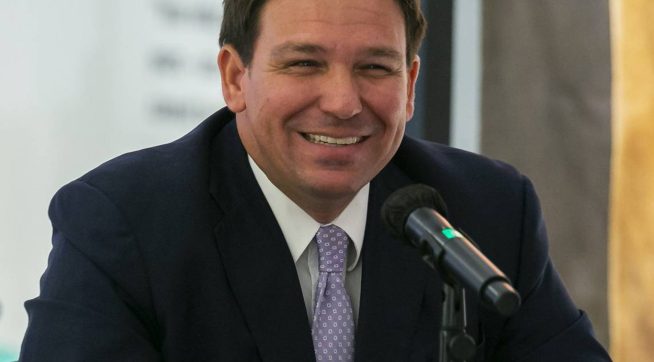
The College Board has now released a letter going after Gov. Ron DeSantis for what they call a “PR stunt” in attacking and at least tentatively refusing to participate in the College Board’s new African-American Studies AP course. The following isn’t a defense of the College Board, which deserves a lot more scrutiny than it gets on topics entirely separate from this course. It’s also not a defense of the curriculum itself. But a mix of speculation and hints lead me to think that this was likely a set up on DeSantis’s part.
Specifically, I suspect that DeSantis knew that these changes were coming and jumped in front of the announcement, knowing that he could then take credit for getting the Board to de-wokenize its offering in the face of DeSantis’s iron will.
Read More
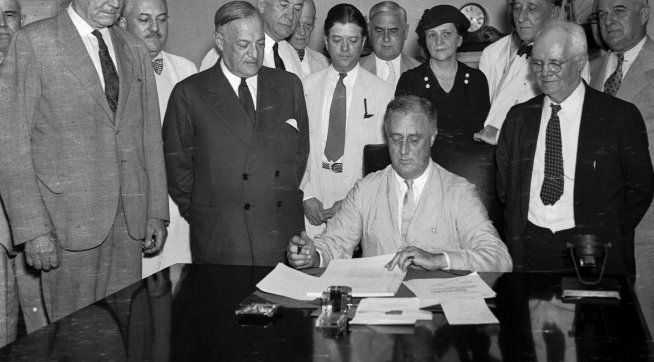
Since we’re talking about whether Social Security survives for future generations, we should start with understanding the various ways the program’s foes propose to limit or get rid of it. Since Social Security is one of America’s most popular government programs, virtually no one says they want to get rid of Social Security. (Except Sen. Mike Lee (R-UT).) Plans to cut it or phase it out entirely are almost all framed as ways to “improve it” or “save” it.
So for instance on CNN this weekend Sen. Mike Rounds (R-SD) compared Social Security to defense spending. “We’re never going to not fund defense. But at the same time we — every single year, we look at how we make it better. And I think it’s about time we start talking about Social Security and making it better.”
So what are the options?
Join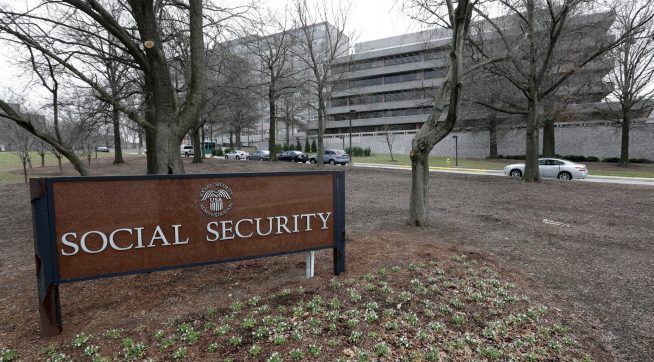
I mentioned a few days ago that political reporters remain way behind when it comes to seeing through the flimflam of Republicans’ schemes to cut or dismantle Social Security. I was reminded in a TPM Reader email a few mornings ago how often the press accounts of the financing of the program itself remain trapped in GOP talking points. In X number of years, we hear again and again, Social Security will become “insolvent.”
But this isn’t true. At best, it’s a totally misleading way to describe how the federal government pays for things.
Social Security and Medicare are funded (almost entirely) by a payroll tax of approximately 15% on wage and salary income up to a statutory cap, which currently stands at $160,200. That tax is split between the employer and the employee. It funds the two programs. A couple generations ago, Congress increased the tax to build up a surplus to pay for the benefits of the baby boom generation. That’s the “trust fund.” Social Security “lent” that extra money to the rest of the federal government, i.e., it purchased government bonds. Eventually the Trust Fund will run out of bonds to cash in. The current estimate is that that will happen in the mid-2030s. This is when Social Security supposedly becomes “insolvent.”
Read More