


You remember the controversy. To me it was one of the most unconscionable acts of the whole COVID19 Crisis in the US, which is saying a lot. The Wisconsin GOP forced an in-person in election in the midst of a deadly epidemic because they believed that a low turnout election would help them retain a seat on the state Supreme Court. As it happened, they lost the seat. But did forcing Wisconsinites out of their houses and to voting stations spur new infections in any documentable way?
Let me start by saying the evidence looks ambiguous to me at least. But it’s gotten some discussion online. So I put together a chart to see what happened.
I’ve told you a few times that the news business has been thrown into severe crisis by the COVID19 epidemic. It’s not necessarily the most hard hit industry. Hospitality, travel and related service industries have been far more drastically affected in absolute terms. But those industries were all doing well pre-crisis. They faced no structural challenges to their business models. The news business has been in an evolving and protracted crisis for years.
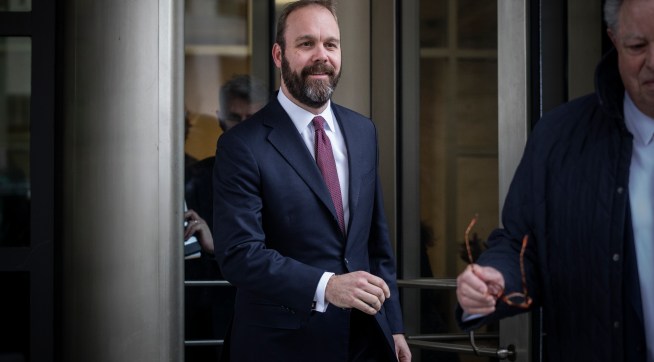
The pandemic and the Russia probe have collided, in more ways than one.
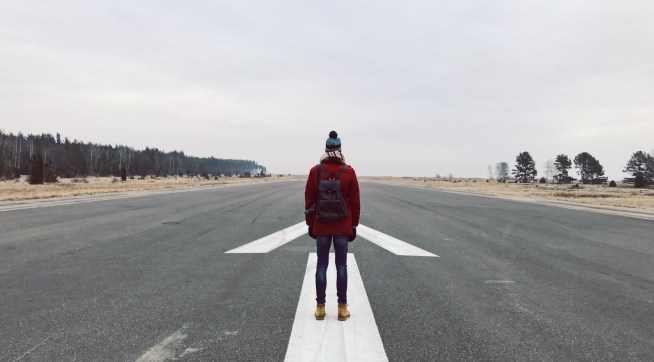
In the last couple years I’ve seriously upped my daily exercise game. Until about six weeks ago I spent about an hour on an elliptical machine almost every day. An elliptical was key because a few years ago I tore my ACL and in consultation with my doctor decided not to have it repaired. It didn’t hurt and I had basically full function. Jogging as a regular exercise was out. But I never liked jogging anyway. But without access to a gym that became more of an issue. Don’t get me wrong. I can run and even sprint. But I can feel in my knee that an hour of it a day over time is not a good idea. So I’ve resorted to long walks which meant I needed something to listen to.
That led me to the back catalog of our house podcast. It’s pretty good! If you haven’t checked it out definitely give it a listen. For me though it has been fascinating to retrace the last eight weeks in reverse: the slow machinery of impending crisis half a world away accelerating into a full national emergency and perhaps the greatest public crisis of our lifetimes.
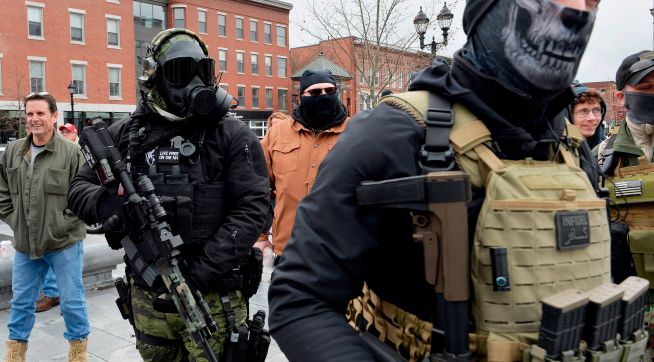
The protests we’ve seen in a handful of locations around the country have bamboozled a lot of the national press. Look closely and a lot of the turnout is heavily stocked with militia types and the kinds of groups who turned out for the Charlottesville protests a couple years ago. But the bigger thing is that for now they appear highly orchestrated. In Michigan, they appear to be in part in reaction polling showing severe declines in public support for President Trump. They’re organized by groups funded in large part by the DeVos family. These are basically Trump loyalists supporting Trump at his request and mobilized by key rightist groups. The key question, as TPM Reader TS explains, is whether what starts here as orchestrated and largely inorganic takes on a life of its own and gains political traction. They now have Fox and an incumbent President cheering them on as a demonstration of political identity.
As for the “open the economy” protests right now, I am keeping an eye on them. A modest number of places so far, and participants in the tens to hundreds to around a thousand apiece. These early events look very orchestrated by a few key national professional organizations – and more electorally aimed than early Tea P or resistance protests were in 2009 and 2017. The orchestrators are Americans for Prosperity, Freedom Works, Club for Growth, and the Trump reelect campaign, all national professional operations. The advocacy groups are all ultra-free-market operations that most certainly do not want most Americans to become reliant upon public benefits or more trusting of government.
Read More
Let me add a few more nuggets of information on this emerging topic.
More on that serology study I noted below. My general point stands about how vulnerable and relatively untouched the California population remains based on these numbers. But there’s another key point to take note of. TPM Reader BR focused my attention on this. If we extrapolate the total number of infections across California, this shows just how massively the official infection numbers undercount what appears to be the actual number of California residents who’ve been infected.
We keep hearing about how we will know more once we get the first serology data to find out just how many people have been exposed, infected and thus (presumably but not certainly) immune to further COVID19 infection. We now have a preprint just released of a study from Santa Clara, California of over 3,300 people. The news is not great, though there are certainly many different ways of defining ‘good’ or ‘bad’ news in this case. The study found that 1.5% of people in the study were seropositive; adjusted for demographic weighting the number was 2.81%.
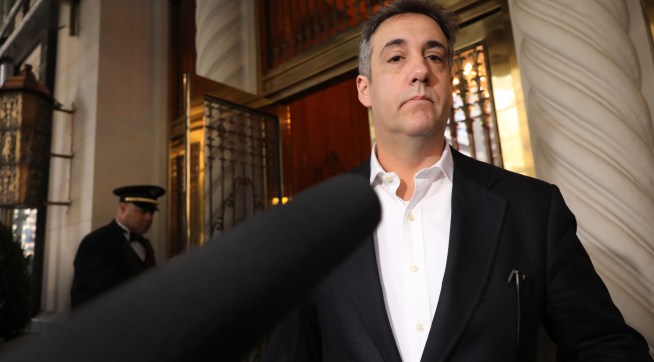
Michael Cohen was never going to have to endure the typical prison experience, even if a pandemic never struck the globe. Even if life as we knew it never came to a halt.
We have some new data on which states are getting the biggest share of the forgivable loan funds (the biggest percentage of a state’s payrolls covered) from the Payroll Protection Program, which is part of the CARES Act, the federal rescue bill. It turns out generally red and/or rural states are doing quite well while big blue states, which are among the hardest hit in the country, are doing much less well. The analysis was done by Ernie Tedeschi, a former US Treasury economist who is now with Evercore. This article from Bloomberg uses Tedeschi’s analysis to build this chart. These are the numbers the Treasury Department released.
Here’s the data.