


TPM Reader AR flagged to me this informed, cautious and insightful overview of what we can glean about COVID19 testing data in the United States – numbers of tests, the percentage of positive tests and what if anything we can infer from these numbers about the true size of the epidemic and how pervasive it is in the United States. It’s written by two people running the COVID Tracking Project.
I’ve mentioned before that news of US intelligence reports from November 2019 about a disease outbreak in China are extremely difficult to square with the most exacting news reporting and genomic analyses of the virus itself. And yet, according to the Times of Israel, Israel’s Channel 12 reported today that the US Intelligence Community became aware of an “emerging disease” in the second week of November. The Trump administration “did not deem it of interest” but intelligence officials shared a classified report with NATO and Israel.

He brings one of his favorite TV defenders to the White House.

I’m returning to this topic of calculating the full death toll of the COVID19 Crisis. As I noted yesterday, samplings of data from New York, Spain and Italy suggest a pattern in which the true scale of mortality tied to the COVID19 Crisis is roughly twice that recorded in the COVID19 death tolls we see each day, and sometimes much higher. Here are a few more data points which add weight to this emerging pattern.
This is a follow up on my April 3rd post about how TPM is holding up amidst the COVID-19 economic crisis. Before I get to that, here’s an update on what I shared with you back on the 3rd. I told you that we were setting up a system to allow readers to support our work above and beyond the cost of your Prime or Prime AF membership. Well, here it is. Click here and we welcome your support at whatever level you think appropriate and whatever level you are able. We truly appreciate it.
We promise you that we will put it to good use. These contributions will all be earmarked for the TPM Journalism Fund. For every increment of $50 we receive we will create a free membership for someone who cannot afford a Prime membership or for a registered student. (More detail on this below.) As I mentioned on the 3rd, we had been workshopping and building this new system for six months to a year and had scheduled its launch for mid-March. We slightly delayed the launch and have slightly retooled it for this new reality. Prior to the COVID19 crisis, our promise was to use these additional FIN (Future is Now) funds to add new reporting capacity to TPM, to turbocharge TPM reporting. With this new COVID19 reality, we will use it either for that purpose or to cover revenue shortfalls tied to COVID19 as they arise.
If you find our work important and want to helps us remain vital and hopefully expand our ability to report news, please consider it.
Now to our status a month into this crisis.
You may have heard talk of eventually redeploying the resources mobilized to fight the pandemic to tackle carbon emissions. It’s not a misplaced sentiment exactly, though I do think the parallels are generally inapt. But then TPM Reader FL wrote in a few days ago and framed it up in a way that felt more on point than other discussions I’ve seen. I yield the floor:
Read More
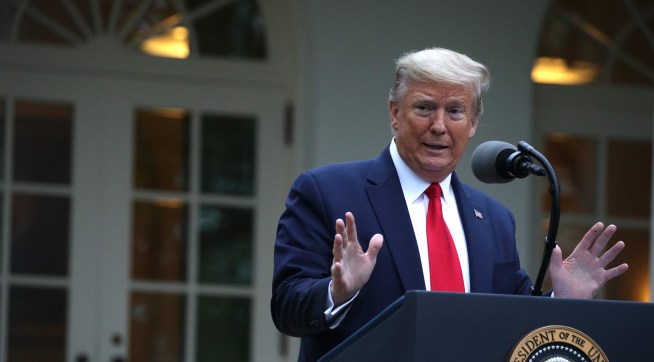
We can thank Rush Limbaugh for this one.
As you know, we’ve been focusing heavily on the ‘excess mortality’ question in the COVID19 pandemic across the world. Excess mortality is the number of deaths in a given region over a particular period of time which is in excess of the average number of deaths in previous years. We’ve looked closely at analyses from Italy and Spain which show dramatic discrepancies between the reported number of COVID19 fatalities and actual amount of excess mortality during the periods in question. In many cases, when this full excess mortality is calculated the number is two, three or even four times higher than the official COVID19 death toll.
What remains unknown in these other cases is how many of these additional deaths were ‘hidden’ COVID19 fatalities versus people who died as a result of the overall crisis but not the disease itself. This can range from an overwhelmed hospital system which creates a degraded level of care, to stress imposed by the totality of the crisis to people who do not seek medical attention for health crises they could have survived.
Read More
Important new numbers out this evening from New York City that for the first time allow us to take a preliminary look the city’s excess deaths during the COVID-19 pandemic. Josh Kovensky has pulled together the numbers.
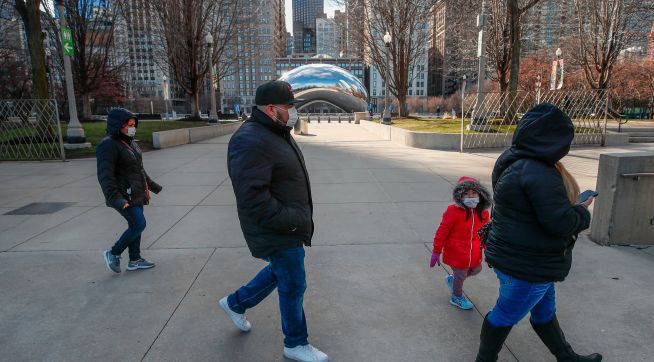
Sometimes we adopt a metaphor for a big societal question that, even though we know it’s a metaphor, still significantly distorts our thinking about what we’re talking about. I’m thinking here of when we “reopen the economy”. At least in its more antic forms, President Trump himself seems to be the big driver of this catchphrase. So that may explain the confusion behind it. The economy isn’t closed and we’re not going to reopen it. Not any time soon.