


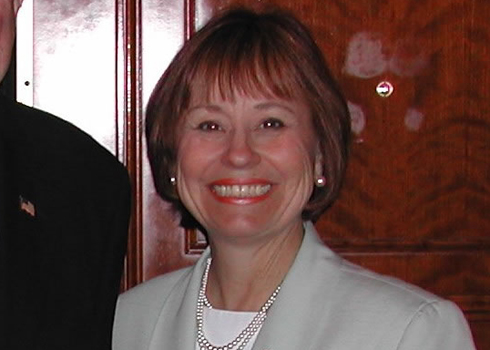
As I noted on Tuesday, Nevada Senate candidate Sharron Angle has made a series of statements over the course of this year suggesting that if things don’t change soon voters will take up armed violence against the government. It’s classic dog whistle politics: ‘I’m not saying it should happen, just saying what might or will happen if people don’t shape up and support my kind of politics’ — a clear message to supporters to a reasonable amount of deniability for everyone else. In other words, Angle’s not threatening the rest of us, it’s more like she’s selflessly putting herself forward as a way to head off the coming storm.
Now the Las Vegas Sun took a look at this today. And they asked Angle spokesman Jerry Stacy to explain just what precisely she meant. I would have expected Stacy to characterize Angle’s rhetoric as in some way metaphoric. But he didn’t. He simply stressed that she’s not “advocating for a revolution.” But in the Sun’s paraphrase, he “didn’t back away from Angle’s comments that trouble could be brewing.”
Normally, I tend to discount when one candidate’s supporters act badly. After all, you can’t control or be responsible for all your reporters. But with this kind of rhetoric, is it really a surprise that some of Angle’s supporters have been making threats to the right-wing third party candidate they believe could hand Reid a victory over Angle?
It looks like Senate nominee Sharron Angle (R-NV) found her conservative law-and-order side in conflict with her libertarian side when it came to the PATRIOT Act. She marked undecided on a candidate questionnaire in 2004 that asked whether she supported the act.
Ne’er-do-well Senate nominee Alvin Greene (D-SC): “I am … the best person to be TIME magazine’s Man of the Year.”
BP is trading substantially higher this morning in London, about 7% higher .
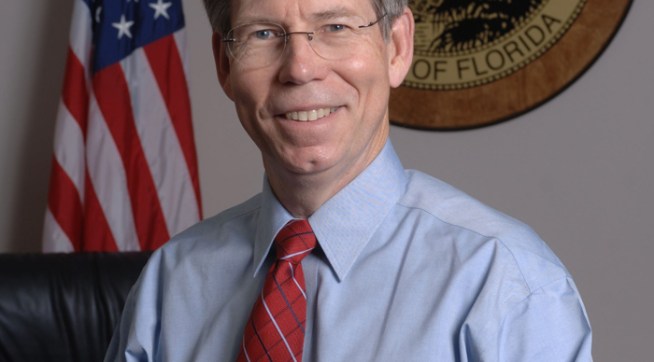
An amazing little story out of Florida. Former Rep. and now Florida Attorney General Bill McCollum (R) was the de facto Republican nominee for Governor this year. That was until far-right former health care exec Rick Scott got done trying to kill Health Care Reform (he was the one running all the ads as ‘Conservatives for Patients Rights’) and decided to hop into the race and spend a ton of his own money to get the nomination for himself. Suddenly, McCollum looks like he just might lose the whole thing.
Those who remember McCollum as a House impeachment manager or the guy who spent a ton of taxpayer money retaining George Rekers for his expertise on the evils of homosexuality probably won’t be too broken up about it. But McCollum may be the more reasonable of the two candidates. And Dems may prefer running against a guy whose company had to pay a massive settlement for overcharging Medicare and Medicaid.
Here’s a press release BP put out today with their version of what was agreed to in the $20 billion escrow fund … Read More
From TPM Reader DB …
The 20 billion fund should be viewed as a huge accomplishment for Obama. He had no actual power to compel that aside from moral suasion and the threat of having an unhappy president. Legally, BP could have just waited for the lawsuits and drawn the whole thing out for years. As a lawyer, I find it a unique and mind-boggling accomplishment.
Given how bad a situation BP is in right now, I’m not sure it was a hot idea to have their non-native English speaking Chairman speak off the cuff in front of the TV cameras. But I feel like there’s at least some chance that to how much BP cares about the “small people” was a language barrier issue. I mean, it’s not even idiomatic English condescension. That would be referring to the “little people.” Any Swedish speakers out there who might be able to give us some insight into what phrase in Swedish he might have been carrying over into English?
From TPM Reader KM …
While Sarah Palin exhibits the kind of stupidity that makes even Bill Reilly shake his head in the video clip you posted, underneath it is at least a grain of truth.
There’s been a lot of talk — a lot of it from us — about the $75 million cap on damages liability legislated back in the early 1990s after the Exxon Valdez oil spill. And to a degree the cap is now rendered at least somewhat moot by the agreement today for BP to contribute $20 billion to a fund to clean up the Gulf and make the injured whole. But I’ve been wondering for a while, just how did the oil industry manage to get that law passed?
It’s true there was an fund set up to handle damages over $75 million. But it was and is woefully underfunded. The current one will only cover a fraction of the costs for this spill.
So again, especially in the aftermath of Valdez, how’d they get that passed? Yes, it’s half a rhetorical question. But really, how’d that happen? If you know the backstory or a good article on how this went down, I’d love to hear more.