


Jon Chait has a new article about the definition of ‘white supremacy’. It caught my attention when I saw Chait and Adam Serwer of The Atlantic debating Chait’s argument on Twitter.
I wanted to share a few thoughts on the question. Read More
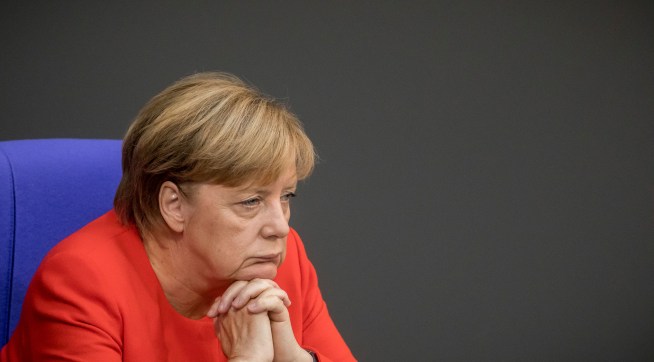
The German election, like the earlier election in the United Kingdom, leaves the country without a clear direction or mandate. Most of the post-election stories have highlighted the showing of the Alternative fur Deutschland, the rightwing populist party that by winning 13 percent has become Germany’s third largest party. That’s certainly worrisome, but I’d give equal billing to the revival of the Free Democrats (FDP), which could doom any prospect for economic reform in Europe.
Courtesy of the White House, here’s a photo (below) of a dinner President Trump held yesterday at the White House with what the White House press office called “grassroots leaders.”
Even from the best of politicians, ‘grassroots’ is the most abused of words. But these are the the most establishment leaders in the professional right in DC. Read More
We’re now just 99 71 65 59 members short of 23,000 Prime subscribers, a key milestone we’re trying to hit this month. Are you a regular TPM reader who hasn’t joined Prime? Your subscription matters. A lot. Click here to join us.
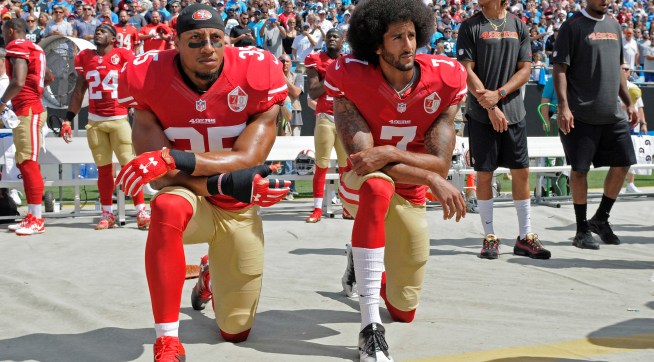
I strongly recommend reading this whole oped by Eric Reid, Colin Kaepernick’s 49ers teammate who joined him kneeling during the national anthem. But I wanted to quote these two paragraphs … Read More
Listening just now to Sarah Sanders press briefing, I think she just said that the anthem protests were no longer about police abuses or police brutality and had changed into something else over the last few weeks (rush transcript).
QUESTION: The president said that kneeling has nothing to do with race. Colin Kaepernick took to his knees in these games, many of these games, speifically because he said black people in this country were not being treated fairly by police. How is that not an issue of race?
SANDERS: I think the focus has long since changed and certainly the message in a lot of what has been communicated over these last several weeks through this process, through these protests by these players.
As longtime readers know, I’ve long been interested in crime rates and particularly murder rates in the United States – regional breakdown, causes, explanations of why they’ve risen and fallen over the decades and centuries. Read More
For more than 150 years, the United States resisted the creation of a large standing army. To a great degree, technology and especially geography made it unnecessary. The United States maintained a significant, though relatively small Navy and a small professional army which served as a nucleus around which a large force could be assembled during national emergencies. This happened during the Civil War, World War I and again in World War II. The World War II army was never fully demobilized and a large standing army (all four services) has been the new normal for three-quarters of a century. Most of us take this as a given. But it is worth remembering why early Americans thought standing armies were at least in tension with democracy if not outright inimical to it. Read More

Philip E. Wolgin is the managing director of Immigration Policy at American Progress. He directs American Progress’ research and publications on immigration and has helped lead the team’s work on a diverse set of issues, such as immigration reform, child refugees at the United States’ southern border, border security, executive action, rebuttals to nativist claims about immigrants, and E-Verify. Philip will be in The Hive to discuss immigration, DACA, and Trump’s new regulations after his travel ban. Post your questions and join us on Wednesday! If you’d like to participate but don’t have TPM Prime, sign up here.