


Earlier this week, we came up with an idea. Go back to the Steele Dossier and read it again fresh basically on all we’ve learned over the last 5 months. How does it read now? Here’s what we came up with. Give it a read.
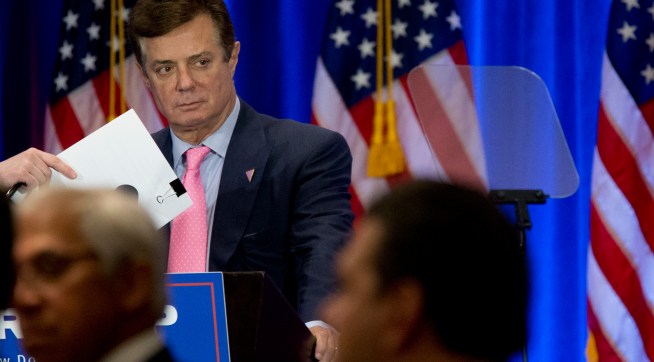
I’ve long been intrigued by just how Paul Manafort managed to get involved in Donald Trump’s campaign. I’ve written about this before. One of the key facts of the relationship is that Manafort agreed to work for free – something that always struck me as quite out of character. The key public information comes from an April New York Times article by Glenn Thrush, which I’d like to return to now.
Thrush got access to a package of emails and documents that detailed how Manafort came into the Trump orbit through one of Trump’s most trusted outside advisors, Thomas Barrack, a real estate and private equity investor. Read More
One thing we’ve learned from the on-going Manafort investigation is that President Trump remained in at least semi-regular phone contact with Manafort for some time after he became President. There’s nothing necessarily wrong or illegal about that. But it’s certainly not politically wise. It’s also hard for me to believe any lawyer would have thought it was a good idea, given the scope of the various Russia investigations.
But here’s a point I wanted to return to. Read More
This exchange on Russia from President Trump’s February 17th press conference doesn’t hold up terribly well, not particularly the portion on Paul Manafort and Trump’s business dealings in Russia or lack thereof.
Q President Trump, since you brought up Russia, I’m looking for some clarification here. During the campaign, did anyone from your team communicate with members of the Russian government or Russian intelligence? And if so, what was the nature of those conversations? Read More
We’re all familiar with the process by which states and localities often bid with tax preferences and other goodies to get businesses to locate in their jurisdictions . In itself, this isn’t all bad, at least within bounds. But it does create a race to the bottom framework in which governments often feel compelled to indulge in the most ridiculous forms of corporate welfare in order to attract businesses and thus employers. On a more general level, it leads states to compete in hollowing themselves out more generally to compete for companies who want no taxes and no regulations at all. This is all a familiar problem and these issues have all been raised in Wisconsin’s push to attract a factory from Foxconn, the Taiwan-based company which makes numerous computer and technology devices for companies like Apple and many others.
But in addition to agreeing to pay Foxconn up to $2.85 billion the bill currently being considered would actually change the state’s legal system specifically for suits tied to Foxconn. Here’s a passage from a new article from the Milwaukee Journal-Sentinel.
The legislation would exempt the Foxconn project from a state environmental impact statement and from some state rules to protect wetlands and waterways. That has raised the possibility that environmental groups may sue over the law and project in the near future.
To head off delays from that potential litigation, GOP lawmakers and Walker added special requirements on the courts system for handling any Foxconn lawsuits.
First, the legislation would expedite appeals of Foxconn-related lawsuits, creating a path that would likely get any case more quickly to the state Supreme Court, where conservatives have a solid majority.
Second, the measure requires higher courts to take appeals of a trial court order in a Foxconn case even if the order is not final. In general, appellate courts have to take appeals of the final judgments and orders made by trial courts but get to decide whether to take appeals of preliminary orders.
Finally, the trial court rulings in that litigation would be automatically stayed until the higher court decided what to do.
When determining how courts will rule, the Legislative Council typically keeps its predictions cautious and that was the case with this latest memo. The analysis noted that it was possible that courts would uphold the Foxconn court provisions.
This provision has generated some resistance on the right and the left. And some believe it may be unconstitutional. I’m not sure how common this is or not. But it goes well beyond mere tax abatements or even the outright cash gifts that Wisconsin appears to be signing on for.
We have a new NBC poll out this morning which shows a small but non-trivial rise in Trump’s public approval – from 40% in August to 43% today. The poll has a 3.3% margin of error. So you might say, that’s noise, not any real change. Possibly. But it’s broadly in line with other polls like Gallup. All the polls showing the same modest improvement suggests it is not statistical noise but something real, albeit small and perhaps ephemeral. Read More
Back on September 15th I wrote a lengthy comment on The New York Times story on Michelle Jones. She’s the former prisoner who spent twenty years in prison for murdering her son and is beginning a PhD program at NYU. The Times story was about her rejection from the history PhD program at Harvard. In the original Times story and in my post responding to it, John Stauffer, a Professor at Harvard, played a leading role.
Stauffer has submitted the following letter to clarify his position. I’m publishing it in full.
To TalkingPointsMemo.Com:
In his article, “From Prison to Ph.D.,” published last week in the New York Times, Eli Hager argued that Harvard University did not give Michelle Jones a fair review, owing to her criminal record.

Over recent weeks we’ve learned much more about how Russian operatives used Facebook to support Donald Trump, attack Hillary Clinton and spread conspiracy theories pumped up the heat of the 2016 campaign. One big question has been: how effectively did they target those messages, given Facebook’s vast ability to target messages? And if they did target their messages to areas of particular Democratic weakness in states like Pennsylvania, Wisconsin and Michigan, how were they able to do that? Where did they get the data to drive the effort? Read More
We’re coming up on 23,000 total subscribers to Prime. We have 216 to go. We want to get there by Friday if we can. Can you help? Become a Prime subscriber. This is how to make sure journalism with smarts, drive, integrity and independence can thrive. Click right here to join us.
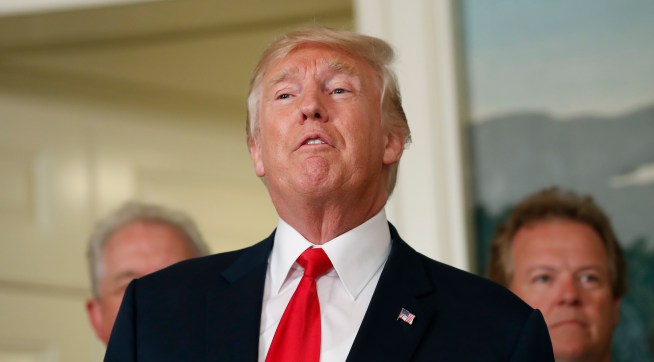
The Times is reporting that Robert Mueller is requesting documents relating to President Trump’s firing of Mike Flynn, firing of James Comey and that bizarre meeting with the Russian Ambassador and Russian Foreign Minister Sergei Lavrov in which Trump told Lavrov that firing Comey had taken the “pressure” off him. Since it’s been widely understood that Mueller is probing whether Trump obstructed justice in firing Comey, this isn’t altogether surprising. But it certainly seems to confirm this assumption since these are key events you’d want to know more about to make that case. Read More