

This article is part of TPM Cafe, TPM’s home for opinion and news analysis.
For a lot of young Americans, every major life decision that signifies adulthood starts with the same question: Can I afford it?
Can I afford to move for that “dream job”? Can I afford to get married, have a kid, or take care of one? Can I afford to buy a home, or even just stay in the one I rent?
For previous generations, those questions had simpler answers.
Older generations who bought entire homes for the same price as a down payment today often don’t fully grasp what it means to face $2,500 rent, $2,000-a-month childcare, and six-figure student debt — even with a so-called “good job.”
The divide today isn’t just about money. It’s about agency. The ability to make choices about your own life and to dream about your future was something every generation before us was told was their birthright.
For millions of young Americans today, that sense of freedom feels out of reach.
The generational divide of our moment isn’t about partisanship or social issues. It’s about affordability — and how differently each generation experiences what it takes to build a good life.
That gap shows up in politics, too. You can hear it in how candidates talk about the economy. For the so-called old guard, affordability is something they discuss in abstract terms: inflation, wages, interest rates, the stock market — numbers on a spreadsheet.
For younger candidates, it’s personal. They don’t have to imagine what it’s like to split rent five ways or watch childcare swallow half a paycheck. They know it — they’re living it.
They’ve made the same trade-offs: skipping doctors’ appointments because of deductibles, picking up Uber and DoorDash shifts to make ends meet, and delaying milestones their parents or grandparents managed to reach a decade earlier.
That perspective changes everything.
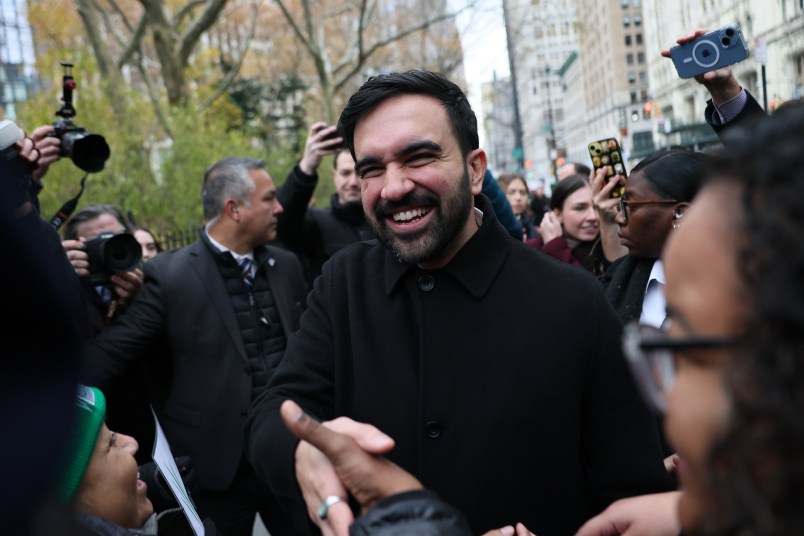
When candidates like Mayor-elect Zohran Mamdani in New York talk about freezing rent or expanding universal childcare, they’re not being idealistic. They’re naming what’s necessary for people to live full, dignified lives. That’s why young voters flock to leaders like him — because their prescriptions aren’t just policies. They offer permission to hope again. They make the promise — or even concept — of a better future seem attainable.
For generations that were forced to grow up through a recession, a housing crisis, and a pandemic, that hope isn’t something abstract. It’s a lifeline.
For too long, young people have been told to tighten their belts, hustle harder, and stop complaining. We’ve been told that if we just worked a little more or spent a little less, we could make it work — as if our economy is a test of character and resilience instead of a system that’s fundamentally broken.
But this new generation of leaders sees through that lie. They’re not running for office simply to nibble around the edges of the status quo; they’re running to reclaim agency over their own futures. They understand that the promise of America — that hard work and education can buy you stability and choice — has eroded for millions of people. They’re determined to not just make a new promise but to actually keep it this time.
And they are living the same realities as the people they hope to represent. Many of them are renters, caregivers, first-generation college graduates, or young people with mountains of student debt (or all of the above), who are campaigning while working second jobs. That authenticity isn’t a branding exercise — it’s simply the truth, and it’s what young voters trust.
That’s why young people are turning out to vote for them, volunteering for them, and even running themselves at record numbers. More than 75,000 people have reached out to Run for Something since the November 2024 election, and over 5,000 in the week after Zohran Mamdani’s big win. That’s because these candidates offer a vision of a life that feels livable for the first time.
They’re not just telling young people that a better future is possible — they’re showing what it looks like, through policy and through example.
And that’s the thing that gives me hope.
The affordability crisis may have taken away a lot of our choices, but it hasn’t taken away our will to fight for them. Every young leader stepping up right now — in city councils, state legislatures and, yes, mayors’ offices — is proving that this generation isn’t apathetic. We just want a fair shot at the same stability our parents had.
Maybe that’s what older generations don’t quite see yet: young people aren’t asking for anything radical. We’re just asking for the space to build our lives — and maybe even dream a little, too




Thank you for this article.
My daughter works harder and longer hours than I do, makes more money than I do, and she is also struggling to keep up and live in the city that she loves. Voting for Zohran Mamdani this year was the most exciting vote that she cast since her first vote ever in 2012, when she voted for Barack Obama.
i would probably vote for a person like him, should they run for office.i see itevery day. rents here are out of sight, i don’t know how a young person can save money for their fututre. while the kids are struggling, rich men and women hold most of the power,it is disgusting to see the POTUS give parties and dinnners while Americans are standing in line to get food…demolishing part of our WhiteHouse to build a ballsroom, while young people are struggling to even afford an apartment….i have no idea who or what they voted for, but this is what they got; and to top it all off..he accepts lavish gifts and money from foriegn powers..and we all know these foriegners do not just give gold and cash because they respect you..he has put a price on in the US POTUS; and pay up or forget it.
NYC Affordability: Way back in the 70s, I lived in NJ, worked in Manhattan. At that time and relative to the value of the dollar, NYC was a very expensive place to live. I knew what my colleagues made, wondered how they afforded apts. I learned that some had other income or were subsidized by parents.
That’s what the emoluments clauses were supposed to deal with.