

This article is part of TPM Cafe, TPM’s home for opinion and news analysis. It was originally published at Balls and Strikes.
Over the past several years, whenever Democratic politicians have floated the possibility of expanding the U.S. Supreme Court, Republicans have reacted with a mix of indignation and fury, casting expansion as an unconscionable attack on judicial independence.
Last year, for example, Texas Senator Ted Cruz called Court expansion “a direct assault on the design of our Constitution,” and accused Democrats of seeking to “advance policy goals they can’t accomplish electorally.” Iowa Senator Chuck Grassley said that expansion “would erase the legitimacy of the Supreme Court and destroy historic precedent.” Mississippi Senator Cindy Hyde-Smith said that “packing the Court for political leverage destabilizes the integrity of the institution and is dangerous for our country.” All three are now co-sponsors of a constitutional amendment to prevent Congress from changing the size of the Supreme Court.
But in the deep-red states of Wyoming and Utah, Republican lawmakers are openly embracing this supposedly taboo tactic, trying to change the size of their state supreme courts in order to secure rulings they prefer. These efforts mirror an earlier, successful campaign in Arizona under former Republican Governor Doug Ducey, in which conservatives reshaped the state’s judiciary—and its jurisprudence—simply by changing the personnel on the court.
On the national stage, Republican lawmakers treat Court expansion as a fringe idea tantamount to cheating. In Republican-controlled states, that same maneuver is becoming routine, stripped of the Ted Cruz-style moral outrage that accompanies it in Washington.
Over the past several years in Utah, the state supreme court has issued a string of rulings that frustrated the Republican-controlled legislature—among other things, upholding lower court orders that blocked a near-total abortion ban from taking effect, and that required the legislature to redraw congressional districts based on a fair maps ballot initiative that voters passed in 2018. After the abortion ban decision, the leaders of the Utah Senate and Utah House of Representatives accused the court of “undermining the constitutional authority of the Legislature to enact laws as elected representatives of the people of Utah.”
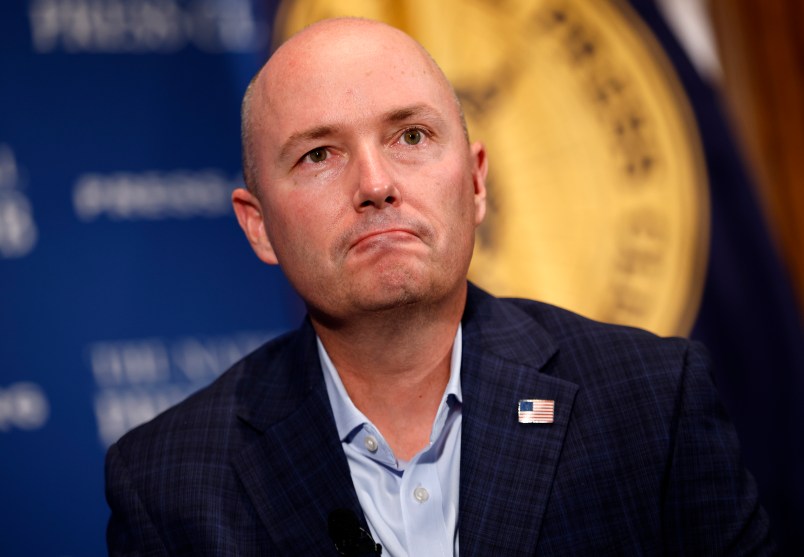
In response, Republicans introduced a bill, with the support of Republican Governor Spencer Cox, that would expand that court from five justices to seven. On Saturday, Cox signed the bill into law, which will allow him to appoint two new justices—potentially in time for the new, larger court to rule on the constitutionality of the fair maps initiative.
Late last year, Cox defended the prospect of expansion by arguing that it would “start moving justice quicker through the system.” But the Utah Supreme Court has actually decided more cases in the last several years than it did in years prior, and Chief Justice Matthew Durrant has made clear that the court has no need for assistance. “I ask that your disappointment with a few results not lead to penalties for an entire branch of government and, by extension, penalties for your constituents,” Durrant said in an address to lawmakers last month. At a Utah Judicial Council meeting on February 24, Justice Paige Peterson was a little more blunt: “It’s obviously retribution and I’m not sure why we’re not saying that,” she said.
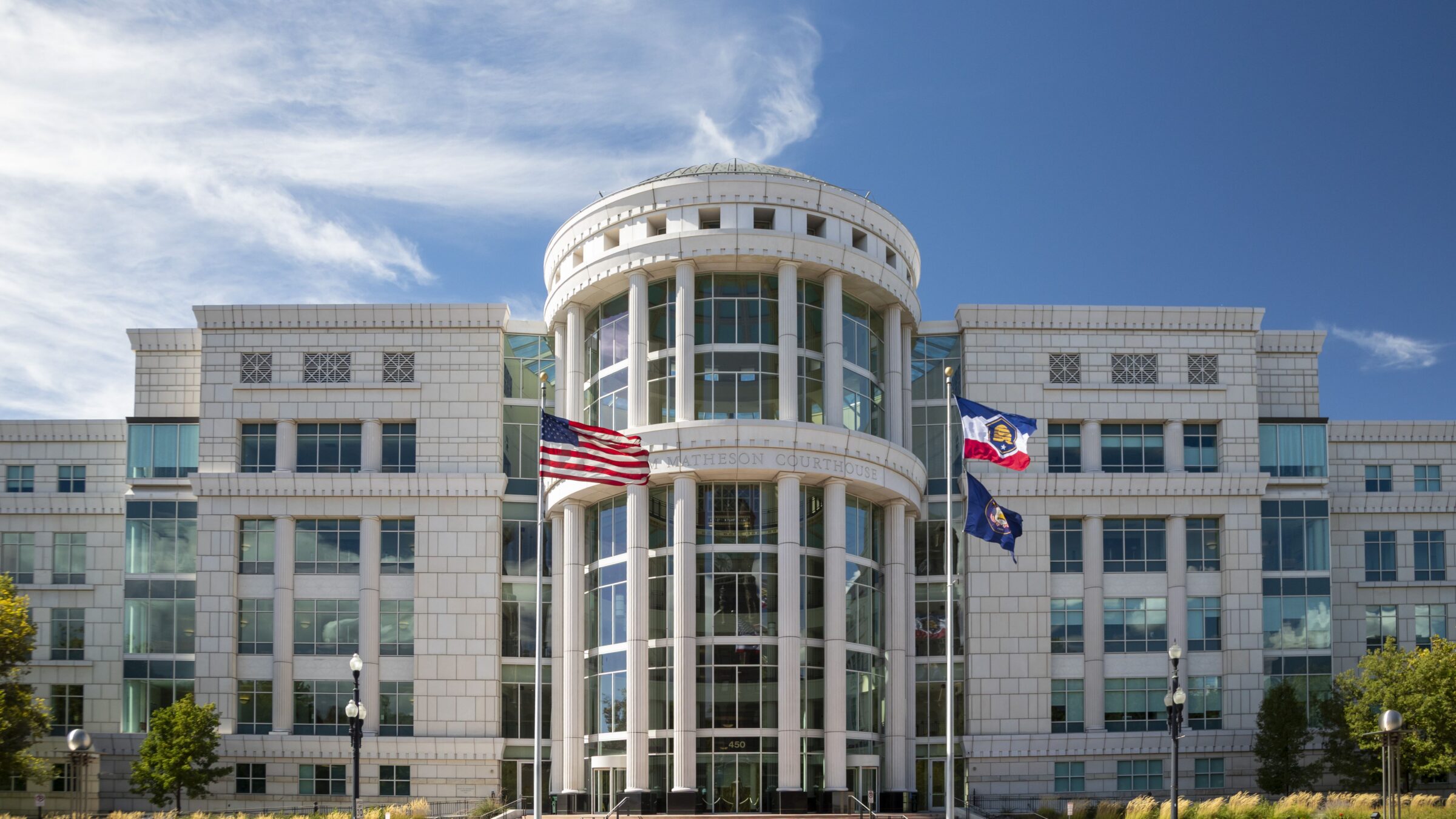
Wyoming Republicans are considering a different approach: shrinking their supreme court. In January, the five-justice Wyoming Supreme Court struck down the state’s abortion ban, holding that it violated a state constitutional amendment protecting the right of any resident “to make his or her own health care decisions.” Days later, the Wyoming House Appropriations Committee held a private session to discuss “possible action” related to the judiciary—which, according to the Wyoming Tribune Eagle, included a proposal to reduce the court’s size from five justices to three.
Although the committee did not end up moving forward, the speed and intensity of the reaction underscores how quickly Republicans are considering structural changes as a political remedy. Rather than waiting for retirements or electoral shifts, critics of these rulings are looking for ways to alter the offending institutions immediately.
The efforts in both Utah and Wyoming are following a blueprint that Republicans developed in Arizona a decade ago, when they expanded the state supreme court from five justices to seven. The move came after years of tension between the legislature and the high court, which had upheld the independence of Arizona’s voter-created redistricting commission and strengthened defendants’ rights in criminal cases. These and other decisions fed a perception among Republican legislative leaders and then-Governor Doug Ducey that the court was an obstacle to their policy agenda—and prompted them to move to expand the bench so that Ducey could appoint new justices more aligned with their views.
Ducey wasted little time following through, appointing Andrew Gould, a former prosecutor whose record as a state court judge reflected a traditional conservative approach to statutory interpretation, and John Lopez IV, who as Arizona’s solicitor general had positioned himself as a bulwark against broad readings of individual rights. Earlier that year, Ducey had also appointed Clint Bolick, a former Goldwater Institute litigator known for his libertarian views. Collectively, the appointments of Gould, Lopez, and Bolick created a high court that would be more skeptical of any progressive-adjacent legal doctrines going forward.
For normal people in Arizona, the consequences were swift and lasting. The new majority has been more deferential to the Republican-controlled legislature, and more hostile to voter-initiated efforts that threaten conservative priorities: It removed from the ballot a voter-approved tax increase on high earners, for example, and upheld a lower court ruling tightening requirements for signature gatherers for ballot initiatives. In a high-profile religious liberty case, the Arizona Supreme Court also sided with a business that had sought a 303 Creative-style exemption from a local anti-discrimination ordinance that would allow them to discriminate against same-sex couples. The lesson for conservatives in other states was clear: changing the size of a court can be just as effective as changing the law itself.
State supreme courts do not always make national news. But they often have the final say on issues of tremendous importance in their states, from redistricting to abortion restrictions to limits on executive power. In Arizona and now Utah and Wyoming, Republicans are altering courts to deliver policy wins that elections alone cannot—and cementing these courts as superlegislatures imposing their will on the people of their states, regardless of popular will.



Spencer Cox has been celebrated as the good kind of Republican, based on his occasional statements criticizing Trump, which alternate with tolerance for Trump. But once you scratch a “good kind of Republican” you find that the same stuff oozes out of all of them.
Two questions, Ted. 1. Does the Constitution specify the number of SCOTUS judges? 2. Has it ever been changed?
STFU
dmcg, no and yes to your questions respectively.
But to the article, there are two important points. The first is that unlike Democrats, Republicans are not afraid to use power and know how to do it. It is my hope that at all levels, Democrats have learned this lesson.
The second point is about these “conservative” courts ruling in favor of reproductive rights. That is there is no more conservative issue and I would add conservative decision then keeping Government hands out of the womb which fully explains Roe, decided only after Richard Nixon made 4 conservative Supreme Court appointments.
But what is missing from this a discussion about how both partisan and cowardly is the current Republican and not conservative first and only U.S. Supreme Court. Therefore, below is an article from Paul Krugman on this very issue.
Profiles in Cowardice, Tariff Edition
The Supreme Court’s silence says volumes
Paul Krugman
Feb 04, 2026
Source: HBS Pricing Lab
Donald Trump loves tariffs. Mainly, I believe, he loves them because they offer so much opportunity for dominance displays, allowing him to threaten other countries with economic ruin — usually via middle-of-the-night Truth Social posts — unless they bend to his whims. Economists may say that most of the damage inflicted by tariffs falls on American consumers and businesses, not foreigners, but Trump’s attachment to tariffs is doubtless strengthened by economists’ disapproval — he wants to show that he’s smarter than the so-called experts.
Furthermore, tariffs give him power without checks and balances. He can impose huge taxes on imports without having to go through annoying stuff like getting legislation through Congress.
Or can he? By any reasonable standard, most of Trump’s tariffs are plainly illegal. Two lower courts have ruled against them. The Trump administration appealed those decisions, and in early November the Supreme Court heard arguments on the case. Many businesses that have found it impossible to make long-term plans with the fate of the Trump tariffs in limbo eagerly awaited the Court’s ruling.
They’re still waiting. And I can’t see any plausible explanation for the delay other than Supreme cowardice.
Background: Most of Trump’s tariffs have been imposed by invoking a 1977 piece of legislation called the International Emergency Economic Powers Act, which the Congressional Research Service describes as giving the president “broad authority to regulate a variety of economic transactions following a declaration of national emergency.”
But we aren’t in an emergency. Trump himself keeps saying that everything is great — the economy is hot, there’s no inflation, we’re respected around the world. It’s not true, but that’s what he says. And he has been using IEEPA to impose or threaten to impose tariffs for many purposes that have nothing to do with economic policy. He imposed a 50 percent tariff on imports from Brazil to punish Brazil for pressing charges against Jair Bolsonaro, the Trump-like former president who tried to overturn an election loss. He threatened tariffs against European nations who stationed troops in Greenland as a precaution against a possible Trumpian attempt to seize the island from Denmark.
In the latter case Scott Bessent, Trump’s Treasury secretary, pressed on the nature of the emergency that would justify tariff threats, declared that “the national emergency is avoiding a national emergency.” Uh-huh.
I’m not a lawyer, but I talk to lawyers, and this isn’t a difficult case on the merits. Trump is clearly wrong on both the letter and the spirit of the law. And when the Supreme Court held its hearing, the tenor of the questions, even from conservative justices, suggested that they recognized that the administration had no case.
So why have we had three months of silence? Well, this isn’t a difficult case on the merits, but it puts the six right-wing members of the Court between a rock and hard place, not intellectually, but personally.
For a right-wing justice, ruling in the Trump administration’s favor in such an open-and-shut case would amount to admitting that you’re a pure partisan hack. And even the right-wing faction on the court is trying to maintain the fiction that it’s still a deliberative body, not a MAGA rubber stamp.
But to rule against the administration would be to hand Trump a humiliating defeat on one of his signature policy issues. It might also be very expensive. Tariffs aren’t the revenue gusher Trump and his minions like to claim: Even after the Trump hikes in tariff rates, customs receipts are small compared with other sources of revenue and have made only a modest dent in the U.S. budget deficit. But losing that revenue and, worse, having to give it back would be a financial embarrassment.
And it’s hard to see how, if the Supreme Court rules against Trump, the government can avoid paying back the money it has collected to companies like Costco, which has sued for a refund. If the Court rules that the tariffs weren’t legal, can the administration say, “No backsies” and refuse to refund money it collected illegally?
Right-wing justices don’t want to humiliate Trump, and they’re surely afraid of what will happen if they do. So they’re damned if they do the right thing, damned if they don’t.
When I’ve made this point in the past, some readers have asked why Supreme Court justices would be afraid of crossing Trump. After all, he can’t fire them, can he?
But to suggest that Supreme Court justices are insulated from pressure merely because they have job security is to misunderstand how power and influence work, especially within the modern right-wing movement.
Prominent figures on the right — and the Republican Six on the Supreme Court surely qualify for that definition — aren’t just members of a movement. They’re also part of a social scene — a scene shaped by the wealth and power of billionaires. They share in the privilege and glitter of that scene even if they aren’t outright corrupt — even if they aren’t all like Clarence Thomas, who, as ProPublica revealed, has taken multiple lavish vacations paid for by billionaire Harlan Crow.
To vote against Donald Trump’s beloved tariffs, delivering him both a policy and a political blow, would be to risk being ostracized and exiled from that milieu. If you don’t think that would matter a lot, you don’t understand human nature.
And more than social estrangement might be at stake. Violent threats against judges and other public officials, especially those denounced by Trump and other MAGA figures, have soared. Are you sure that a judge perceived as having betrayed Trump — and his or her family — would be safe? More to the point, are judges themselves sure?
So the right-wing majority on the Court is surely afraid to rule on tariffs — afraid to rule for Trump, because that would destroy what’s left of their credibility, afraid to rule against, because that would anger both the MAGA elite and the MAGA base.
So they’re procrastinating, even though the longer the tariffs stay in place, the more Trump is emboldened to tweet out bizarre, destructive and illegal policies and the more economic damage is done by uncertainty.
Their paralysis is understandable. But it’s also utterly shameful.
The SCOTUS will find for the First Felon with never-before-seen contortions in interpreting the law.
There is a reason Roberts has forced the clerks to sign NDAs.