


FRISCO, TEXAS – Far-right activists are seizing on a new example of the America they fear. It’s a booming, Texas city home to the Dallas Cowboys’ practice facility and a PGA golf resort.
The activists’ problem? The city’s population of Indian immigrants and people of Indian descent has grown dramatically in recent years as the town has massively expanded. Per the 2020 census, it was America’s fastest-growing city. The 2000 census put Frisco’s population at 33,000. By 2020, it was 200,000; the city’s mayor told TPM he estimates the current population to be around 250,000. With that growth, the demographics have also shifted. The 2020 census estimated that around a quarter of Frisco residents were Asian; city planners now estimate that Asians account for one-third of the population.
City officials boast about what they regard as the fruits of years of planning: multinational tech corporations with new offices in the city, endless soccer fields, a new library with a massive T. rex skeleton inside, a gleaming megamall, and, of course, the HQs of the Dallas Cowboys and PGA America. Vast, freshly built housing tracts coat the landscape. The few trees are thin and new.
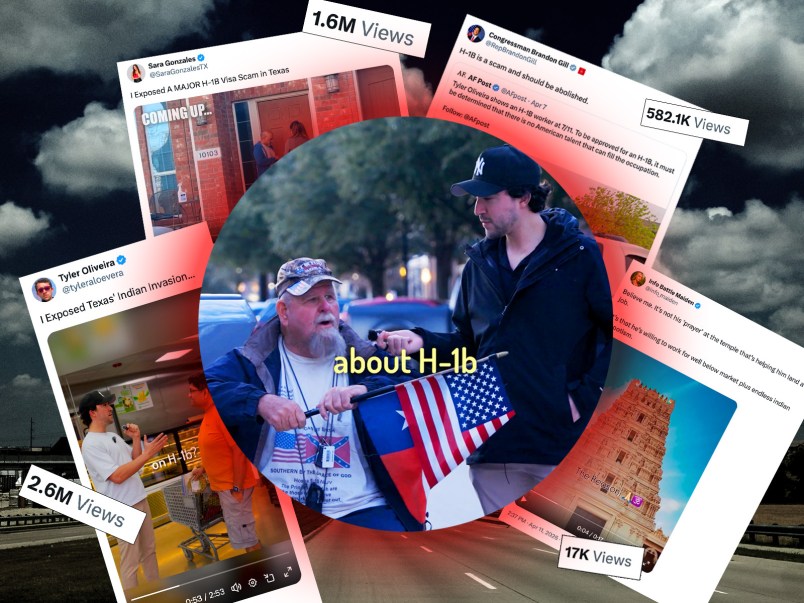
But for a coterie of area activists and influencers, the influx of Indians — some on H-1B work visas, others citizens of Indian descent — is a real-life example of the “Great Replacement” conspiracy theory. Under that idea, elites are replacing white Americans — sometimes referred to by right-wing activists as “Heritage Americans” — with nonwhite foreigners in a bid to gain political power. That narrative about Frisco has been magnified in recent days by national political figures. Rep. Brandon Gill (R-TX), who represents a district near Frisco, cited the city’s demographic changes during a recent podcast appearance to demand an end to the H-1B worker visa program.
“We’ve got communities like Frisco that have been totally transformed, whether it’s Islamic immigration or immigration from anywhere else in Asia,” Gill said. “I don’t want to hear Muslim calls to prayer in my community. I do not want the caste system socially in the schools that my kids are going to because we’ve had so many people come to the United States who are not assimilating into American culture.”
Others, like former Trump adviser Steve Bannon, have trained a spotlight on Indians in the city in recent weeks, using a video by political activist Tyler Oliveira depicting Indians in the city to call for “a moratorium of at least 10 years on all immigration” and a “special deal” for American citizens.
The growing furor on the far right over the fact that a Texas city is home to a sizable Indian community is an example of how concerns about American identity animate an ongoing push to constrict legal immigration. It’s part of a broader split within the MAGA coalition between tech entrepreneurs like Elon Musk and Vivek Ramaswamy, who have pushed for more high-skilled legal immigration, arguing that workers from India in particular boost the country’s tech businesses. They want more H-1B visas to that end. Nativists, embodied by Bannon and others, demand an end to the program, saying that it’s a means by which the supposed “Great Replacement” is taking place.
This story is also about social media: the actions of everyone involved, from Gill (who began his pre-Congress career as a digital media entrepreneur) to local activists on both sides of the debate, are shaped by the prospect that what they say or do may go viral.
This has led to complaints from city officials that Frisco has become a set backdrop for regional and national political influencers, who largely reside outside of Frisco even if they live in the Dallas-Fort Worth metroplex. At one point, far-right activists shared a photo online of a Frisco scout troop at a city council meeting. The troop appeared to be composed of children of South Asian descent; activists cast it as an example of the Great Replacement.
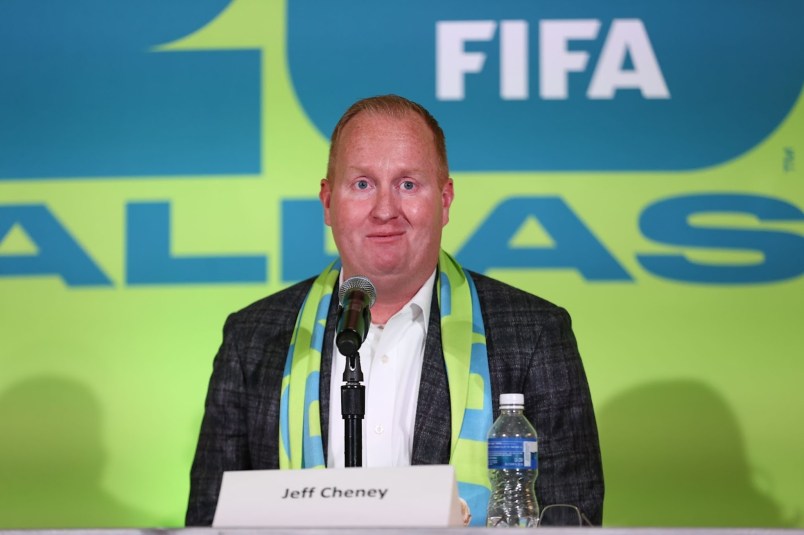
“What it’s turned into, unfortunately, is a video recording studio for people who don’t live here and just want to use it for their own social media or public gain,” Mayor Jeff Cheney told TPM.
It’s prompted pain and confusion within the Indian community. People wonder where the hatred — now taking the form of social media posts and lengthy documentary-style videos — is originating. Others, mainly H-1B holders who spoke to TPM on condition of anonymity, fear that the attention may lead to their status being revoked. “It’s horrifying,” one H-1B holder told TPM. Some worry that the Trump administration will surge immigration enforcement at the community; others were more focused on the day-to-day impact: bullying at schools, quieter tensions.
“It feels uncomfortable now to go into places where there would be a diverse demographic because you know how people feel about you,” Neha Suratran, a 22-year-old Frisco resident, told TPM.
Catching growth
For years, Frisco officials looked south with anticipation. Dallas was growing, with a major airport and highways snaking out in all directions.
Their city was primed for growth. Around 80 percent of its land was vacant in 2000, with scattered ranches and a railway line running through the area.
So, city officials developed an ambitious plan. They wanted to avoid becoming just a suburb that served other, more prosperous cities, and instead envisioned a future where Frisco itself could attract high-paying jobs. That meant adding what John Lettelleir, who has directed planning for the city in various roles since 1998, described as “sugar” — the kinds of amenities that would bring in big corporations.
“They’re in competition for a limited labor supply and they know they need to be in an environment to be attractive for that labor pool,” Lettelleir told TPM. Lettelleir and other city leaders pitched the city as accessible to DFW airport and near several interstates, with restaurants, retail, and sports offerings that would keep employees happy.
In 2013, the Dallas Cowboys announced a partnership with Frisco to build an HQ and training facility. In recent years, big, international corporations like T-Mobile and Keurig Dr. Pepper have moved headquarters to the city. Ross Perot Jr. is building a luxury mixed-use complex in the city.
“One of our success stories is we’ve always had mayors and councils that are entrepreneurs, business-minded people,” Cheney, the mayor, told TPM.
The surge in corporate relocations created huge demand for workers with highly skilled tech and business degrees. Lettelleir said that there had been a dearth of available workers; at the local level, the city could work with local colleges. Many of the companies used the federal H-1B program to meet demand. Workers — many from Hyderabad, a tech hub in India — began to arrive in the city in increasing numbers.
Idols
Frisco landed on the far-right’s radar at some point last year.
National Republicans had been split since 2024 between nativists, opposed to immigration in all forms, and members of the tech right. The nativist faction has tended to regard H-1B visas, which allow workers with specialized skills to enter the country, as a form of job theft from American workers. Indians are the largest beneficiaries of the program.
Online, that opposition has begun to translate to sustained hate towards Indians. Some depict the program as a hotbed of fraud; White House Deputy Chief of Staff Stephen Miller accused India of “cheating” on American immigration programs. Fuentes, the white nationalist influencer, urged his followers to question their support for Trump due to the number of Indians receiving H-1Bs.
Dallas-Fort Worth had attracted conservatives from other states seeking refuge from what they regarded as tyrannical blue state policies over the last several years. Andrew Beck, a consultant who helped develop the brand of the influential, far-right Claremont Institute, was part of that migration. He’s called Hindu statues in Texas “idols,” using Indian immigration to the state as a case study to argue for a vision of American citizenship rooted in a “Christian civil religion.”
“I feel a certain sympathy with these immigrants who are struggling with culture shock. They may have nicer homes in America — but they are not at home,” he wrote. “This is a strange land to them, just as India would be to me if I lived there. And the American is a stranger to them. They do not consider themselves Americans, and they are worried that their children and descendants will become like the strangers they live among.”
Beck added that he regretted “that I must use Indian immigrants as my example of unassimilated America”, and then cited the “forced assimilation” of German immigrants in Texas — “within a generation, German cultural institutions in Texas collapsed” — to call for a future without “hyphenated Americans.”
Internet research
In this national atmosphere, a range of diehards and opportunists have seized on Frisco. Lang, the Proud Boys member and Jan. 6 rioter, appeared in the city in April 2025 on behalf of a group called “Protect White Americans.”
Tensions had percolated in the region for some years. In 2022, a woman was charged with assault and terroristic threats after slapping another woman while screaming, “go back to India.” Last year, a Frisco councilwoman apologized for offensive remarks about Indians that were revealed on a secret recording.
But national political influencers and politicians didn’t really begin to pay attention to Frisco until an obscure former T-Mobile employee named Marc Palasciano began to talk about the changes in the city.
Palasciano has posted about Frisco and its non-white population almost without a break for the last several months. Though he lives in another city, he regularly attends city council meetings, railing against his former employer and H-1B visa holders in the city. City officials blame him for bringing unwanted attention to Frisco. He helped to focus the right’s debate around H-1Bs and immigration onto Frisco largely through the power of aggressive social media use.
Palasciano told TPM that he grew up scattered, amid a divorce that took a toll on him. He moved around the Dallas area, attending three high schools and foregoing college. The moving made him a fast talker; when he got a job as a sales associate at T-Mobile, he loved it. The company felt like an underdog compared to other phone networks, a place where he could be one of “the little guys speaking up to the big guys.”
By 2020, he had been promoted to a corporate role. But when COVID struck, Palasciano found himself cut off from the world, with a lot of time on his hands. He started “listening to hours” of podcasters Joe Rogan, Tim Dillon, and Alex Jones, he said, and was “just researching on the internet.”
When workers began to return to the office, Palasciano refused to be vaccinated. He was initially blocked from returning, he said, before Gov. Greg Abbott (R) barred companies from mandating vaccines.
What he felt he had unearthed online during his time at home weighed on him. “I found out that T-Mobile is owned by T-Mobile Germany,” he told TPM “They’re part of the World Economic Forum. They created the vaccine passports. T-Mobile was censoring text messages during COVID.”
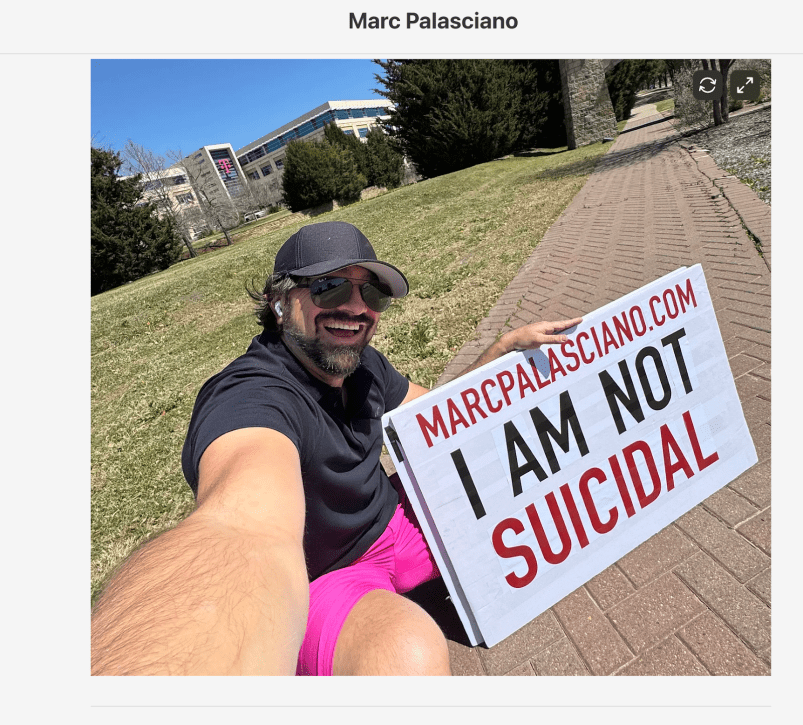
Palasciano’s employment at the company ended in 2023. Then, he saw an opportunity: Elon Musk had recently bought Twitter, renaming it X while removing content moderation and boosting users on the right.
“I’m going to use Elon’s platform,” Palasciano recalled thinking. “And what I’m going to do is start with exposing T-Mobile and whistleblow T-Mobile to go viral.”
Palasciano added that he’s not racist — his father was an immigrant, an Italian from Argentina. He said that he came to understand that Indians were part of the Great Replacement after learning more about what he described as the World Economic Forum “attacking Western civilization countries.”
“That’s why America doesn’t look the way it does,” he said. “That’s why all these Indians are here, and all these different people are migrating to this country because they’re making America not look like America.”
Starting last year, Palasciano posted clips of himself at city council meetings where he claimed that Indians were “taking over” the city. After a 180-day jail sentence on a misdemeanor harassment charge involving his former T-Mobile manager, Palasciano told TPM that he started to work with another conservative content creator, Tyler Oliveira.
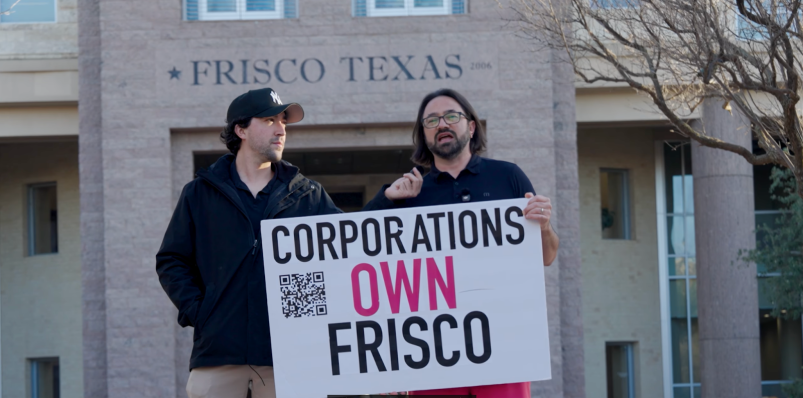
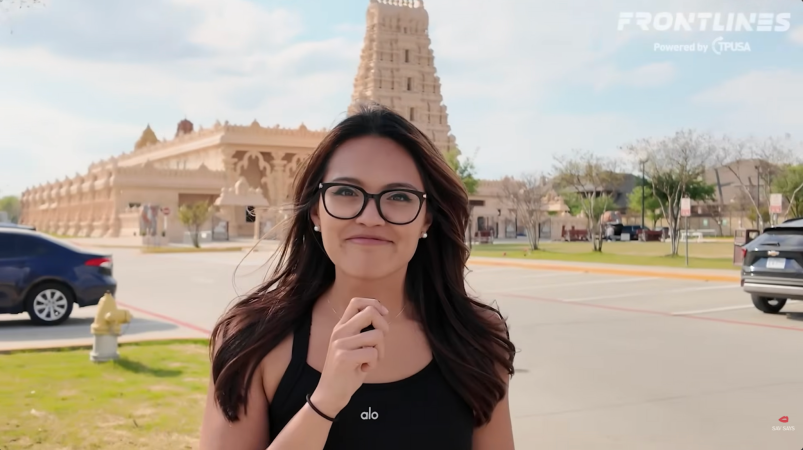
More right-wing influencers began paying attention to Frisco. In January, BlazeTV’s Sara Gonzales released a video calling H-1B visas in the city a “scam.” Soon after, Gov. Abbott blocked state universities and institutions from using the program; Attorney General Ken Paxton launched an investigation into businesses named in Gonzales’ video.
At the next city council meeting, in early February, dozens of people came, accusing Indians on the program of being “scammers.” They did not come with any clear demands; H-1Bs are a federal program, not subject to city rules.
“I reject global Zimbabwe; we must maintain our Rhodesia,” one man said at the meeting.
Photos of the scout troop at the meeting appeared online afterwards; activists used the children, most of whom appeared to be of South Asian descent, to argue that whites were being replaced. Some in the South Asian community began to become more suspicious. It didn’t make sense that all of these people, both in person and orders of magnitude more online, were so focused on their random city; they began to wonder, where was all the hatred coming from?
“Nobody is going to wake up and say, ‘I’m just going to go to Frisco and talk about nasty things,’” Vijay Karthik, who is running for city council this year, told TPM.
Palasciano took credit for the meeting’s virality. “That’s probably one of the coolest experiences of my life,” he told TPM.
‘Heritage Texans’
After the meeting blew up online, some in the South Asian community started to organize. A local Hindu temple that has appeared in several of the videos sent a priest to deliver the invocation at a recent city council meeting. Indian-Americans who said that they felt targeted by the attention began to show up to give their own speeches.
In April, more right-wing influencers have been releasing videos portraying Frisco’s Indian community as the product of fraud. One, titled “The Muslim and Indian Takeover of Texas” by TPUSA contributor Savanah Hernandez, featured Sara Gonzales recounting an email she received from someone near Frisco describing an Indian couple supposedly inviting a cow into their home before exulting over its urine and feces.
Oliveira’s video has gotten the most attention. In it, he describes “heritage Texans” as being pushed out by Indians. Palasciano appears throughout the video, which is titled “I Exposed Texas’ Indian Invasion.” It has received 1.6 million views on YouTube.
For Oliveira, it’s a continuation in a series. He gained notoriety after filming a video in which he wandered around Springfield, Ohio, asking residents about claims that Haitian immigrants to the city were eating dogs and cats.
One promo for the video features an interview with an Indian man who recounts arriving on an H-1B visa to a company that was largely staffed with Americans. “Fast forward, now, you don’t see any Americans,” the man says with a grin.
TPM tracked the man down; he is Martin Padeti, a Republican candidate for justice of the peace in a neighboring county. Padeti said that he had voted for Trump in 2024 and was happy to have appeared in the video. When TPM asked how he felt about Oliveira using him as an example of the Indian immigration that he’s criticizing, Padeti replied, “that’s okay. I don’t take anything personally.”
Oliveira’s video caught the attention of many on the right. A publisher known for The Camp of the Saints, a 1970s book depicting a scenario in which Indian immigrants destroy the West, replied approvingly. Rep. Gill wrote that “H-1B is a scam and should be abolished.” Other right-wing influencers continue to descend on Frisco.
At a recent city council meeting, more on the far-right — and the extremely online — turned up. One man, who identified himself as a member of the local Turning Point USA chapter, wore a shirt that showed the U.S. Constitution shrouded in an American flag. Another, who applauded nativist speakers, wore a polo with various female anime characters emblazoned on it.
On the other side, young Indian-Americans spoke about America as a melting pot, and tried to demolish the nativists’ points. The same viral machine kicked into gear for them, too, boosting their videos while decrying Palasciano and the others.
Still, the situation has left lingering pain and confusion in the community. People seemed baffled by where the hate is coming from. Upcoming elections are the first with several Indian-American candidates. People whisper about paid influencers, old grievances and possible plots that could have brought such a huge amount of attention to town — but for what?
Suratran, one of the people who spoke at recent meetings, likened it to being in a panopticon.
“It’s like you’re constantly like being watched or looked at by people that aren’t the same ethnicity as you are,” Suratran said. “It feels like we’re being treated like animals in a zoo.”
This story has been updated.




It’s like they want the economy to die on the vine. When immigrants move in and help economic growth they feel like it’s a conspiracy. Just sad.
“Not a racist” says racist second-generation immigrant thug who wants to shut the door behind him. I’m wondering just what you have to do to get six months in jail on a misdemeanor harassment charge against your former boss…
[F]ar-right activists shared a photo online of a Frisco scout troop at a city council meeting. The troop appeared to be composed of children of South Asian descent; activists cast it as an example of the Great Replacement.
Far-right people also like to claim “tHEsE pEOPle nEvER aSsIMMIlAtE!”
Keeping this story in mind the next time a South Asian Republican embraces racist/white nationalist policies because they see themselves as white and believe they’ll be safe from the blowback.
@dave_mb For bigots maintaining the racial hierarchy is worth eating shit.
MAGA Republicans, especially in Texas, are of two minds. Both are racist, hateful, self-serving, and hypocritical.