


Here is a short update on the so-called Broadview Six case — one of the high-profile prosecutorial abuse cases coming out of ICE/CBP Midway Blitz occupation of Chicago in the fall and winter of 2025-26. To catch everyone back up, this was a case involving four candidates or elected officials, one campaign staffer and one activist. It was tied to ongoing protests outside the ICE Broadview facility outside Chicago. Federal prosecutors took a situation that involved protestors briefly making contact with a vehicle unexpectedly trying to drive through a protest line and jacked it up to a felony case. As one of the lawyers on the case told me at the time, the facts supported at best a misdemeanor disorderly conduct charge, and even that would been a wild overreaction to what actually happened.
Throughout the case, it was clear that the case was part of the Trump administration’s larger strategy of targeting peaceful protestors with wildly excessive charges. Eventually the case fell apart when major prosecutorial misconduct was uncovered on the part of the prosecutors in the case. All charges were eventually dropped in May with prejudice, just before the trial was to take place. The remaining mystery was tied to the original prosecutor in the case, who committed the misconduct securing the indictment the previous fall. (There was other misconduct tied to turning off doctored transcripts of that grand jury session.) That prosecutor, Sheri Mecklenburg, had a generally apolitical reputation and certainly was no right-winger. Defense attorneys had the impression she didn’t have a lot of confidence in the government’s position. She left the case with little explanation for a DOJ assignment working on the Senate Judiciary Committee under Sen. Dick Durbin (D-IL) in February. Meanwhile, the U.S. Attorney for the Northern District of Illinois — Andrew Boutros — and Mecklenburg’s replacement — William Hogan — were both known to be strongly onboard with the Trump/ICE program. (Hogan also had a tattered reputation on the professional ethics front.)

There’s an article (gift link) out today in The Wall Street Journal about infrastructure spending on AI and data centers. We know the stock market is fueled, dominated by the AI boom. We know about the politics of data centers. But the details here, largely based on a recent Brookings study really boggle the mind. I’m going to share two charts to illustrate the story. But the gist is that AI is already year over year the biggest infrastructure build in American history, dwarfing the US highway system, the data transmission build out for the internet, canals and being substantially bigger than the railroad buildout in the years after the Civil War. And by many measures the entire economy is now dominated by AI spending. Not only is the non-AI economy doing pretty poorly, at least showing less spending than before. But to a great degree that’s because AI spending is crowded out other spending and driving up prices. (If you’ve tried to buy a computer or computer memory recently you knows this.)
I’m going to share a few charts.
Read More

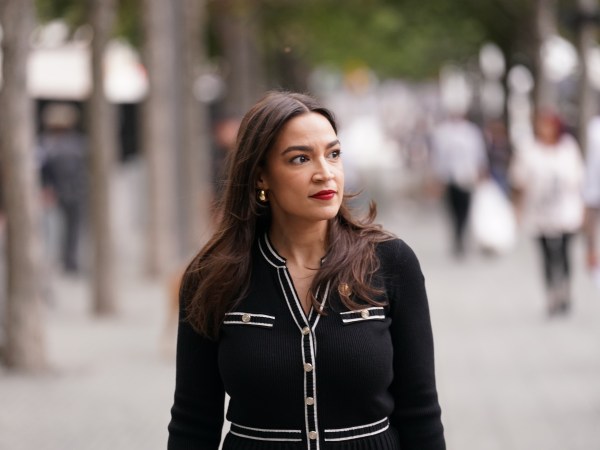

In case you’ve missed it, we relaunched our Weekender newsletter earlier this year, adding some fun recurring segments (trivia! “This Effing Guy!”) and refocusing it on the “funny, surreal, and strange in U.S. politics and culture.” I joined publisher Joe Ragazzo this afternoon for a little preview of tomorrow’s Weekender, which will categorize the different ways Republicans are trying to cope with their grim prospects in the midterms.
We also touched on kid stuff (I’m about to have my second), tattoos, the prospect of an AOC 2028 presidential run, and some other fun topics. Check out the full live below, and see more TPM conversations on our YouTube channel.


I promise not to be writing a post about every new theory or hot take about contemporary polling. And I’ll make this one quick. Nate Silver has a post up today (I think paywalled) in response to a new batch of polls released by Times/Siena. These polls are broadly in line with other recent polls, with the exception that they show Susan Collins a few points ahead in Maine. But Silver notes something interesting: in Blue States November looks like a wave while in Red States it looks like a Tsunami. Is that odd? Not necessarily. There are three or four very concrete reasons that explain that why would be the case – stuff with shifts in specific constituencies, etc. But it’s also true that when we talk about poll misses in recent cycles some of the most extreme ones were in Red States. So perhaps the Tsunami is a mirage? My best guess is that that is not the case. And Silver doesn’t really seem to think so either. But I think it’s worth keeping in the back of our collective minds. As I noted in yesterday’s piece, the best evidence that a big storm is coming is that Republicans themselves are telling us one’s coming. They’re telling us with their actions. I think they know. Of course, at a more fundamental level none of us know the future.