





Thank you to everyone who contributed yesterday. A big day of contributions that has gotten us near one of the biggest milestones on the way to our goal. TPM Publisher Joe Ragazzo and I have developed – both statistically and instinctively – a feel for the cadence of the Annual TPM Journalism Fund Drive having run them now for several years. $0 to $250,000 is a sprint. There’s a lot of energy. $250,000 to $400,000 is a slog. Like pushing a boulder up a hill. Once we hit $400,000 it’s a bit like getting to the top of the hill and rolling the boulder down is a lot easier. Not easy. It’s still essential to remind people, make the case. (I have moments wondering: does it make sense to show how the drive sausage is made? Well, in for a time in for a dollar: knocking down that fourth wall has always been the essence of TPM’s reporting and how we communicate with the TPM community.) We’re now $21,350 from that $400,000 milestone. Can you help us get there? If you haven’t had a spare moment to join us this year today would be a great time. Just click right here.





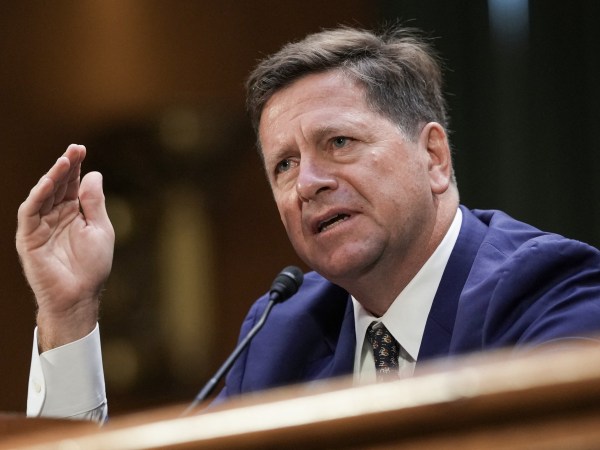
Here’s a brief follow up, genetically if not literally similar to my post from earlier today about AI bubbles. Axios has a report on the public comments on the Securities and Exchange Commission’s proposal to “ease” (i.e., get rid of) the requirement that public companies issue quarterly disclosure reports. The SEC has received almost a quarter million comments (orders of magnitude more than normal) and they are almost universally against it. Some of this is organized, organizations or company that represent or advocate for investors trying to get people to write in. But it’s mainly that there is simply zero constituency for this: retail investors, institutional investors, former SEC chairs, academics who study business. According to Axios, the pro side was “the Chamber of Commerce, the Business Roundtable and Exxon Mobile.” As they note, the agency has to consider the comments. It’s not a vote. They can move forward regardless.
What struck me here is that it’s almost impossible to look at the current state of the U.S. economy, equity markets, trends in retail investing, the widespread public exposure to mutual funds and index funds, and the increasing inattention to white-collar crime and think that what the economy needs is less transparency. The current head of the SEC, Paul Atkins, has pitched these changes as a way to “make IPOs great again.” First of all, it’s not entirely clear why IPOs should be great again. We want new companies. New companies finding new points of market need, devising new services, finding ways to chip away at the dead wood of monopoly and bureaucratic sclerosis is important to the economy. But that’s not the same as a high-octane culture of IPOs. Indeed, to the extent there are fewer IPOs, it’s more tied to the growth of monopolies. If there are new ideas to be nurtured, it’s happening within the monopolies, or they’re bought out or snuffed out early by those monopolies to ward off future competitors.
Read More

Like many others, I continue to be baffled and unnerved at how transactions that seem like definitional signs of a bubble (or possibly even fraud) are now so thoroughly baked into the very structure of the AI industry. This morning, Semafor’s Liz Hoffman starts a piece with this overview: “OpenAI and Anthropic need to borrow a lot of money but they don’t have profits or a track record of creditworthiness. Enter Jensen Huang.”
It goes on from there …
Read More