



I sat down with Elizabeth Spiers, founding editor of Gawker, former editor of The New York Observer and now a columnist for the Times, to discuss this year’s annual TPM Membership Drive and today’s media landscape. We discussed journalist independence, membership business models and why in the Trump Era only truly independent media can tell the truth without fear or favor.
I hope you give it a look.
Ready to join the TPM community as a member and support our team’s work? Just click right here.
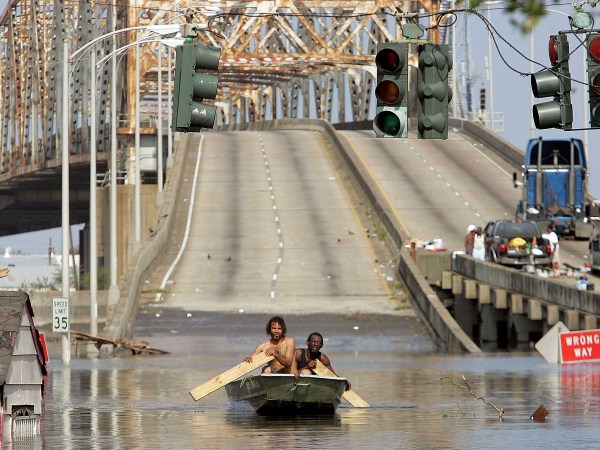


It’s no great insight to say Trump’s impulsive Iran War has been a big political loser for him. Even some of his and the war’s supporters would concede that point. “Katrinas” are also wildly overdetermined and over-diagnosed in political talk. How many “Obama’s Katrinas” were there? How many did Joe Biden allegedly have? But it did occur to me this morning that it is something like that for Trump but for a specifically Trumpian reason. Donald Trump’s great super power is changing the subject. He never sticks to one racket or con until its rung out of all its juice. He’s always on to some new thing because — long before we lived in the broken world of social media — Trump has always lived in the attention economy. Attention is the great commodity. It’s even more powerful for Trump as a defensive weapon. When something isn’t going great he’s always creating some new drama, some new thing to change the subject to. But what we’re seeing now is that Trump simply cannot change the subject. The whole Iran War story is devastatingly bad for him. And he simply has no way to stop it from being the big, dominating story. He can’t make any shiny object take its place. He’s stuck, not just militarily but politically as well.
Read More




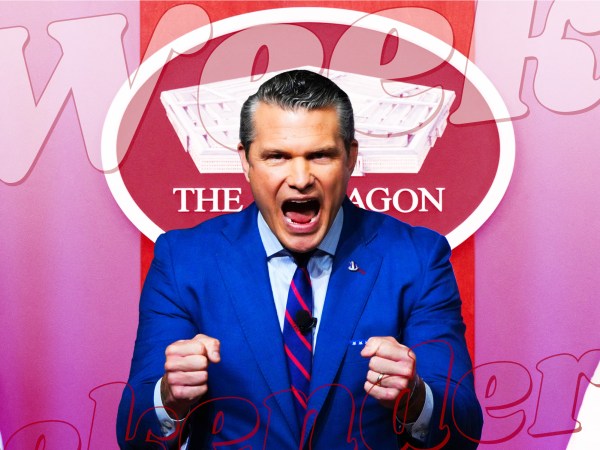
You’ve probably seen the story about how, at a DOD presentation, Secretary of Defense Pete Hegseth quoted what he apparently thought was a bible verse but was in fact the faux biblicalism delivered by Samuel L. Jackson’s character, Jules Winnfield, in Pulp Fiction. There’s a lot here. Yes, the faux godly Hegseth should really be a bit more versed in the bible. But it’s really perfectly apt that he’s not. If you remember, Winnfield is a hitman, a killer, a man of meaningless violence. He wraps his murders in stylized bible verse imitations to give them some mix of giving them retributional ooomph and just for kicks. Is there any better description of Pete Hegseth? I can’t think of one. Hegseth’s brand of Christian nationalism is a permission structure for domination and violence. The biblical text is a source of handy quotes to the extent it advances those aims. But he’s neither smart enough nor serious enough to mine the text in any serious way. He’s just a different version of Jules Winnfield.



Yesterday I noted G. Elliott Morris’s argument that extremely poor consumer sentiment in the U.S. is no mystery once you look properly at what Americans mean when they talk about prices and inflation. In short, just because prices stopped going up in the second half of Joe Biden’s presidency didn’t mean the public stopped being mad about them going up (and staying up) in the first half of his term. I’m pretty certain that this explains a lot about what sank Biden’s presidency and the dynamics of the 2024 election. But does it explain what’s happening now? When I wrote yesterday’s post, TPM Reader SB agreed, but argued that it went beyond that — that the still-declining consumer sentiment, the extremely sour public mood goes beyond the post-COVID inflation shock. It’s also about extreme wealth inequality, SB argued. Then, this morning, Paul Krugman began what he says will be a series of posts on his Substack in which he argues that while he agrees with the “excess price” framework, he’s not sure it’s a sufficient explanation.
Krugman didn’t really get into what exactly he thinks it is. As I said, he said he’ll address it in a series of posts. But the gist is that there’s a larger politico-economic explanation that goes beyond how long people stay mad about prices. Krugman says he thinks the deepening sense of economic gloom is driven by the fact that the public was upset about inflation, voted to move in a direction and then had the new guy do basically everything he could to stoke more inflation into the economy and generally whipsaw the economy in 20 different directions for a series of bizarre and obscure ideological fascinations.
Read More