

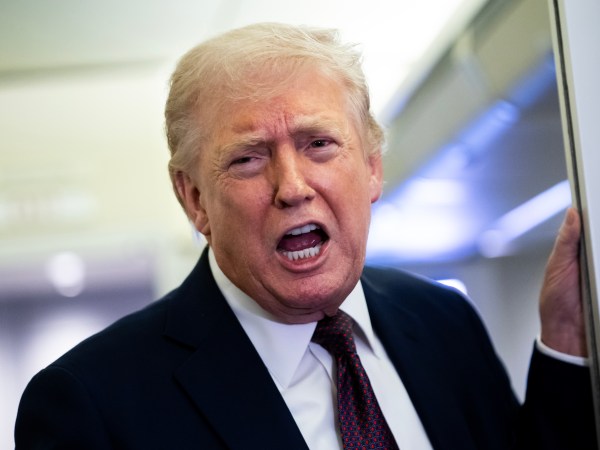
This post follows up on the previous two posts about President Trump’s weak hand in trying to end his Iran War with something short of a humiliating climb-down from his demands for “regime change” and “unconditional surrender.” Trump’s claim yesterday of “very, very strong talks” with Tehran turn out, predictably, to be third-party talks aimed at coaxing Tehran into talking at all. As Reuters reports in this new (paywalled) story, Iran is actually dramatically upping its demands since the start of the war. Those include guarantees of no future attacks, reparations for war damage and formal control of the Strait of Hormuz.
Read More

Emine Yücel has a report up this morning on a new “deal” being kicked around the Senate that would attempt to fix the airport situation. This proposal would fund most of DHS — including the TSA — without funding ICE enforcement operations.
Republicans would then seek to fund those operations later this year, in a reconciliation bill, which, under Senate rules, can pass with only 51 votes. That means Republicans won’t need Democrats to get it through.
The deal is similar to how one might have predicted this would end for weeks. But it includes one weird, emerging point: Republicans might also try to pass the SAVE America Act through reconciliation.
Read More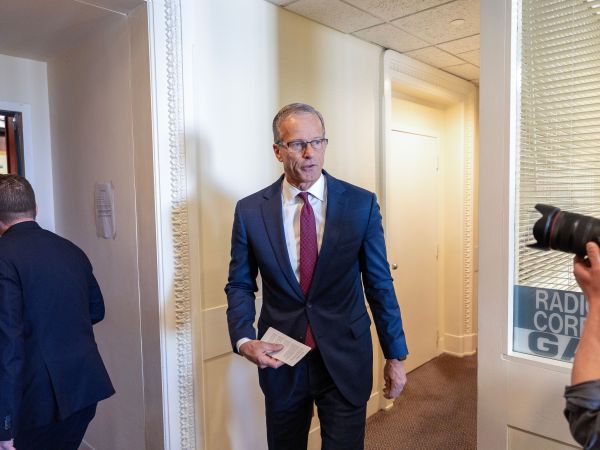






Beyond the bluster and carnage let’s look at the current situation in the war between the U.S. and Israel and Iran. I wrote most of this post before the overnight news that Trump is essentially suing for peace. But all of it still applies. And it comes down to one remarkable dynamic.
Despite the U.S. dominating the skies and almost every other combat domain, Iran has seized and holds the initiative in the war itself, forcing the U.S. to react to it and, in Trump’s hands, do so erratically and helplessly. Iran has the strategic initiative, despite constant and incredibly damaging attacks by the United States and Israel. Indeed, getting Iran to stop its primary retaliatory measure — throttling the Strait of Hormuz — now appears to be the main U.S. war aim. In other words, the main goal of the U.S. now is to get Iran to cease its retaliation for the U.S. starting the war in the first place.
The U.S. was already trying to get Iran to the bargaining table, according to this report last night from Axios. The fact that the U.S. is, reportedly, considering how to “package” cash payments to Iran (i.e. release frozen assets) is a testament to just how far we are from “unconditional surrender.” Meanwhile, this morning’s news confirms that the U.S. is getting talks started, or at least hoping to do so. Of course the simplest way to get Iran to release the strait is to stop the war. But the U.S. can’t do that, at least not openly, since that would amount to a massive and humiliating defeat.
Read More