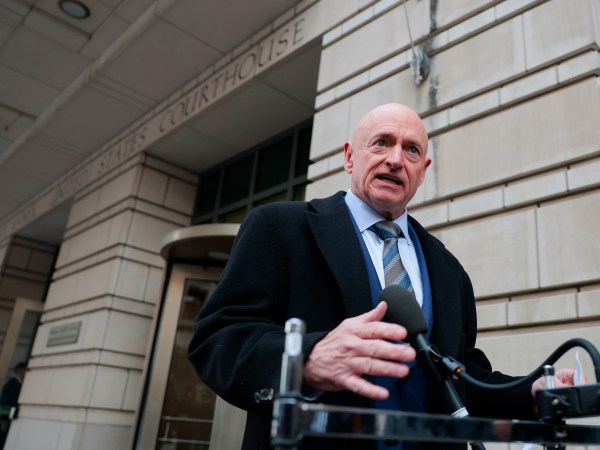




Yesterday, one of ICE’s and the White House’s prize ICE-as-victim cases blew up. We’ve seen a version of this happen before. The story is pushed on Fox. Charges follow. But as it begins to make its way through the courts, it falls apart and the charges are more or less quietly dropped. We’ve seen so, so many of these cases where it’s clear that what the ICE agents said just wasn’t true. I don’t even have to tell you about some of the more obscure ones. Though they didn’t get to charges since the purported attackers were already dead, you can see the pattern in the killings of Renee Good and Alex Pretti. First, the story was that protestors were trying to kill ICE agents and the agents barely emerged alive. Then we see the video and none of that is true. The key, though, is that in those cases where charges were filed, it’s always no harm no foul. The claims of ICE agents are shown to have been false, but it’s on to the next wilding spree. There are no consequences. Not for the original behavior. Not for lying about it.
But yesterday something different happened. The DOJ went into court and asked that a set of charges be dismissed with prejudice, i.e., they can’t be filed again. And the reason was this sentence that’s been rattling around my head for the last 24 hours. “Newly discovered evidence in this matter is materially inconsistent with the allegations in the Complaint Affidavit.”
Read More





Yesterday, we talked about the global Authoritarian Movement or Authoritarian International (with the convenient acronym “AI”). Today, I wanted to talk about something slightly more specific. It’s part of the same phenomenon, perhaps a subset of it, but it’s distinct.
Back during Trump’s first term, people in the anti-Trump world became intensely, if superficially, engaged with the inner-workings of Russia under Vladimir Putin, particularly the aggressive use of influence and disruption operations in competitor states, as well as the use of “kompromat” to maintain control over Russian oligarchs and key people — allies and enemies — abroad. One of the features of that world is that it’s really not extortion. It can be an oddly stabilizing system because everyone kind of has something on everyone else. In any case, this became a big part of the Trump opposition world during Trump’s first term. What did Putin have on Trump? What did he want? When did it start?
Read More